
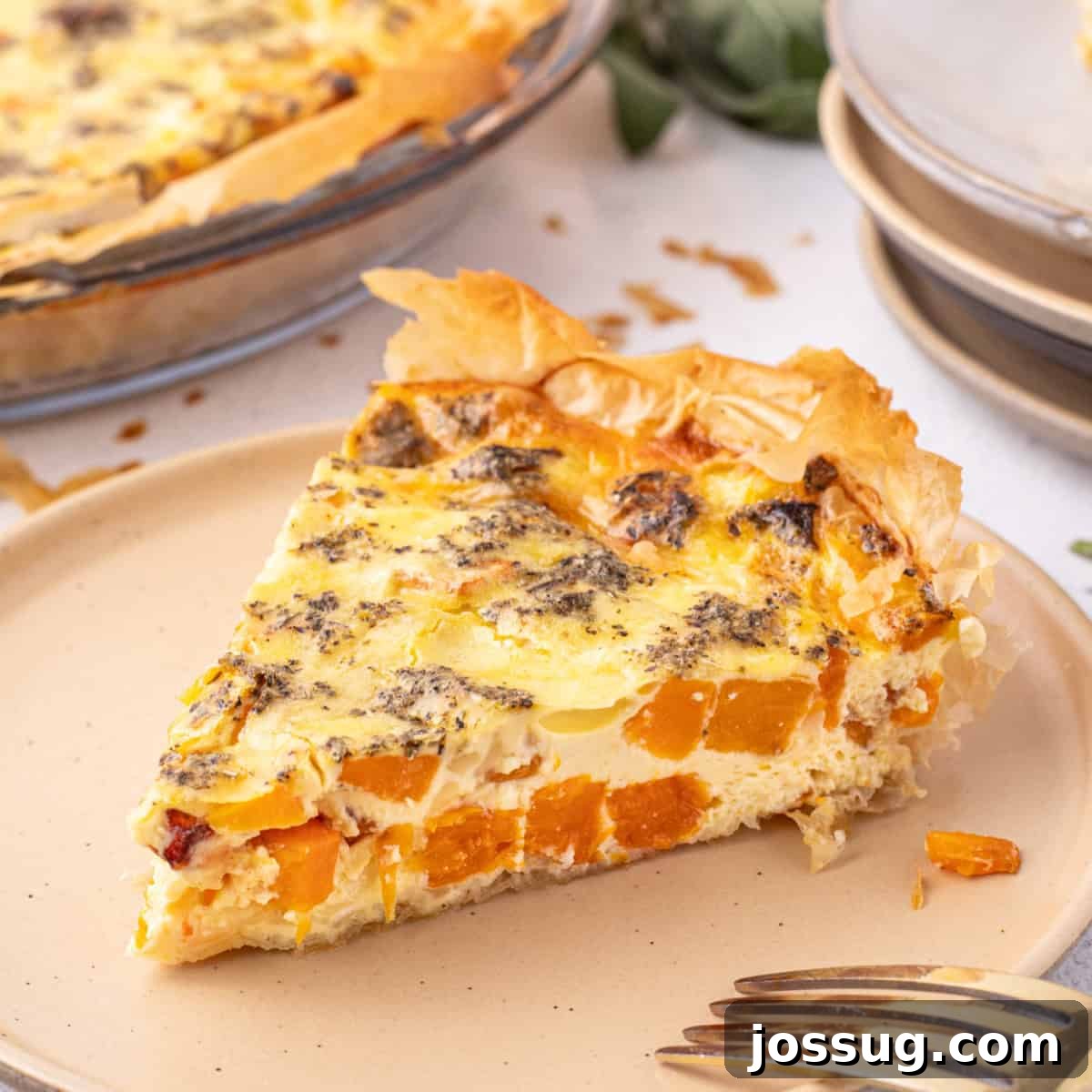
🥧 Elevate your meal with this exquisite Roasted Butternut Squash Quiche, a perfect blend of a flaky phyllo crust, rich Gruyère cheese, and sweet, tender roasted butternut squash. Ideal for a memorable brunch or a comforting dinner!
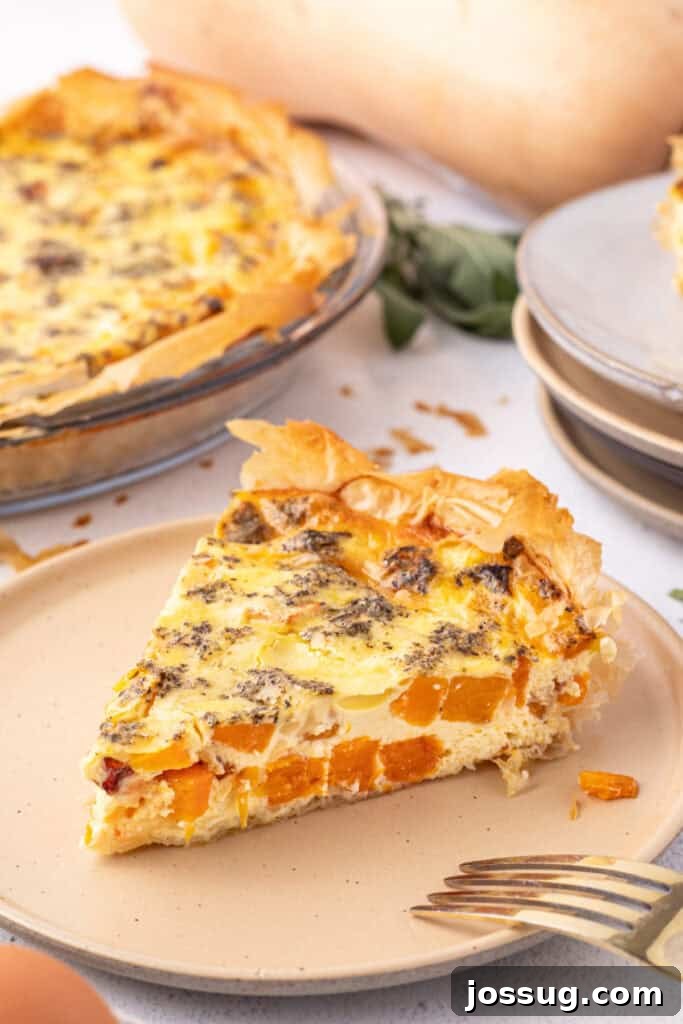
The Ultimate Roasted Butternut Squash Quiche: A Fall Favorite
As the crisp air of autumn descends and vibrant leaves paint the landscape, there’s nothing quite like gathering around the table for a warm, comforting meal. This Roasted Butternut Squash Quiche embodies everything we adore about fall dining – it’s hearty, incredibly flavorful, and beautifully showcases the season’s bounty. Forget heavy, traditional pie crusts; our recipe features a delicate, golden-brown phyllo dough that adds an irresistible crispness, creating a delightful contrast to the creamy, savory filling within.
Imagine tender, caramelized butternut squash, infused with hints of fresh sage, nestled in a rich custard of eggs and luxurious Gruyère cheese. Each bite offers a symphony of textures and tastes, making this quiche a truly special dish. Whether you’re hosting a leisurely Sunday brunch, seeking a sophisticated yet simple dinner, or preparing a festive dish for a holiday gathering, this butternut squash quiche is guaranteed to impress. It’s more than just a recipe; it’s an invitation to savor the best of autumn with an easy-to-follow, yet elegant, savory tart.
Celebrating the Season: The Magic of Butternut Squash in Your Kitchen
Butternut squash is a quintessential fall vegetable, cherished for its naturally sweet flavor, vibrant orange hue, and incredible versatility. Beyond its delicious taste, butternut squash is also a nutritional powerhouse, rich in vitamins A and C, fiber, and antioxidants, making it a healthy and delicious addition to any diet. Roasting it brings out its natural sugars, creating a depth of flavor that is simply unparalleled and perfectly suited for savory dishes like this quiche. This method transforms firm squash into tender, slightly caramelized pieces that melt in your mouth, contributing a comforting sweetness and velvety texture to the dish.
If you’re looking for innovative and easy butternut squash recipes, this quiche is a standout choice that perfectly captures the essence of fall flavors. It elegantly combines the earthy notes of fresh sage with the nutty, slightly sharp taste of Gruyère cheese, all balanced by the inherent sweetness and mild earthiness of the roasted squash. This carefully curated combination of ingredients ensures a harmonious and deeply satisfying flavor profile that is both sophisticated and incredibly comforting. It’s a brilliant way to incorporate seasonal produce into your meals, moving beyond simple side dishes to create a memorable main course. From simple weeknight meals to elaborate holiday spreads, this oven-roasted butternut squash quiche fits seamlessly into any culinary occasion, making it one of those indispensable fall recipes you’ll return to year after year for its reliability and deliciousness.
⭐ Why You’ll Adore This Roasted Squash Quiche
- Showcases Seasonal Flavors: This quiche masterfully highlights the best of fall with tender roasted butternut squash and aromatic fresh sage, delivering a taste experience that truly celebrates autumn’s bounty in every single bite. The flavors are rich, comforting, and perfectly balanced.
- Irresistibly Crispy Phyllo Crust: Unlike heavier, traditional shortcrust pie crusts, the use of delicate phyllo dough creates a stunningly golden and exceptionally flaky shell. This provides a delightful textural contrast to the creamy, velvety filling within, making each forkful a true pleasure and setting this quiche apart as a unique and lighter alternative.
- Perfectly Versatile for Any Occasion: Whether you’re planning an elegant weekend brunch with friends, a light yet satisfying dinner for the family, or a festive and impressive dish for a holiday gathering, this quiche is an ideal choice. It pairs beautifully with a crisp green salad and a light vinaigrette for a complete meal, or stands proudly as a sophisticated centerpiece dish that’s sure to garner compliments.
- Effortlessly Elegant Presentation: While surprisingly simple to prepare, this quiche boasts an impressive, golden-brown appearance and a sophisticated flavor profile. It looks like it took hours of effort, making it suitable for both casual family meals and more formal occasions where you want to impress your guests without the stress of complicated cooking techniques.
- Healthier Roasting Method for Enhanced Flavor: By roasting the butternut squash first, we not only enhance its natural sweetness through caramelization but also achieve a wonderfully tender texture. This method adds significant depth of flavor and nutritional value to the quiche filling, providing a wholesome and delicious base.
- Convenient Make-Ahead Option: This quiche is perfect for those who like to plan ahead! It tastes fantastic reheated and can even be enjoyed chilled, straight from the refrigerator. This makes it an incredibly convenient option for busy weeknights, preparing for unexpected guests, or streamlining your holiday meal preparations.
- Simple Ingredients, Gourmet Results: Using a relatively short list of accessible ingredients, this recipe transforms them into a gourmet-quality dish that tastes far more complex than it is to make. It’s a testament to how simple, fresh ingredients can create extraordinary flavors.
🛒 Essential Ingredients & Smart Substitutions
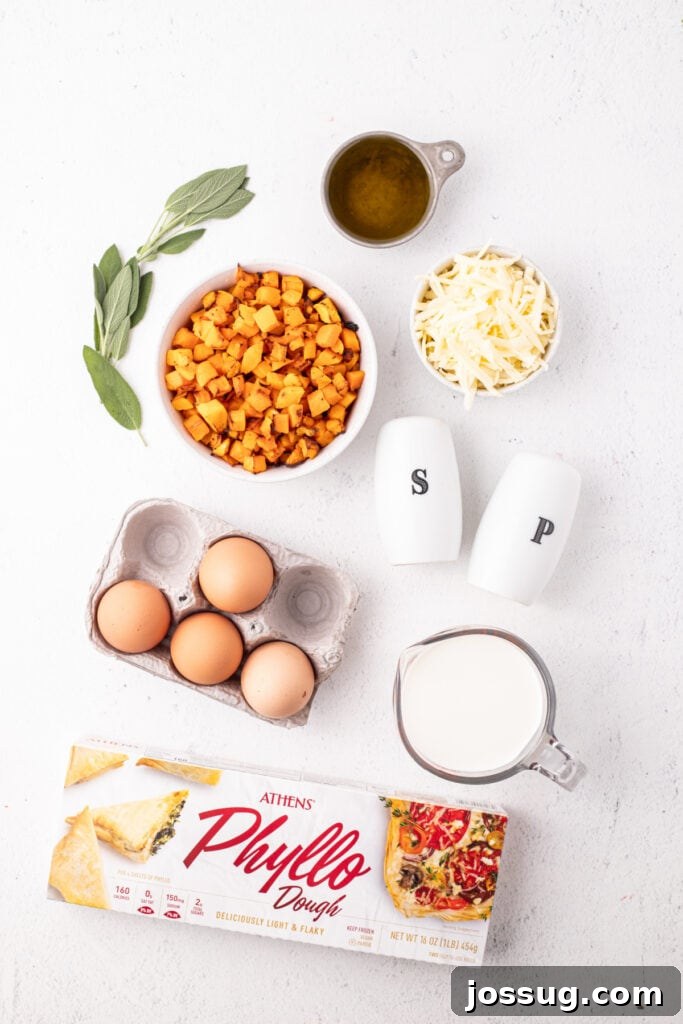
Crafting the perfect roasted squash quiche begins with selecting high-quality ingredients. Here’s a detailed look at what you’ll need to create this delectable dish, along with some clever swaps and tips to suit your pantry or dietary preferences, ensuring flexibility without compromising flavor:
- Butternut Squash: The unequivocal star of our show, offering natural sweetness and a creamy, satisfying texture when roasted. For a slight variation in flavor and texture, you can confidently substitute with other winter squashes like pumpkin (ensure it’s culinary pumpkin, not decorative) or even sweet potato. Whichever squash you choose, ensure it is peeled and cut into uniform bite-sized pieces for consistent roasting and easy incorporation into the filling.
- Olive Oil: This versatile oil is used both for roasting the squash, where it helps in achieving caramelization, and for brushing the delicate phyllo dough layers, contributing to its golden crispness. It adds a subtle, pleasant fruity note. Avocado oil is an excellent neutral alternative, or for a richer, more traditional-tasting crust, melted unsalted butter can be used when brushing the phyllo layers.
- Salt and Pepper: These fundamental seasonings are crucial for enhancing and balancing all the other flavors in the quiche, from the sweetness of the squash to the richness of the cheese. Always adjust quantities to your personal taste preference, adding more after the quiche is baked if needed, as palates vary.
- Phyllo Dough: This delicate, paper-thin pastry is the key to our quiche’s signature incredibly flaky and crispy crust. It requires a bit of gentle handling but yields exceptionally impressive and lighter results compared to heavier pastry crusts. If phyllo isn’t readily available or you prefer a different texture, puff pastry will create a rich, buttery, flaky crust, or a traditional store-bought (or homemade) pie crust can be used, though the final texture will differ significantly.
- Large Eggs: Eggs provide the essential structure and richness for the creamy custard filling, binding all the delicious ingredients together. Always use large eggs for consistent results in baking and quiche making, as variations in egg size can affect the custard’s consistency.
- Half and Half: This dairy base is what gives the quiche its luxurious, smooth, and creamy consistency. For a lighter quiche, whole milk can be used as a substitute, which will result in a slightly less rich custard. For an even more decadent and richer result, opt for light cream or heavy cream, which will make the quiche exceptionally creamy.
- Gruyère Cheese: Known for its distinctive nutty, slightly sweet, and savory flavor profile, Gruyère cheese melts beautifully and adds incredible depth and complexity to the quiche. It’s a truly sophisticated choice. If Gruyère is hard to find, Swiss cheese offers a similar mild, nutty profile, while sharp white cheddar can provide a bolder, tangier contrast that is equally delicious.
- Fresh Sage: This aromatic herb perfectly complements the inherent sweetness of butternut squash and the richness of Gruyère cheese, imparting an earthy, warm, and slightly peppery note that screams autumn. If fresh sage isn’t available, other fresh, woody herbs like fresh thyme or rosemary make excellent substitutions, each offering a slightly different but equally delightful herbaceous aroma that will enhance the fall theme.
✨ Creative Variations to Explore
This roasted butternut squash quiche recipe is wonderfully adaptable, allowing you to customize it to your liking, utilize ingredients you have on hand, or simply experiment with new flavor combinations. Don’t be afraid to get creative and make it truly your own!
- Sweet Potato Swap: For a slightly different flavor profile and an equally beautiful, vibrant orange color, completely replace the butternut squash with roasted sweet potato chunks. The sweetness will be slightly more pronounced, creating an incredibly comforting and familiar alternative that’s perfect for a cozy meal.
- Boost Your Veggies: Elevate the nutritional content and add more delightful texture by incorporating other complementary vegetables. Sautéed spinach, sliced button or cremini mushrooms, or deeply caramelized onions are fantastic additions that pair exceptionally well with both the squash and the cheese. Ensure any added vegetables are cooked down to remove excess moisture before adding them to the filling to prevent a watery quiche.
- Cheese Adventures Beyond Gruyère: While Gruyère is a classic and highly recommended choice, feel free to explore other cheeses! Tangy goat cheese can add a lovely creamy texture and a distinct sharp, earthy flavor that contrasts beautifully. Crumbled feta offers a salty, briny kick, while a blend of sharp cheddar and mozzarella could also work for a more familiar, milder, yet equally satisfying taste.
- Warm Spice Infusion: For an even deeper autumnal feel and aroma, consider sprinkling in a pinch of warm spices. Freshly grated nutmeg or a tiny dash of cinnamon (or even a touch of allspice or ginger) into the egg mixture will beautifully enhance the inherent sweetness of the squash and add an extra layer of cozy, holiday-inspired flavor.
- Add a Protein Power-Up: For a heartier, more substantial quiche, especially if serving as a main course for dinner, cooked and crumbled crispy bacon, browned breakfast sausage, or savory diced pancetta can be added to the filling. Remember to cook the meat thoroughly and drain any excess fat before folding it into the quiche filling mixture to keep the quiche from becoming greasy.
- Herb Alternatives: Beyond fresh sage, consider other finely chopped fresh herbs that thrive in fall. Fresh thyme or rosemary are excellent alternatives; each herb offers a unique aromatic quality that will beautifully complement the squash and cheese, creating different but equally delicious flavor profiles.
- Spice It Up: For those who enjoy a little heat, a pinch of red pepper flakes added to the squash before roasting or directly to the egg mixture can provide a subtle, welcome kick.
🔥 Expert Tips for a Perfect Quiche Every Time
Achieving a truly outstanding quiche, especially one with a delicate phyllo crust, involves a few key techniques. Follow these expert tips to ensure your roasted butternut squash quiche turns out perfectly golden, flaky, and irresistibly delicious:
- Roast Squash to Perfection: The goal for your butternut squash is tender but not mushy. Roast until it’s easily pierced with a fork but still holds its shape. Over-roasting can make it overly soft and watery, which might compromise the texture of the quiche filling. Aim for tender pieces with a slight caramelization on the edges, as this develops a richer, deeper flavor.
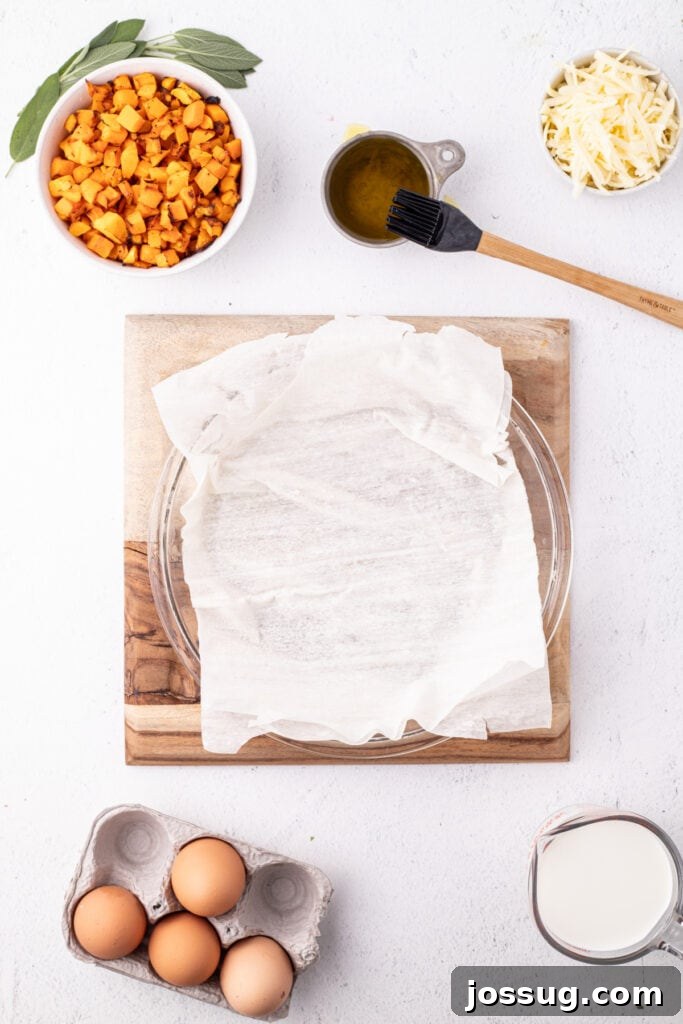
- Mastering Phyllo Dough Handling: Phyllo dough is famously delicate and dries out very quickly when exposed to air, becoming brittle and difficult to work with. To prevent this, always keep any unused sheets covered with a slightly damp (but not wet, to avoid sogginess) towel or plastic wrap while you are layering your crust. Work efficiently but gently to minimize exposure.
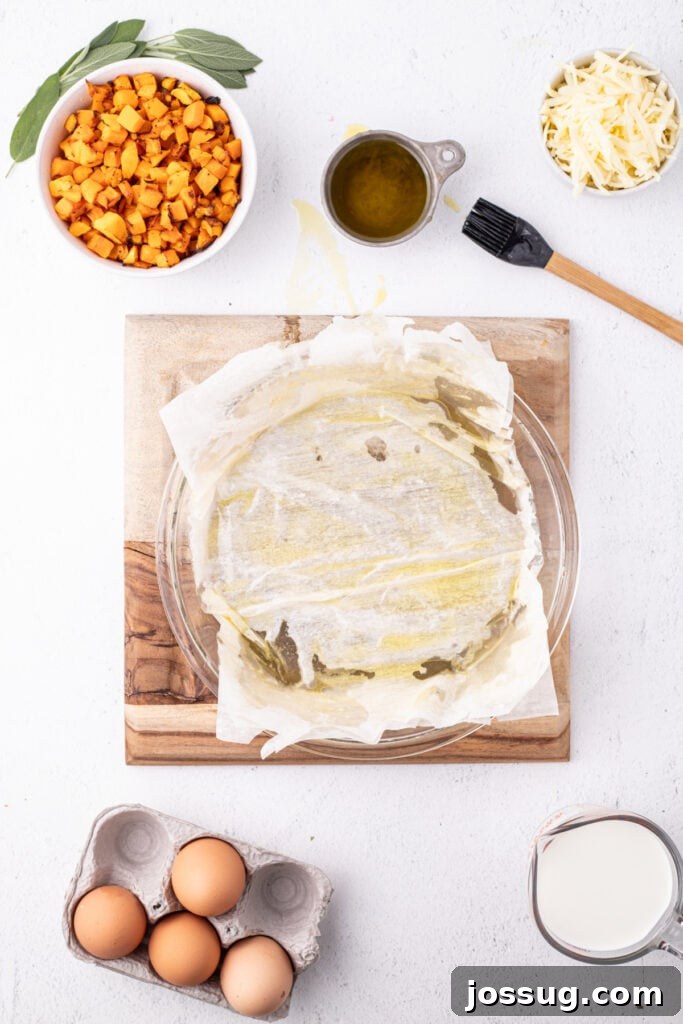
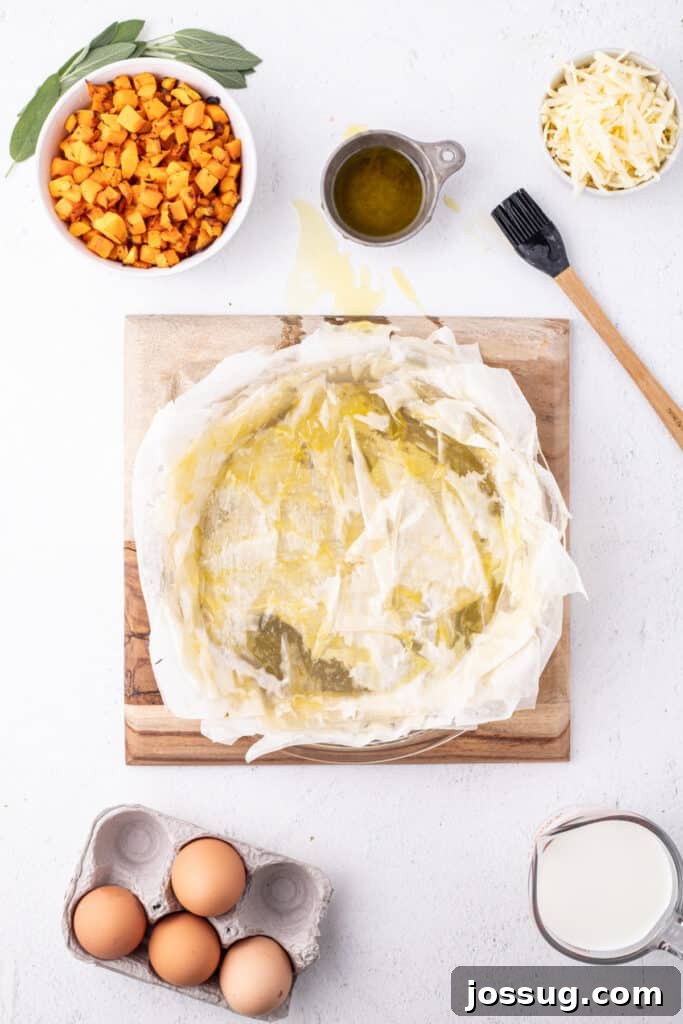
- Even Layers are Key for a Flaky Crust: When layering the phyllo sheets in your pie dish, try to distribute them evenly, gently pressing them into the corners and up the sides. Don’t worry if the sheets tear a little; the multiple layers will bake together beautifully and the imperfections will add to the rustic charm. The most critical step here is to generously brush each individual phyllo layer with olive oil (or melted butter) to achieve that incredible golden crispness and prevent a dry, cracker-like texture.
- Prevent a Soggy Bottom: While phyllo is generally less prone to sogginess than traditional pastry, ensuring your filling isn’t overly wet is still important. Thoroughly roast the squash as instructed to reduce its moisture content. You can also lightly brush the very bottom layer of phyllo in your pie dish with a thin layer of egg white to create an extra moisture barrier, though with phyllo, this is often not strictly necessary if the squash is properly roasted.
- Avoid Overfilling the Crust: When pouring in your creamy quiche filling, leave a little space (about half an inch) at the top of your phyllo crust. The custard will puff slightly as it bakes, and leaving room prevents it from overflowing and making a mess in your oven.
- The “Jiggle” Test for Doneness: To accurately determine if your quiche is perfectly cooked, gently shake the pan after the recommended baking time. The edges should appear set and lightly golden, but the very center (a small circle of about 1-2 inches) should still have a slight, custardy jiggle. It will continue to set and firm up as it cools. Alternatively, a thin knife or skewer inserted into the center should come out clean. Avoid overbaking, as this can result in a dry, rubbery texture.
- Rest for Clean Slices: This step is often overlooked but crucial for perfect presentation. Always allow the quiche to rest for at least 10-15 minutes after removing it from the oven. This allows the hot custard to fully set and cool slightly, resulting in clean, beautiful slices that hold their shape elegantly when served.
- Garnish for Visual Impact: For an especially elegant presentation, particularly if serving this Roasted Butternut Squash Quiche for a holiday brunch or dinner, garnish with a few fresh sage leaves, a sprinkle of chopped chives, or a dash of paprika just before serving. This adds a pop of color and freshness.
❓ Frequently Asked Questions About Roasted Squash Quiche
Absolutely! This Roasted Butternut Squash Quiche is an excellent choice for meal prepping. It stores wonderfully in the refrigerator for several days and reheats beautifully, making it a fantastic grab-and-go option for delicious breakfasts or satisfying lunches throughout the week. You can bake a whole quiche on Sunday and enjoy convenient, flavorful slices for up to three days.
Yes, while phyllo dough adds a unique crispy and light texture, you can certainly use other crust options. Puff pastry will give you a rich, buttery, and flaky crust, offering a different but equally delightful experience. A traditional store-bought or homemade pie crust can also be used for a more classic quiche feel. Remember to adjust baking times slightly as needed for your chosen crust type.
Yes, this quiche is perfect for making ahead, which is a huge advantage for entertaining. Bake the quiche as directed, then allow it to cool completely to room temperature. Once cooled, cover it tightly with plastic wrap or aluminum foil and refrigerate overnight. You can reheat individual slices or the whole quiche before serving, or even enjoy it chilled for a picnic or a lighter, refreshing meal.
You can use frozen butternut squash, but some extra steps are highly recommended for the best results. First, thaw the frozen squash thoroughly, ideally overnight in the refrigerator. It is then crucial to pat it very dry with paper towels to remove any excess moisture, as frozen vegetables tend to release more water during cooking. Roasting it briefly as per the recipe instructions, even if previously frozen, will help dry it out further and develop its flavor before adding it to the custard.
Yes, absolutely! To make a crustless fall quiche, simply grease your pie dish or springform pan very well, ensuring it’s thoroughly coated to prevent sticking. Then, pour the quiche filling directly into the prepared pan, skipping the phyllo dough step entirely. The baking time might be slightly shorter for a crustless version, so keep a close eye on it, ensuring the center is set and the top is golden.
A perfectly baked quiche will have edges that are set and lightly golden, while the very center will have only a slight, delicate jiggle when you gently move the pan. It will continue to firm up as it cools. If you insert a thin knife or skewer into the center (about an inch from the edge), it should come out clean. Avoid overbaking, as this can lead to a dry, rubbery, or tough texture.
Certainly! Adding meat can make this quiche even heartier and more substantial. Cooked and crumbled crispy bacon, browned breakfast sausage, finely diced ham, or savory pancetta would all be delicious additions. Make sure to cook the meat thoroughly and drain any excess fat before folding it into the quiche filling mixture to prevent the quiche from becoming greasy.
Yes, this recipe can be easily doubled to feed more people. For a larger quiche, you would typically use a 9×13 inch baking pan (or two standard 9-inch pie dishes). You’ll need to adjust the baking time slightly; a larger quiche will likely take longer to cook through, so monitor it closely until the center is set and the top is beautifully golden brown. This is a fantastic and convenient option for holiday meals or bigger family gatherings.
This quiche is an absolute holiday superstar! Its rich, festive flavors, elegant appearance, and convenient ability to be made ahead of time make it ideal for Thanksgiving brunch, Christmas morning, or any festive fall or winter gathering. It’s one of those versatile squash recipes that guests always rave about for its gourmet taste and comforting appeal.
🍽️ Explore More Delicious Recipes You’ll Love
If you’re a fan of comforting and versatile quiche recipes, or simply love incorporating seasonal ingredients into your cooking, you’ll find plenty more inspiration here. Discover other savory dishes that are perfect for any meal:
Meatless
Crustless Spinach Quiche
A light and healthy, yet incredibly flavorful quiche, perfect for those seeking a gluten-free or low-carb option without sacrificing taste.
Beef
Crustless Reuben Quiche
All the classic deli flavors of a Reuben sandwich transformed into a delicious, savory, and crustless quiche. A unique twist on a favorite!
Beef
Roast Beef Quiche
A hearty and satisfying quiche featuring tender roast beef, perfect for a robust brunch or a comforting dinner, offering a rich savory experience.
Casserole
Crustless Ham Bake
An easy and delicious crustless bake with savory ham, ideal for using up leftovers or preparing a quick, satisfying meal any day of the week.

6
servings
Roasted Butternut Squash Quiche
Jamie Sherman
15
mins
1
hr
15
mins
10
mins
1
hr
40
mins
Pin Recipe
Jump to Instructions
Equipment Needed
-
9-inch pie dish (or a springform pan for easier slicing and removal)
-
Baking sheet (for roasting the butternut squash)
-
Sharp Knife (essential for safely peeling and dicing the squash)
-
Large Mixing Bowl (for preparing the creamy quiche filling)
-
Whisk (to thoroughly combine eggs and dairy smoothly for the custard)
-
Pastry Brush (crucial for evenly coating each delicate phyllo layer with olive oil)
Ingredients
- 2 cups butternut squash, peeled and cut into uniform bite-sized pieces
- 1 tablespoon olive oil (for roasting the squash)
- Salt and freshly ground black pepper, to taste
- 8 sheets phyllo dough, thawed according to package directions
- ¼ cup olive oil (for brushing phyllo layers)
- 4 large eggs, lightly beaten
- 1 cup half and half (or whole milk for a lighter option, or light cream for richer)
- ½ cup Gruyère cheese, shredded (freshly grated is highly recommended for best flavor and melt)
- 1 tablespoon fresh sage, thinly sliced (or fresh thyme/rosemary as alternatives)
Instructions
-
Preheat your oven to 350°F (175°C). Prepare a baking sheet by lining it with parchment paper or lightly coating it with cooking spray to prevent sticking.
-
In a medium bowl, combine the peeled and bite-sized butternut squash pieces with 1 tablespoon of olive oil. Season generously with salt and freshly ground black pepper, tossing to ensure the squash is evenly coated. Spread the seasoned squash in a single layer on the prepared baking sheet. Roast for 30-40 minutes, or until the squash is tender, easily pierced with a fork, and slightly caramelized at the edges. Once roasted, remove from the oven and set the squash aside to cool slightly.
-
Increase the oven temperature to 375°F (190°C). Lightly grease a 9-inch pie dish or springform pan; a springform pan is particularly helpful for easy removal and neat slices.
-
Carefully unroll the thawed phyllo dough. It’s crucial to keep any unused sheets covered with a slightly damp towel or plastic wrap to prevent them from drying out and becoming brittle. Place one sheet of phyllo pastry into the greased pie dish, allowing the ends to hang over the sides of the dish. Lightly brush the entire surface of this phyllo sheet with a portion of the ¼ cup of olive oil. Repeat this process with the remaining 7 sheets of phyllo dough, layering them in the dish and brushing each layer thoroughly with oil. Don’t worry if the edges aren’t perfectly aligned; the layers will bake together beautifully, forming a rustic, flaky crust.
-
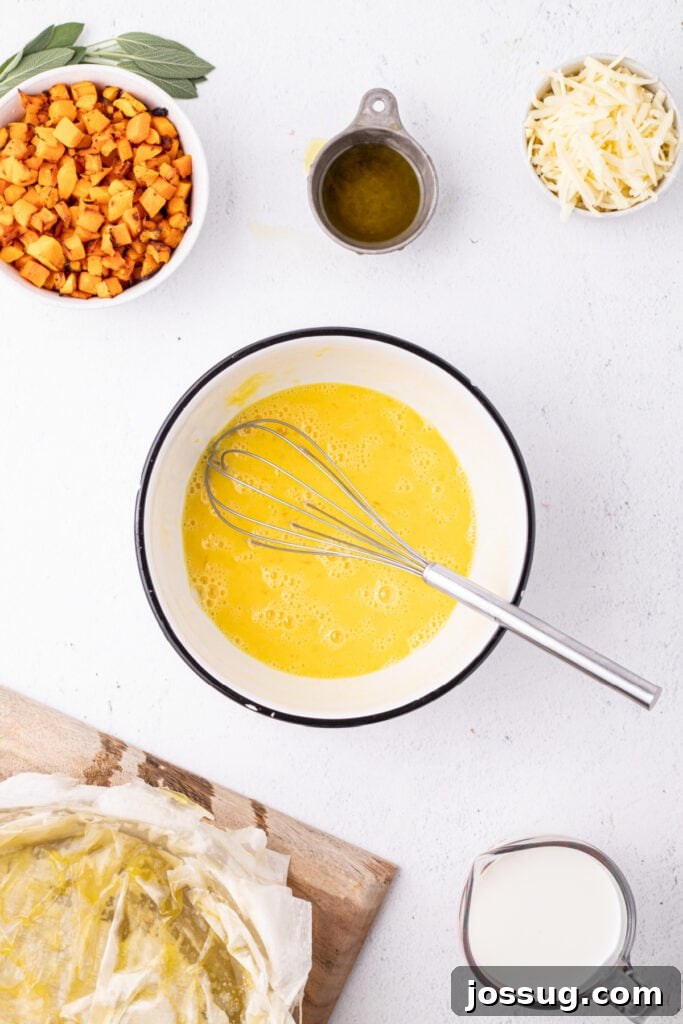
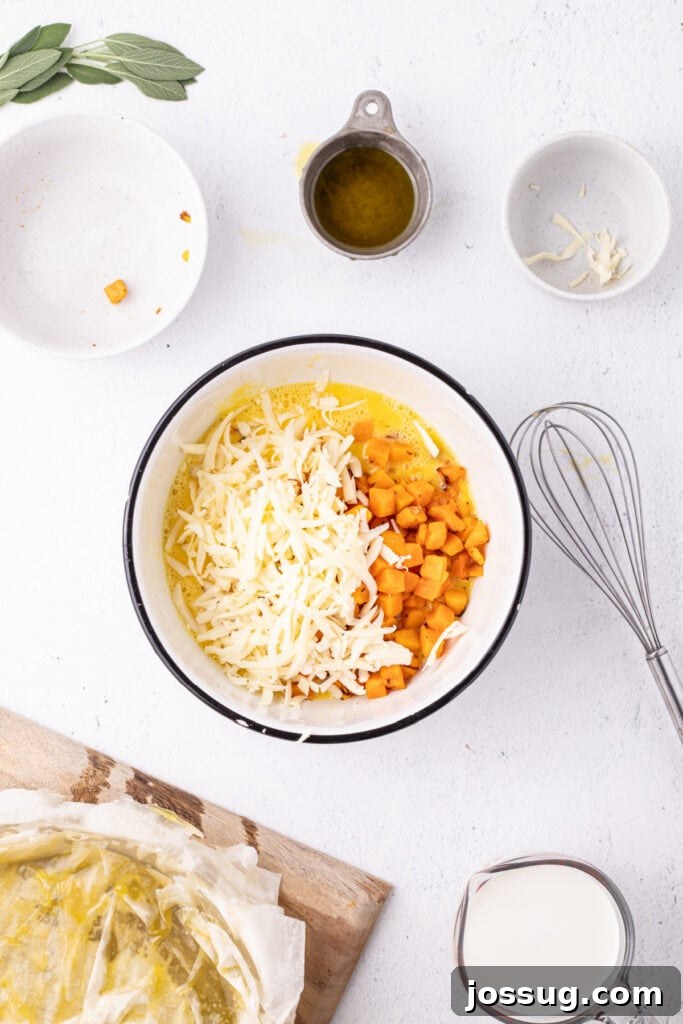
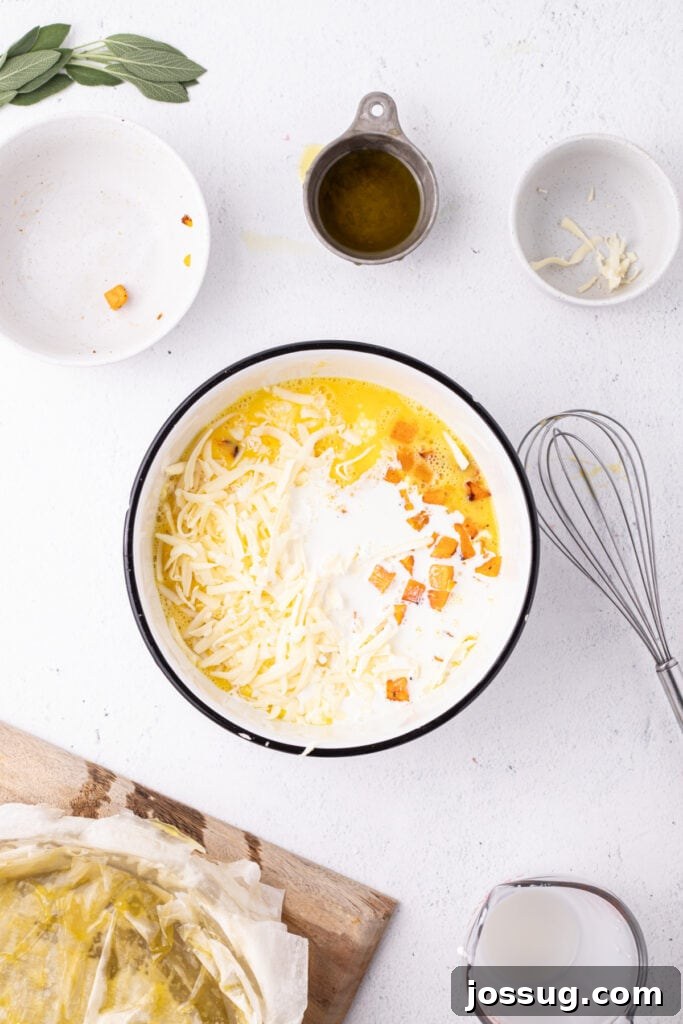
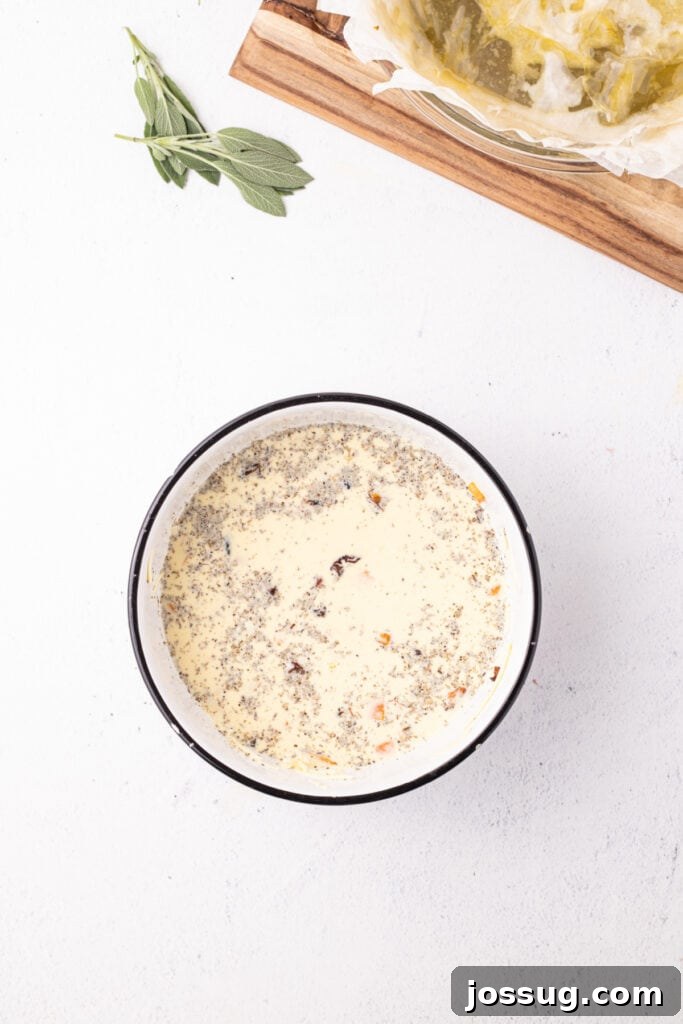
In a large mixing bowl, combine the cooled roasted butternut squash, lightly beaten eggs, half and half, shredded Gruyère cheese, and thinly sliced fresh sage. Stir gently with a whisk or spatula until all ingredients are well combined and evenly distributed. Taste the mixture and adjust seasoning with additional salt and pepper if needed, based on your preference.
-
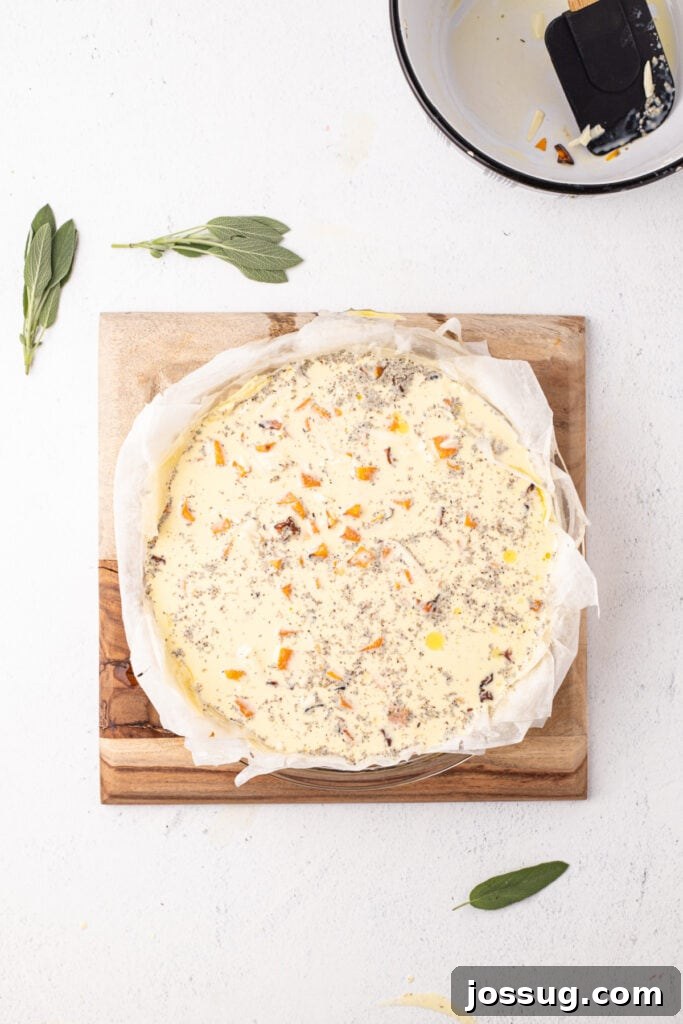
Carefully pour the prepared quiche filling mixture into the phyllo-lined crust in the pie dish. Gently smooth the top with a spatula to ensure an even surface.
-
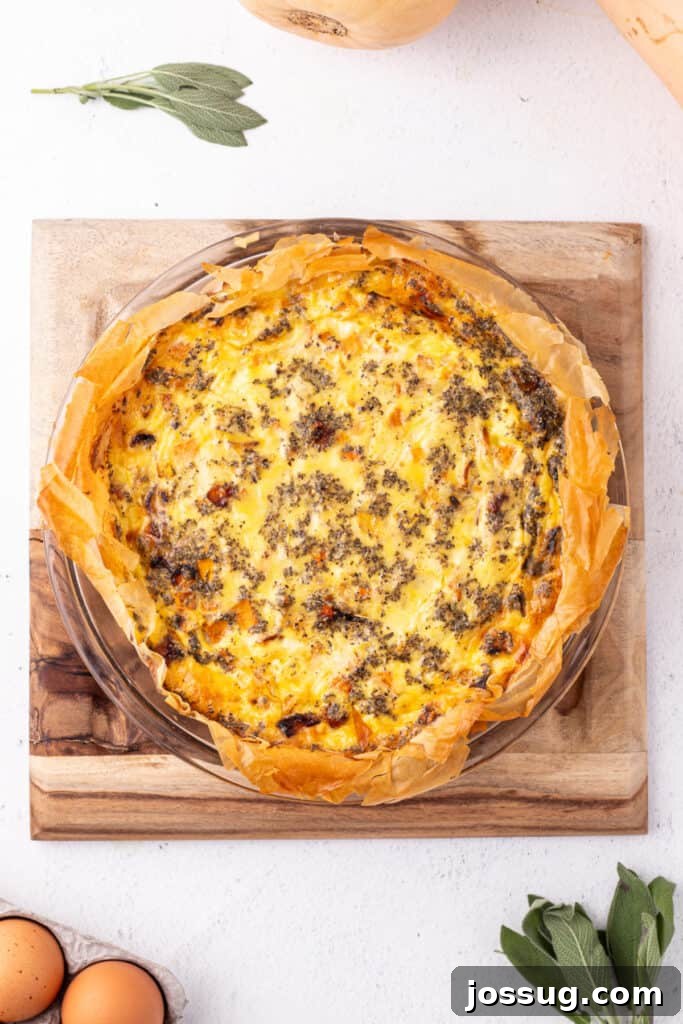
Bake for 35-45 minutes at 375°F (190°C), or until the quiche is beautifully golden brown on top and the center is set with only a slight, custardy jiggle. If you notice the phyllo crust browning too quickly during baking, you can loosely tent the edges or the entire quiche with aluminum foil to prevent over-browning.
-
Once baked to perfection, carefully remove the quiche from the oven and let it rest on a wire rack for at least 10-15 minutes before slicing and serving. This resting period is crucial for allowing the custard to fully set and firm up, ensuring clean, beautiful, and intact slices when you cut into it.
Recipe Notes for Success
🥡 Storage Instructions
- To maintain optimal freshness and flavor, store any leftover Roasted Butternut Squash Quiche tightly covered with plastic wrap or aluminum foil in the refrigerator for up to 3 days. Ensure the quiche has cooled completely to room temperature before placing it in the fridge to prevent condensation.
♨️ Reheating Options
- Oven: For the best results, reheat individual slices or the entire quiche in a preheated oven at 350°F (175°C) for 10-15 minutes, or until warmed through. This method helps the phyllo crust regain some of its delightful crispness.
- Microwave: For a quick and convenient reheat, individual slices can be microwaved for 1-2 minutes, or until hot. Be aware that the phyllo crust may soften and lose some of its crispness in the microwave.
- Air Fryer: To re-crisp the phyllo while warming, reheat slices in an air fryer at 325°F (160°C) for approximately 5-6 minutes, checking for desired warmth and crispness.
❄️ Freezing Instructions
- This quiche freezes exceptionally well! Once completely cooled after baking, wrap individual slices or the entire quiche tightly first in plastic wrap, then an additional protective layer of aluminum foil. Freeze for up to 2 months. To reheat, thaw overnight in the refrigerator, then warm in the oven as directed above for the best texture.
💡 Additional Tips for Best Results
- Freshly Grated Cheese is Key: Always opt for freshly grated Gruyère cheese instead of pre-shredded varieties. Pre-shredded cheeses often contain anti-caking agents that can affect how smoothly they melt and integrate into the custard, yielding a less superior flavor and a slightly grainy texture.
- Handle Phyllo Dough with Care: As mentioned throughout, phyllo dough is delicate and prone to drying out. Work quickly when layering, and always keep unused sheets covered with a slightly damp cloth to prevent them from becoming brittle and difficult to manage. This ensures easy handling and contributes to a perfect, flaky crust.
- The Importance of Resting Time: Allowing the quiche to rest for at least 10-15 minutes after baking is a crucial step. This helps the hot custard to fully set and firm up, which prevents it from collapsing when sliced and ensures clean, picture-perfect, and intact slices.
- Don’t Skimp on the Oil for Phyllo: Brushing each phyllo layer generously with olive oil (or melted butter) is absolutely vital for achieving that desirable golden-brown, wonderfully crispy texture and rich flavor in your crust. Adequate oil creates steam between layers, leading to flakiness.
🍳 Alternate Cooking Methods
- For this particular recipe, baking in a conventional oven is the recommended and most effective method to consistently achieve the desired delicate texture for the phyllo crust and the perfectly set, creamy filling. Other methods are not recommended for a full-sized quiche.
- Individual Mini Quiches: You can easily transform this recipe into charming individual mini quiches. Simply bake the filling in muffin tins lined with phyllo dough or paper baking cups. Reduce the bake time significantly, to approximately 20-25 minutes, or until golden and set. This is a fantastic option for appetizers, individual servings, or lunchbox additions.
♻️ Enjoying Leftovers
- Leftover quiche is often just as delicious, if not more so, than when freshly baked! It makes for a fantastic quick breakfast, a satisfying light lunch, or even an evening snack.
- Serve cold for a refreshing meal, especially on warmer days, or reheat gently and pair with a simple side salad and a light vinaigrette dressing for a complete and satisfying dish.
Nutritional Information (Approximate)
Serving: 1 slice
- Calories: 344kcal
- Carbohydrates: 21g
- Protein: 11g
- Fat: 24g
- Saturated Fat: 8g
- Polyunsaturated Fat: 3g
- Monounsaturated Fat: 13g
- Trans Fat: 0.01g
- Cholesterol: 150mg
- Sodium: 275mg
- Potassium: 296mg
- Fiber: 1g
- Sugar: 3g
- Vitamin A: 5388IU
- Vitamin C: 10mg
- Calcium: 205mg
- Iron: 2mg
Please note: Nutrition information is automatically calculated and should be used as an approximation. Actual values may vary based on specific ingredients, portion sizes, and preparation methods.
Enjoyed this recipe? Share your thoughts below!
Your feedback helps us improve and inspire other home cooks. We’d love to hear from you.