
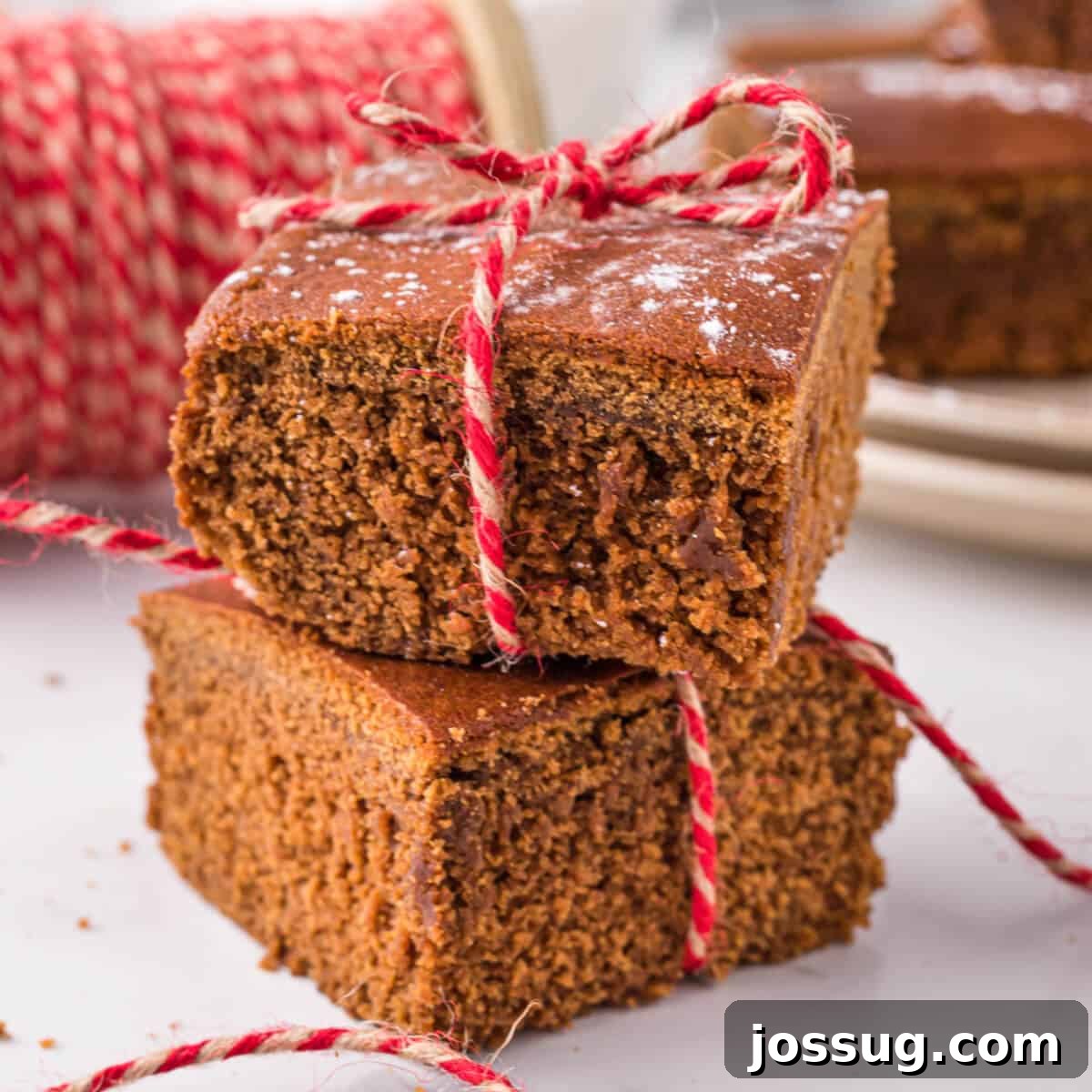
Classic Gingerbread Cake: Your Ultimate Holiday Baking Guide
The sweet and spicy aroma of freshly baked Gingerbread is more than just a scent; it’s an instant invitation to the heart of the holiday season. This classic Gingerbread Cake recipe yields a beautifully dense, incredibly moist, and perfectly spiced cake that evokes warmth, comfort, and timeless tradition. It’s the quintessential dessert for bringing festive cheer to any home, making every bite a celebration.
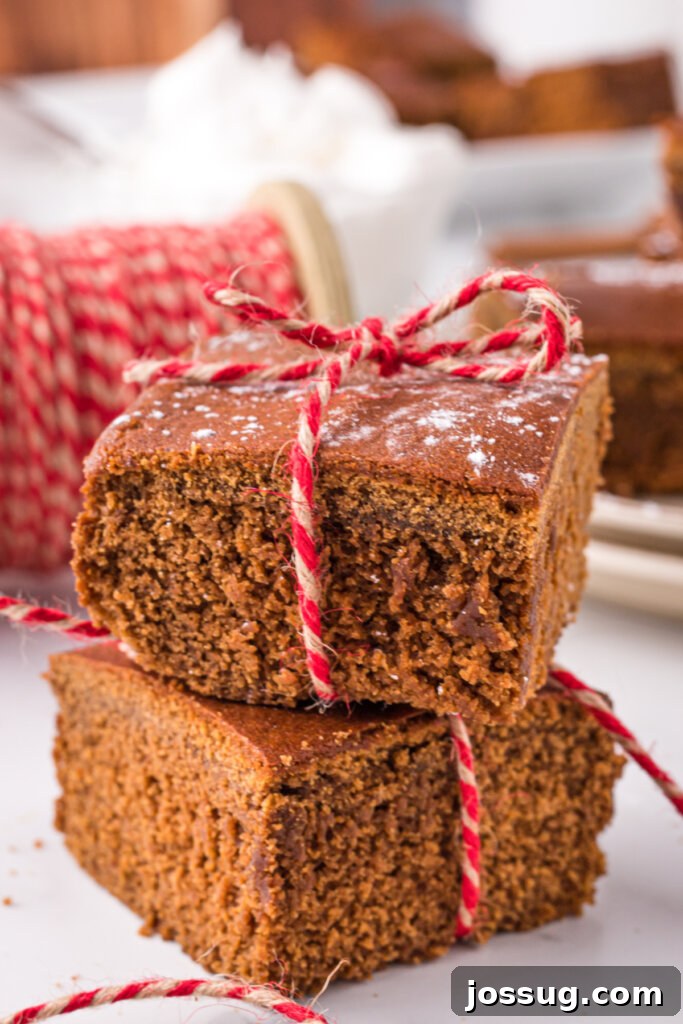
The Undeniable Magic of Gingerbread: A Holiday Staple
There’s an undeniable magic surrounding gingerbread during the holiday season. The moment those warm, aromatic spices begin to fill your kitchen, a joyful anticipation for the festive season truly begins. It’s a fragrance that instantly conjures cherished childhood memories, cozy family gatherings, and the excitement of Christmas morning.
More than just its captivating scent, gingerbread encompasses a delightful and broad category of baked goods. These treats are uniquely defined by their distinctive flavor profile, which comes from a harmonious blend of warming spices like ginger, cloves, nutmeg, and cinnamon. Sweetness is typically provided by ingredients such as honey, sugar, or, as featured in this exceptional recipe, rich molasses. Our focus is on crafting a cake that is sweet, wonderfully dense, and exquisitely moist, highlighting the deep, complex notes of molasses beautifully paired with an aromatic symphony of these classic holiday spices.
Interestingly, my own childhood memories don’t feature an abundance of gingerbread; perhaps my family leaned towards other festive desserts like our family-favorite Soft Sugar Cookies, delicate Peppermint Meringues, or the traditional Italian Anise Cookies. Regardless, as an adult, I’ve developed a profound love for this holiday cake, and sharing this cherished recipe with family and friends has become a heartwarming annual tradition, bringing smiles and warmth to every gathering.
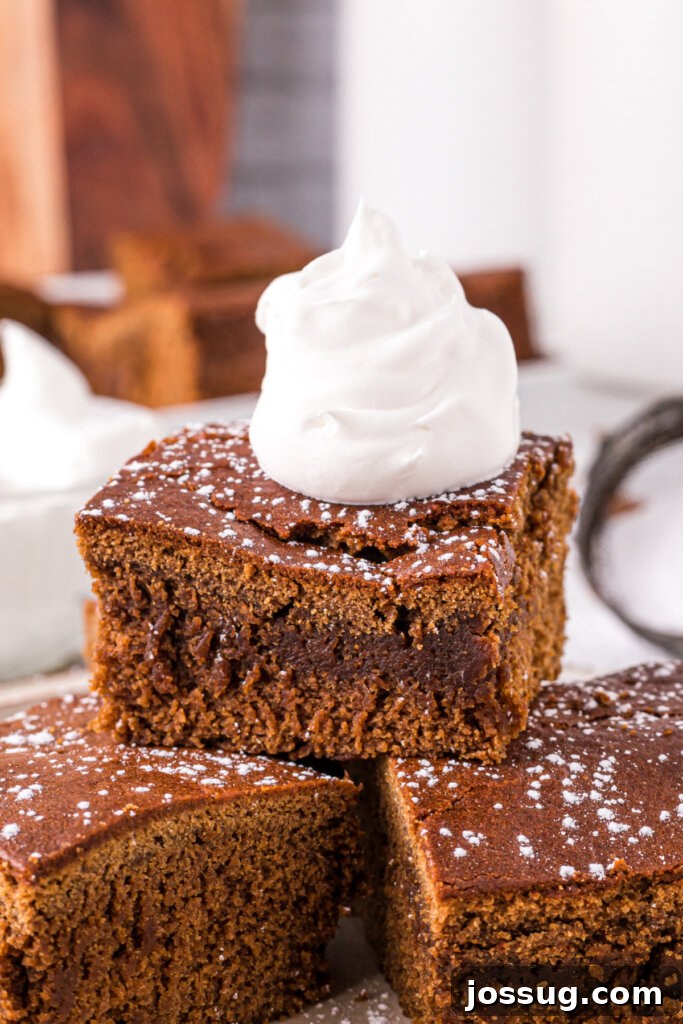
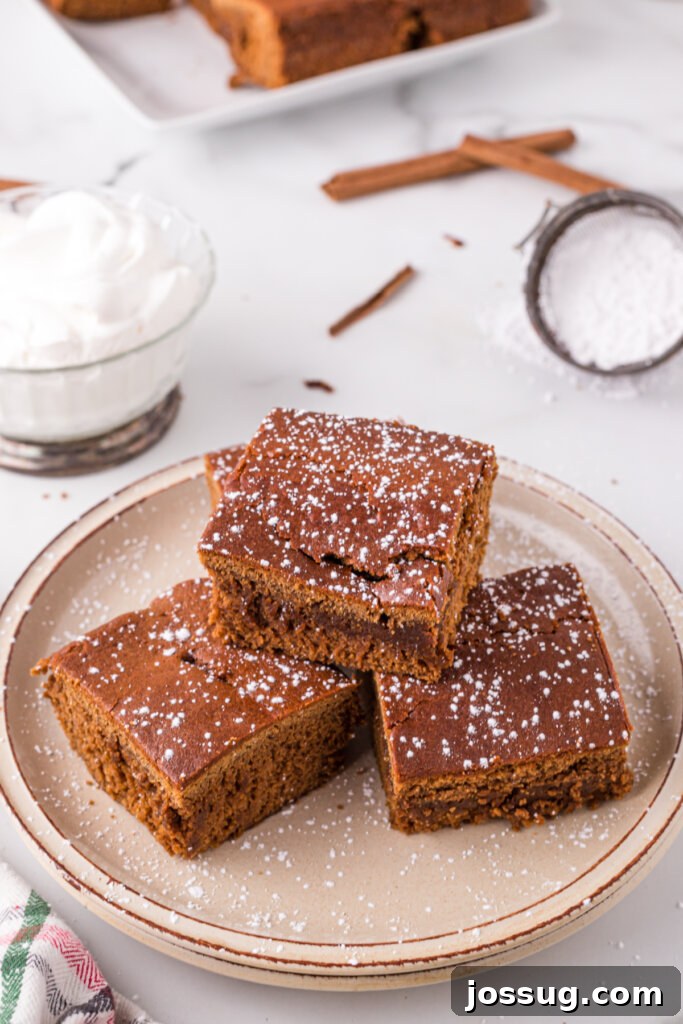
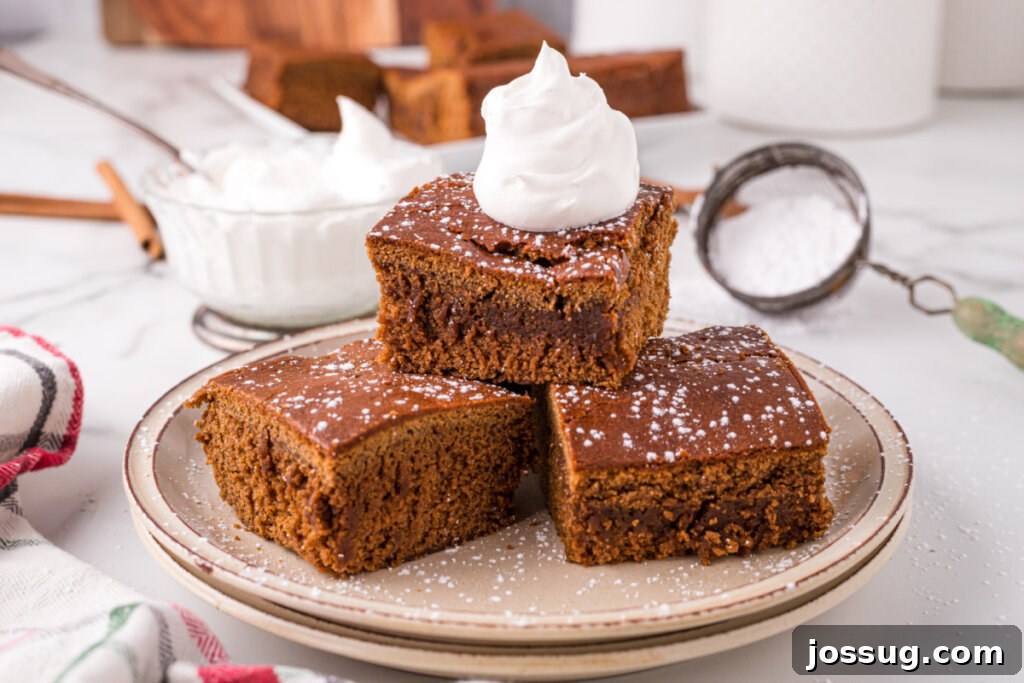
This versatile gingerbread cake is utterly divine on its own, offering a pure taste of its spicy sweetness and moist texture. However, its charm is further enhanced when paired with various delectable toppings. Imagine serving a warm slice with a generous drizzle of homemade Caramel Sauce, a bright and zesty Lemon Sauce, or a dollop of tangy Lemon Curd. For a simpler yet equally elegant presentation, a dusting of powdered sugar or a cloud of homemade sweetened whipped cream adds a delightful touch. If you’re feeling particularly indulgent, this gingerbread cake takes beautifully to a rich frosting or glaze, making it perfect for an extra-special occasion. No matter how you choose to enjoy it, this classic gingerbread cake promises a memorable and delicious culinary experience.
Crafting Your Perfect Gingerbread Cake
Baking this flavorful gingerbread cake is a rewarding experience, leading to impressive results with straightforward steps. Follow this guide to achieve a perfectly moist, dense, and aromatic holiday treat that will be the star of your festive table.
Essential Ingredients for Your Gingerbread Cake
The distinctive charm of gingerbread lies in its carefully selected, potent combination of ingredients. Each component plays a vital role in achieving the signature flavor and tender texture that makes this cake so beloved:
- All-Purpose Flour: This forms the essential structure of the cake. For an even finer, more delicate crumb, you could use cake flour, although all-purpose flour works wonderfully and is typically more accessible.
- Shortening: Crucial for imparting a tender texture and ensuring the cake remains incredibly moist. As an alternative, unsalted butter can be used, which will lend a richer, more complex flavor profile to your gingerbread.
- Granulated Sugar: Provides essential sweetness and helps in tenderizing the cake. For a deeper, more caramel-like undertone that complements the molasses beautifully, you may also consider using brown sugar.
- Molasses: This is the star sweetener and flavor enhancer, delivering gingerbread’s characteristic deep, slightly smoky, and robust flavor. For this recipe, we highly recommend using unsulphured molasses due to its sweeter and milder taste, which allows the other spices to shine without being overwhelmed. Sulphured molasses is less sweet and has a more pungent, slightly mineral flavor, while blackstrap molasses is the least sweet and most robust, often described as having an almost licorice-like or bitter taste. Choose the type that best suits your preferred flavor intensity.
- Hot Water: Serves multiple purposes: it helps to dissolve the molasses and sugar effectively, creating a smooth batter, and crucially, it activates the baking soda for optimal leavening.
- Baking Soda: A critical leavening agent. It reacts with the natural acidity of molasses to produce carbon dioxide, which in turn creates the cake’s airy yet dense crumb structure.
- Ground Ginger: The namesake spice, offering a warm, pungent, and distinctively peppery kick that is the soul of gingerbread.
- Ground Cinnamon: Adds a sweet, woody warmth that perfectly complements and balances the sharpness of the ginger, contributing to the overall festive aroma.
- Salt: A seemingly small addition with a huge impact. Salt balances the sweetness, intensifies the spice flavors, and makes every other ingredient truly sing.
- Large Egg: Acts as a binder for all the ingredients, adds richness, and significantly contributes to the cake’s overall structure and moistness.
- Optional Toppings and Sauces: To further elevate your gingerbread, consider serving it with Caramel Sauce, a bright and zesty Lemon Sauce, or a tangy Lemon Curd.
Step-by-Step Baking Instructions
Follow these detailed steps to effortlessly bring this delightful gingerbread cake to life in your kitchen, ensuring a perfect bake every time.
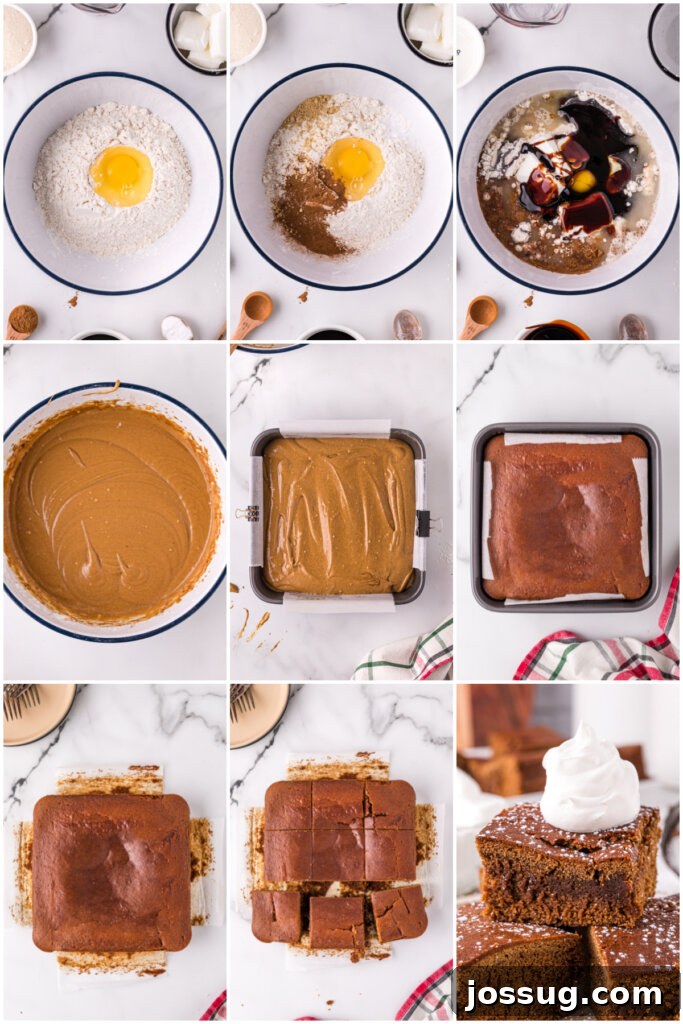
- Prepare Your Baking Pan: Begin by preheating your oven to 325°F (160°C). Prepare a 9x9x2-inch baking pan by thoroughly greasing its bottom and sides with shortening, then lightly dusting it evenly with all-purpose flour. This crucial step creates a non-stick barrier, ensuring your cake releases cleanly and beautifully once baked. Set the prepared pan aside.
- Combine and Mix the Batter: In a large mixing bowl, add all the gingerbread ingredients: the measured all-purpose flour, shortening, granulated sugar, molasses, hot water, baking soda, ground ginger, ground cinnamon, salt, and the large egg. Using an electric mixer, begin beating the mixture on low speed for approximately 30 seconds, just until the ingredients are initially combined. Stop the mixer, and with a rubber spatula, carefully scrape down any batter clinging to the sides and bottom of the bowl to ensure all ingredients are fully incorporated. Then, resume mixing on medium speed for an additional 2-3 minutes. Continue until the batter appears smooth, uniform, and well-blended. It’s important to avoid overmixing, as excessive agitation can over-develop the gluten in the flour, resulting in a tough or rubbery cake rather than a tender, moist one.
- Pour Batter and Bake: Once your batter is perfectly mixed, carefully pour it evenly into the prepared 9×9-inch baking pan. Gently spread the batter to ensure it’s level. Place the pan into your preheated oven. Bake for 50-55 minutes. To test for doneness, insert a wooden toothpick or a thin skewer into the center of the cake; it should come out clean, with no wet batter clinging to it. If it’s not quite ready, bake for a few more minutes and re-test. Remember, resist the temptation to open the oven door too frequently, especially during the first two-thirds of the baking time, as sudden temperature fluctuations can cause the cake to sink in the middle.
- Cool and Serve Your Cake: Once baked and golden, remove the pan from the oven. Allow the gingerbread cake to cool in the pan on a wire rack for at least 15-20 minutes. This vital cooling period allows the cake’s structure to firm up, making it much easier to remove without crumbling or breaking. After this initial cooling, carefully invert the cake onto the wire rack to cool completely. Your gingerbread cake is now ready to be served! It’s truly delicious on its own, but you can enhance the experience with a simple dusting of powdered sugar, a cloud of homemade whipped cream, or a luxurious drizzle of warm Caramel Sauce, a bright Lemon Sauce, or a tangy Lemon Curd.
Frequently Asked Questions About Classic Gingerbread Cake
Whether you’re a seasoned baker or new to gingerbread, you might have some questions. Here are common queries about baking, storing, and enjoying your homemade gingerbread cake, along with expert answers.
➡️ What exactly is gingerbread spice?
Gingerbread spice generally refers to a quintessential blend of warming ground spices that define its unique flavor. The core components typically include ground ginger, cinnamon, nutmeg, and cloves. Sometimes, additional spices like allspice or a hint of cardamom may be incorporated to add further depth and complexity. This aromatic combination is what gives gingerbread its signature festive and inviting taste. The baked good itself is traditionally sweetened with ingredients like honey, granulated sugar, or, most commonly, rich molasses.
➡️ What’s the best way to store gingerbread cake?
To maintain your gingerbread cake’s freshness and moistness, it’s best stored in an airtight container or tightly wrapped with plastic wrap at room temperature. Under these conditions, it will remain delicious for up to 3-5 days. For a longer shelf life, particularly if you live in a warmer climate or prefer it chilled, you can refrigerate the cake for up to 7-10 days. Always ensure it’s well-sealed to prevent it from drying out and absorbing other refrigerator odors.
➡️ Can I freeze gingerbread cake?
Yes, absolutely! Gingerbread cake freezes exceptionally well, making it perfect for preparing ahead or saving leftovers. Once the cake has completely cooled to room temperature, wrap it tightly first in a layer of plastic wrap, then follow with an additional layer of heavy-duty aluminum foil. This double-layer protection is crucial for preventing freezer burn and maintaining moisture. You can freeze the entire cake or individual slices for up to two months. To enjoy later, simply transfer the wrapped cake to your kitchen counter and allow it to thaw gradually at room temperature for several hours or overnight.
➡️ How do you reheat gingerbread cake?
Many people find a warm slice of gingerbread cake to be incredibly comforting, especially during cooler seasons. To reheat an individual slice, simply place it in the microwave for about 15-20 seconds. Be mindful not to overheat, as this can cause the cake to become dry. For larger pieces or a whole cake (uncovered), you can gently warm it in a low oven, around 250°F (120°C), for 10-15 minutes, or until it’s just warmed through to your liking.
➡️ Why did my cake fall or sink in the middle?
A sunken cake center is a common baking frustration, often stemming from one of two primary issues:
- Opening the Oven Door Too Soon: Cakes require a consistent and stable temperature to properly set their internal structure as they bake. Frequently opening the oven door, particularly during the first two-thirds of the baking time, allows too much heat to escape. This sudden drop in temperature can cause the delicate, rising internal structure of the cake to collapse. It’s crucial to resist the temptation to peek until much closer to the estimated baking time.
- Batter Sitting Too Long Before Baking: Once your batter is fully mixed and ready, it’s essential to get it into the preheated oven promptly. Leavening agents, such as baking soda, begin to react as soon as they come into contact with wet ingredients. If the batter sits for an extended period before baking, these active agents can lose much of their potency, resulting in a cake that doesn’t rise properly and may ultimately fall in the center.
Ensuring your oven temperature is accurate (consider using an oven thermometer) and meticulously following the recipe’s mixing and baking times can significantly help in preventing these common issues.
Expert Baking Tips for Gingerbread Success
Achieving the perfect, tender, and flavorful gingerbread cake is simple with a few expert insights. Keep these practical tips in mind for consistently delicious results and a truly memorable holiday treat:
- Do Not Overmix the Batter: This is a crucial rule for many cakes, including gingerbread. Once the wet and dry ingredients are combined, mix only until the batter is just smooth and no streaks of flour remain. Overmixing develops the gluten in the flour excessively, which can lead to a tough, rubbery cake rather than the desired tender, moist crumb.
- Mind Your Molasses Choice: The type of molasses you choose will have a profound and significant impact on the final flavor and sweetness of your gingerbread cake.
- Unsulphured Molasses: This is generally the preferred choice for most baking recipes, including this gingerbread cake. It is the sweetest and boasts the mildest flavor, offering a clean, rich sweetness that enhances rather than overwhelms the delicate spices.
- Sulphured Molasses: This variety is less sweet and possesses a more pronounced, somewhat mineral, and pungent molasses taste. While it can be used if you prefer a bolder, more robust flavor, be aware that its intensity might dominate other subtle spice notes.
- Blackstrap Molasses: This is the least sweet and the most robust in flavor among all molasses types. It is often described as having an almost licorice-like or slightly bitter taste. While it’s packed with nutrients, its very strong flavor profile can be quite overwhelming for some palates in a cake recipe.
For a beautifully balanced and crowd-pleasing gingerbread cake, unsulphured molasses is highly recommended.
- Accurate Ingredient Measurements are Key: Baking is a precise science where accuracy truly matters. Ensure all your ingredients, especially flour and leavening agents like baking soda, are measured precisely. For flour, using a kitchen scale is ideal for consistency. If not available, use the ‘spoon and level’ method: lightly spoon flour into your measuring cup until it overflows, then level it off with a straight edge without packing it down.
- Use Room Temperature Ingredients: Whenever a recipe calls for eggs (and butter, if you’re substituting), ensure they are at room temperature. Room temperature ingredients emulsify much better with other components, leading to a smoother, more homogenous batter. This results in a cake with a finer, more consistent texture and a better rise.
- Don’t Rush the Cooling Process: Allowing the gingerbread cake to cool sufficiently in its pan before attempting to invert or slice it is vital. Patience at this stage prevents the cake from crumbling, ensures its structural integrity, and results in a beautiful presentation. Allow it to set and firm up properly.
Explore More Festive & Flavorful Recipes
If you’ve thoroughly enjoyed baking and savoring this classic gingerbread cake, we invite you to explore these other delightful and heartwarming recipes. Each one is designed to bring unique warmth, flavor, and cheer to your kitchen and special occasions:
- Chocolate Gingerbread Man Cookies: A creative and delicious twist on the traditional gingerbread cookie, perfect for holiday cookie exchanges and decorating fun!
- Gingerbread Pecan Snowballs: Delicate, buttery, and melt-in-your-mouth cookies infused with just the right hint of gingerbread spice and crunchy pecans.
- Homemade Pizza Sauce: Elevate your homemade pizza nights with this fresh and flavorful sauce, a staple for any kitchen.
- Homemade BBQ Sauce: Take your grilling and slow-cooked meats to the next level with this rich, tangy, and subtly sweet homemade barbecue sauce.
- Cranberry Sauce: A vibrant, tart, and sweet staple that brightens any holiday meal or can be enjoyed year-round.
Recipe Card: Classic Gingerbread Cake
Gingerbread Cake
By Jamie Sherman
The sweet and spicy aroma of freshly baked Gingerbread will make your home smell like Christmas! This dense moist cake is a timeless classic!
Prep Time: 10 mins
Cook Time: 55 mins
Total Time: 1 hr 5 mins
Yield: 9 servings
Rate Recipe
Print Recipe
Equipment
- Rubber spatula or wooden spoon
- Measuring cups and spoons
- 9×9-inch square baking pan
- Stand mixer (or hand mixer)
Ingredients
For the pan:
- Shortening for greasing pan
- Flour for dusting pan
For the Gingerbread Cake:
- 2 ⅓ cups all-purpose flour
- ½ cup shortening
- ⅓ cup granulated sugar
- 1 cup unsulphured molasses
- ¾ cup hot water
- 1 teaspoon baking soda
- 1 teaspoon ground ginger
- 1 teaspoon ground cinnamon
- ¾ teaspoon salt
- 1 large egg
For serving (optional):
- Caramel Sauce
- Lemon Sauce
- Lemon Curd
- Powdered sugar or homemade sweetened whipped cream
Instructions
- Prepare Pan: Preheat oven to 325°F (160°C). Grease and flour the bottom and sides of a 9x9x2-inch baking pan. Set aside.
- Combine Ingredients: In a large mixing bowl, beat together all the gingerbread ingredients (flour, shortening, sugar, molasses, hot water, baking soda, ginger, cinnamon, salt, egg) with an electric mixer on low speed for 30 seconds.
- Mix Thoroughly: Stop the mixer and scrape down the sides of the bowl with a spatula. Continue to mix on medium speed for 2-3 minutes until the batter is smooth and well-combined. Avoid overmixing.
- Bake: Pour the batter into the prepared pan. Bake for 50-55 minutes, or until a toothpick inserted near the center comes out clean.
- Cool & Serve: Allow the cake to cool in the pan on a wire rack for 15-20 minutes before inverting to cool completely. Serve warm or at room temperature, optionally with Caramel Sauce, Lemon Sauce, or Lemon Curd, a dusting of powdered sugar, or whipped cream.
Notes
- Be careful not to overmix the batter to ensure a tender cake.
- The choice of molasses significantly affects flavor. Unsulphured molasses provides the sweetest and mildest taste, sulphured is more pungent, and blackstrap is least sweet with a strong, almost licorice flavor. For this recipe, unsulphured is recommended for a balanced taste.
- Consider using room temperature ingredients for a smoother batter and better rise.
- For an extra layer of flavor and moisture, you can brush the warm cake with a simple syrup or a spiced rum glaze after it comes out of the oven.
Nutrition Information
(Approximate values per serving)
- Serving Size: 1 square
- Calories: 365 kcal
- Carbohydrates: 60 g
- Protein: 4 g
- Fat: 12 g
- Saturated Fat: 3 g
- Polyunsaturated Fat: 3 g
- Monounsaturated Fat: 5 g
- Trans Fat: 2 g
- Cholesterol: 21 mg
- Sodium: 338 mg
- Potassium: 593 mg
- Fiber: 1 g
- Sugar: 35 g
- Vitamin A: 31 IU
- Vitamin C: 0.01 mg
- Calcium: 88 mg
- Iron: 3 mg
Nutrition information is automatically calculated and should be used as an approximation. Individual results may vary based on specific ingredients and preparation methods.
Did you love baking and tasting this Classic Gingerbread Cake? We would be absolutely thrilled to hear your thoughts and experiences! Please take a moment to leave a comment below and share your feedback, or tell us about your own cherished holiday baking traditions.
This recipe was originally published on December 23, 2012. It underwent significant updates on December 15, 2019, and was further refined on November 11, 2021, with enhanced details and expert tips to ensure your perfect bake.