
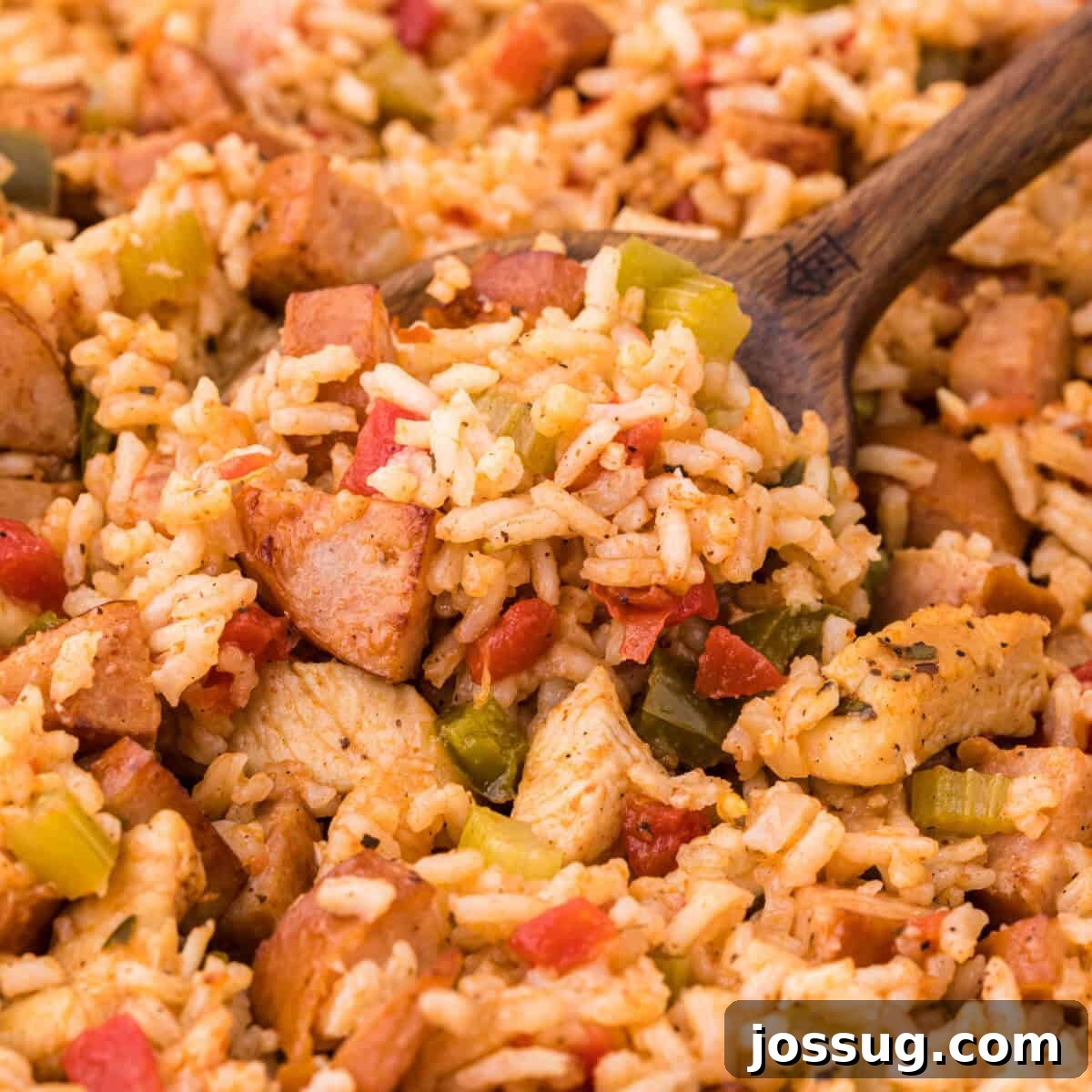
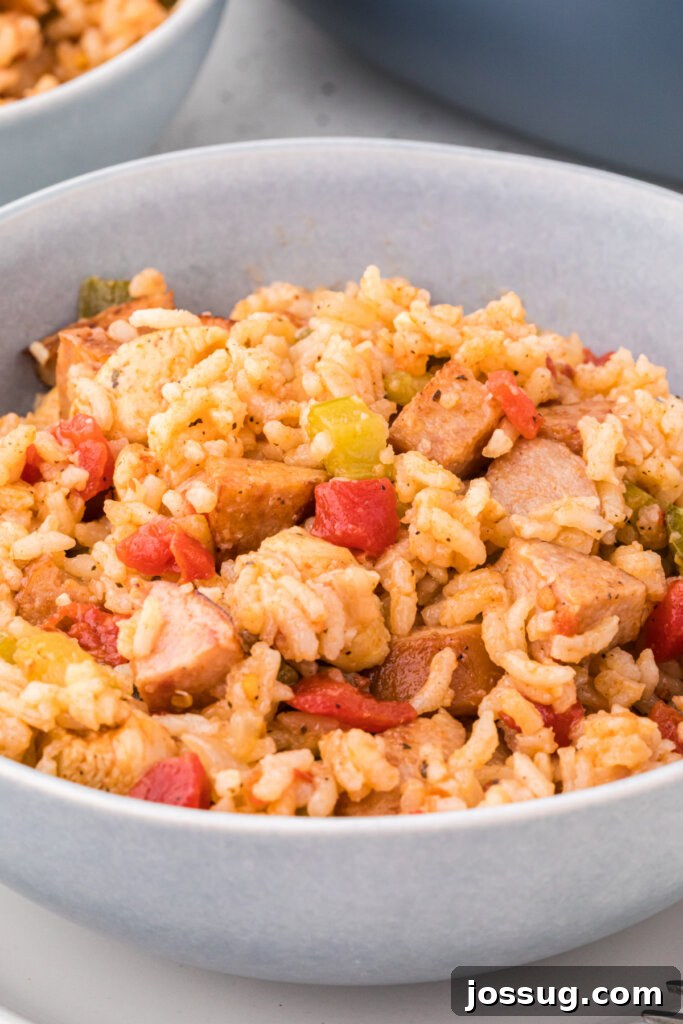
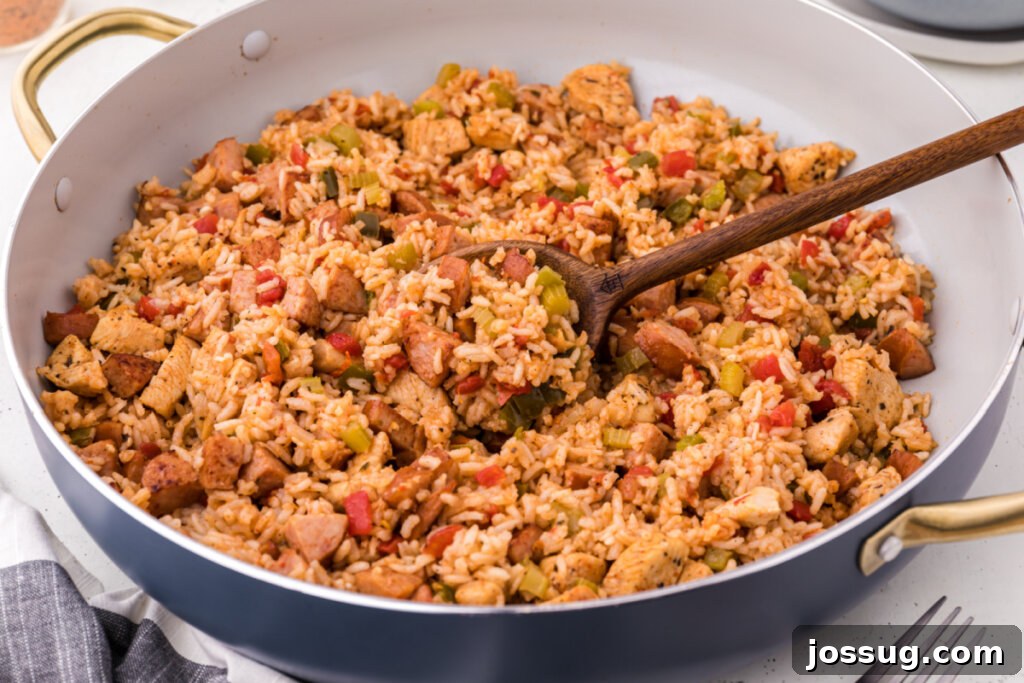
Embark on a culinary journey to the heart of Louisiana with this incredible one-pan Jambalaya! This classic dish brings together perfectly seasoned rice, savory sausage, tender chicken, and the aromatic “Cajun Holy Trinity” for a deeply satisfying and flavor-packed dinner experience. Simple to prepare yet bursting with authentic Creole and Cajun influences, this recipe promises to be a comforting and delicious staple in your kitchen.
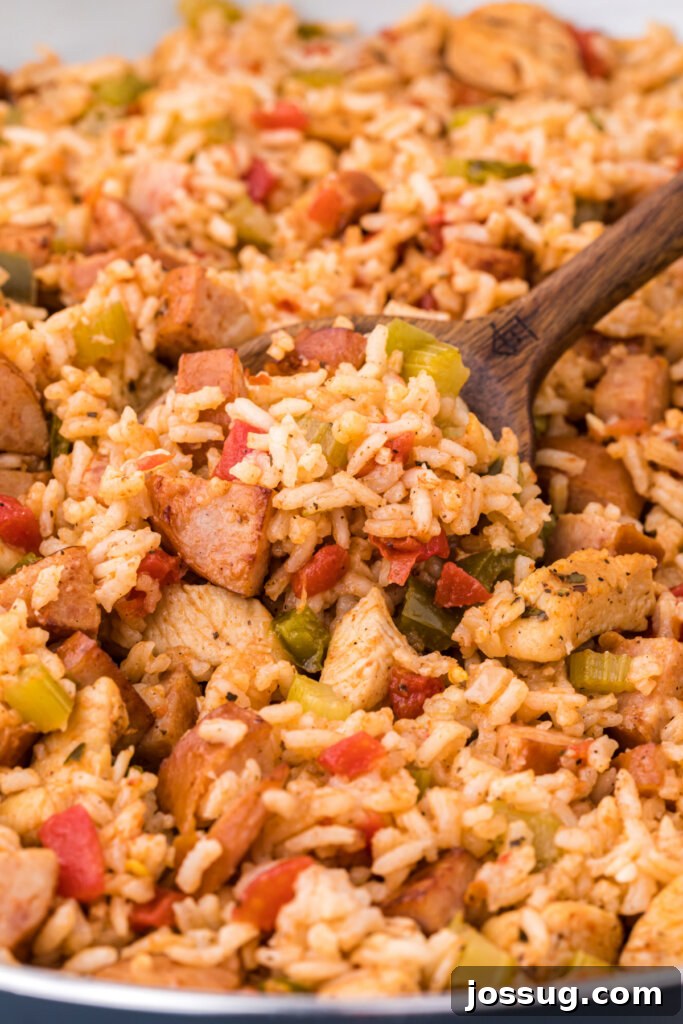
Authentic One-Pan Jambalaya: A Taste of Louisiana’s Soul Food
Experience the Heart of Louisiana Cuisine
There’s something uniquely comforting about a warm, spicy meal, especially when the weather turns cold and rainy. For many, that craving leads straight to a hearty bowl of chili, but for those in the know, it often points to the vibrant, complex flavors of an authentic Jambalaya. This iconic dish isn’t just food; it’s a celebration of Louisiana’s rich cultural tapestry, a comforting embrace that warms you from the inside out.
Jambalaya is a beloved staple of both Creole and Cajun cuisines, originating from the southern United States, specifically the vibrant state of Louisiana. Often served as a main dish, it’s a highlight during festive occasions like Mardi Gras, family gatherings, or simply any evening when you desire a meal that’s both substantial and bursting with character. Its beauty lies in its simplicity as a one-pot wonder, combining rice, an array of vegetables, and a medley of proteins into a harmonious whole.
The Rich History of Jambalaya
The story of Jambalaya is as rich and flavorful as the dish itself. It’s widely believed to have evolved from Spanish paella, introduced to Louisiana by Spanish settlers who adapted their traditional saffron-infused rice dish using locally available ingredients. Over time, it absorbed influences from French, African, and Caribbean culinary traditions, giving birth to the unique Creole and Cajun variations we know today.
While both Creole and Cajun Jambalaya share common ground in their use of rice, meat, and the “Holy Trinity” of vegetables, they have distinct characteristics. Creole Jambalaya, often referred to as “red Jambalaya,” typically includes tomatoes, which give it a reddish hue and a slightly sweeter, more acidic flavor profile. Cajun Jambalaya, on the other hand, often omits tomatoes, relying instead on a deeper browning of meats and sometimes a roux to create its characteristic darker color and more robust, earthy flavor. This recipe, with its inclusion of diced tomatoes, leans towards the Creole style, offering a bright and savory balance.
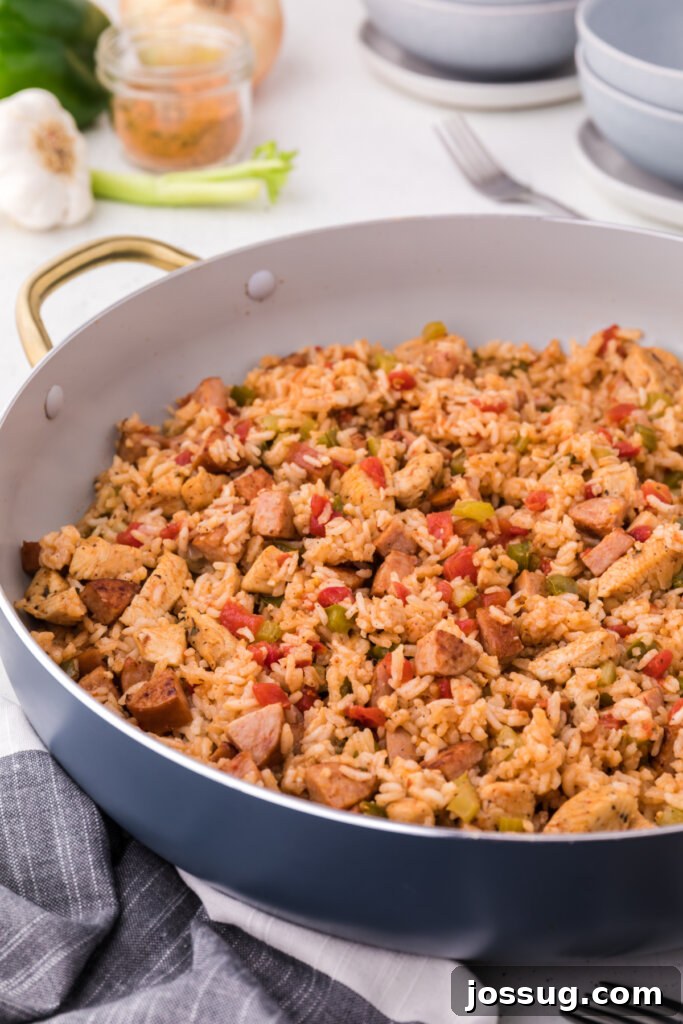
Mastering Your One-Pan Jambalaya: Ingredients & Essential Substitutions
Creating an authentic and delicious Jambalaya doesn’t have to be complicated. This one-pan recipe simplifies the process without sacrificing any of the deep, complex flavors that make this dish so iconic. The key lies in selecting the right ingredients and understanding how they contribute to the overall taste and texture.
The Cornerstone: Proteins
- Smoked Sausage: A non-negotiable component for true Jambalaya flavor. Andouille sausage is the traditional choice, known for its spicy, smoky profile, but any good quality smoked sausage (pork, turkey, or even a spicy chicken sausage) will work beautifully. Ensure it’s sliced into bite-sized pieces for even cooking and distribution throughout the dish.
- Chicken Breasts: Boneless and skinless chicken breasts, cut into 1-inch cubes, provide tender, lean protein that readily absorbs the rich flavors of the dish. For an even richer, more succulent result, boneless, skinless chicken thighs can be used.
- Optional Additions & Substitutions: Jambalaya is incredibly versatile. Feel free to substitute an equal amount of seafood like plump shrimp or succulent crawfish in place of, or in addition to, the chicken. Diced ham or other cooked pork can also be added for extra depth. If using delicate seafood, add it towards the end of the cooking process to prevent overcooking and rubbery textures.
The Flavor Foundation: The Cajun Holy Trinity & Aromatics
No Louisiana dish would be complete without the “Holy Trinity” – a vibrant trio of onion, bell pepper, and celery. These three vegetables are the aromatic heart of Creole and Cajun cooking, providing an unparalleled depth of flavor to any dish they grace.
- Onion, Bell Pepper, Celery: These are the pillars of Jambalaya. A medium yellow onion, a small green bell pepper (for that classic Louisiana taste, though red or yellow can add sweetness), and 2-3 stalks of celery, all finely chopped, form the essential aromatic base.
- Garlic: Four cloves of minced fresh garlic are crucial for enhancing the savory profile and adding a pungent warmth.
- Petite-Diced Tomatoes: A 14.5 oz can of petite-diced tomatoes, undrained, contributes moisture, a touch of acidity, and defines this as a Creole-style Jambalaya. They also add a lovely color and texture.
The Spice Symphony: Seasonings & Liquids
- Cajun Seasoning: This is the soul of your Jambalaya! A robust blend typically includes paprika, cayenne pepper, garlic powder, onion powder, oregano, thyme, and black pepper. You can find excellent store-bought blends, or if you prefer, make your own homemade version for a truly custom flavor.
- Worcestershire Sauce: Just a couple of teaspoons add a subtle yet significant layer of umami, deepening the overall savory notes of the dish.
- Salt & Black Pepper: Essential for seasoning and balancing all the robust flavors. Adjust to your personal preference.
- Crushed Red Pepper Flakes & Tabasco Sauce: For that signature Louisiana kick! These allow you to control the heat level to your liking. Don’t shy away if you love a spicy dish; feel free to add a little extra.
- Long-Grain White Rice: The traditional and ideal choice for Jambalaya. Its firm texture holds up well during cooking, absorbing all the liquid and flavors while remaining distinct. Jasmine or Basmati rice can also be used, but avoid sticky rice varieties that can make the dish gummy.
- Chicken Broth: The primary liquid component that cooks the rice and expertly binds all the wonderful flavors together, creating a rich and cohesive dish. Low sodium chicken broth allows for better control over the final saltiness.
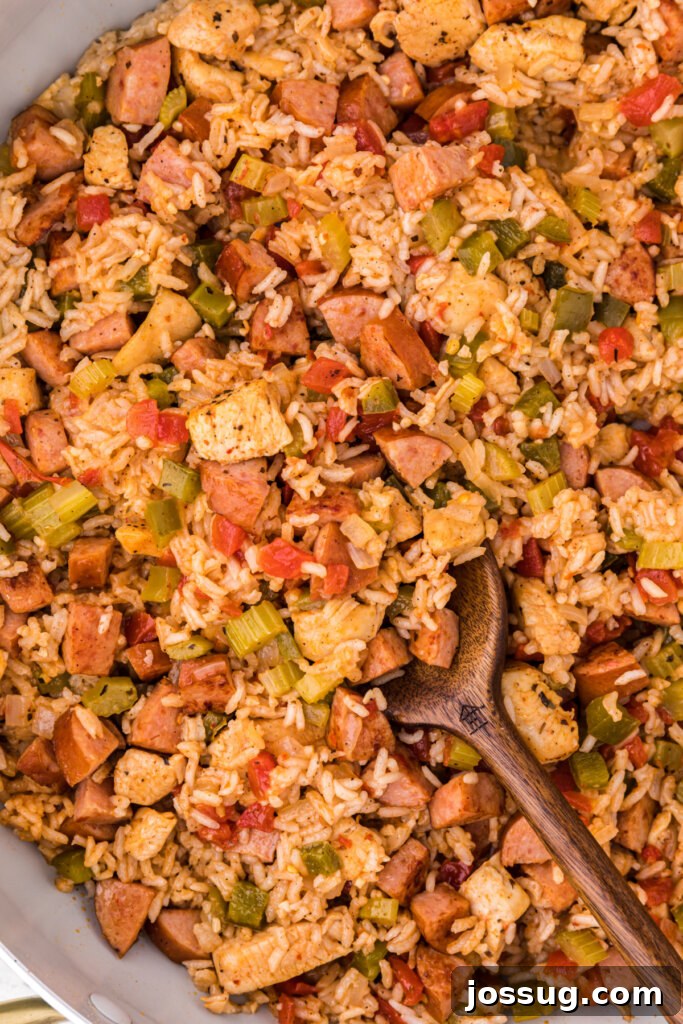
Crafting Your Perfect One-Pan Jambalaya: Step-by-Step Guide
Follow these clear steps to create a delicious and authentic Jambalaya in a single pan, minimizing cleanup and maximizing flavor!
- Sear the Sausage: Heat 2 tablespoons of vegetable oil in a large, deep skillet or Dutch oven over medium-high heat. Add the chopped smoked sausage and sprinkle it with half of the Cajun seasoning. Cook the sausage, stirring occasionally, until it’s beautifully browned and has rendered some of its fat, creating a flavorful base (known as “fond”) in the pan. Using a slotted spoon, remove the sausage and set it aside, leaving the rendered fat in the pan.
- Brown the Chicken: Add the 1-inch cubed chicken breasts to the same pan with the rendered sausage fat. Sprinkle the remaining Cajun seasoning over the chicken. Cook, stirring occasionally, until the chicken is lightly browned on all sides. It doesn’t need to be cooked through at this stage, as it will finish cooking with the rice. Remove the chicken with a slotted spoon and add it to the plate with the sausage.
- Sauté the Holy Trinity & Aromatics: Into the flavorful pan drippings, add the chopped onion, green bell pepper, and celery (the “Holy Trinity”). Sauté for 3-5 minutes, stirring occasionally, until the vegetables begin to soften and become translucent. Make sure to scrape up any browned bits from the bottom of the pan, as these contribute immense flavor.
- Infuse the Flavors: Stir in the minced garlic and diced tomatoes. Cook for another minute, allowing the garlic to become fragrant. Then, add the Worcestershire sauce, salt, black pepper, crushed red pepper flakes, and Tabasco sauce. Stir everything thoroughly to combine, letting the spices bloom in the heat and meld with the vegetables.
- Combine & Simmer: Return the cooked sausage and browned chicken to the pan. Add the uncooked long-grain white rice and pour in the chicken broth. Stir everything gently, just enough to ensure the rice is submerged and evenly distributed throughout the mixture. Bring the entire contents of the pan to a rolling boil over medium-high heat.
- Cook the Rice to Perfection: Once boiling vigorously, immediately reduce the heat to low, cover the skillet tightly with a lid, and let it simmer undisturbed for 20-25 minutes. It is crucial to resist the urge to lift the lid or stir the contents during this phase, as the steam is essential for cooking the rice properly and achieving a fluffy texture.
- Rest & Fluff: After the 20-25 minutes of simmering, remove the pan from the heat. Keep the lid on and allow the Jambalaya to rest for an additional 5-10 minutes. This resting period allows the rice to absorb any remaining moisture, finishes the cooking process, and results in perfectly tender, separated grains. Finally, remove the lid, fluff the rice with a fork, and serve your delicious Jambalaya hot.
Jambalaya FAQs: Your Questions Answered
Which Rice is Best for Jambalaya?
Traditionally, plain long-grain white rice is the preferred choice for Jambalaya, and for good reason! Its grains remain distinct and don’t clump together, allowing them to absorb all the rich flavors of the broth and spices beautifully. You can also achieve excellent results with jasmine or basmati rice, which are also long-grain varieties. However, it’s generally best to avoid short-grain or sticky rice varieties, as they can lead to a mushy texture that isn’t characteristic of authentic Jambalaya.
Why is My Jambalaya Rice Crunchy?
Crunchy rice in your Jambalaya is usually a sign of insufficient liquid or cooking the dish over too high a heat. To prevent this, ensure you are using the correct ratio of liquid to rice as specified in the recipe. Also, after bringing the mixture to a boil, it’s critical to reduce the heat to low, cover the pan tightly, and resist the urge to lift the lid. Lifting the lid releases essential steam needed to cook the rice evenly.
Why is My Jambalaya Rice Mushy?
Mushy rice typically occurs from two main issues: too much stirring or overcooking. Excessive stirring during the simmering phase releases starch from the rice grains, leading to a gummy, mushy texture. Once the rice and broth are added, stir gently only once, then cover the pot and leave it alone. Overcooking can also cause rice to become mushy. You want the liquid to be mostly absorbed, then remove it from the heat and let it steam, as this final step creates perfectly cooked, fluffy rice.
Can Jambalaya Be Made Ahead?
While Jambalaya is certainly delicious as leftovers, it is truly best enjoyed fresh, right after it’s made. The texture of the rice can change upon reheating, sometimes becoming drier or slightly mushier than when first prepared. If you absolutely need to make it ahead, cook it slightly under al dente, then cool quickly and store in an airtight container in the refrigerator for up to 3 days. Reheat gently on the stovetop or in the microwave with a splash of extra chicken broth or water to help rehydrate the rice.
What’s the Difference Between Cajun and Creole Jambalaya?
This is a common and important distinction! Creole Jambalaya, often associated with New Orleans, is known for its inclusion of tomatoes (earning it the nickname “red Jambalaya”) and sometimes a roux. It reflects the diverse culinary influences of the city. Cajun Jambalaya, from rural Louisiana, typically omits tomatoes and relies on the browning of meats and the “Holy Trinity” to create a richer, darker, and more robust flavor profile. This recipe, with its diced tomatoes, is a delightful example of the Creole style.
How Spicy Should Jambalaya Be?
The spice level in Jambalaya is entirely up to your preference! This recipe includes Cajun seasoning, crushed red pepper flakes, and Tabasco sauce to provide a good kick. If you prefer a milder dish, you can reduce the amount of red pepper flakes and Tabasco. For those who love heat, feel free to add a bit more cayenne pepper directly or serve with extra hot sauce on the side. Always taste and adjust as you go!
Perfect Pairings and Serving Suggestions
A hearty bowl of Jambalaya is a complete meal on its own, but there are a few traditional accompaniments that elevate the experience. Crusty French bread or homemade cornbread are perfect for soaking up any leftover flavorful juices. A simple, crisp green salad with a light vinaigrette provides a refreshing contrast to the richness of the dish.
For those who love extra heat, a bottle of your favorite hot sauce should always be on the table. A sprinkle of fresh chopped parsley or sliced green onions just before serving adds a touch of brightness and a vibrant pop of color, making your Jambalaya not only delicious but also visually appealing.
Storage and Reheating Tips
To store leftover Jambalaya, allow it to cool completely before transferring it to an airtight container. It can be safely refrigerated for 3 to 4 days. For longer storage, Jambalaya can be frozen for up to 2-3 months. Thaw frozen Jambalaya in the refrigerator overnight before reheating.
When reheating, especially from the refrigerator, you may find the rice has dried out slightly. To restore moisture and texture, reheat portions in the microwave or on the stovetop over medium-low heat, adding a splash of chicken broth or water. Stir gently until heated through, ensuring the rice doesn’t become mushy.
Explore More Louisiana-Inspired & Rice Recipes
- Quick and Easy Cajun Shrimp
- Mexican Rice
- Taco Rice Recipe
- Ham and Pineapple Fried Rice
- Homemade Cajun-Creole Seasoning
Jambalaya
By Jamie Sherman
Enjoy the vibrant flavors of Louisiana with this incredible one-pan Jambalaya! Perfectly seasoned rice, savory sausage, tender chicken, and the iconic “Cajun Holy Trinity” come together for a deeply satisfying and authentic meal.
Prep Time: 15 mins
Cook Time: 45 mins
Additional Time (Resting): 10 mins
Total Time: 1 hr 10 mins
Servings: 8 servings
Rate This Recipe
Print Recipe
Equipment
- Large Deep Skillet or Dutch Oven
- Cutting Board
- Sharp Knife
- Measuring Cups and Spoons
- Slotted Spoon
Ingredients
- 2 tablespoons vegetable oil
- 1 pound smoked sausage, chopped (Andouille or your favorite)
- 1 pound boneless, skinless chicken breasts, cut into 1-inch cubes
- 1 tablespoon Cajun seasoning
- 1 medium onion, chopped
- 1 small green bell pepper, seeded and chopped
- 2-3 stalks celery, chopped
- 4 cloves garlic, minced
- 1 (14.5 oz) can petite-diced tomatoes, undrained
- 2 teaspoons Worcestershire sauce
- 1 teaspoon salt (adjust to taste)
- ½ teaspoon crushed red pepper flakes (or more, to taste)
- ½ teaspoon black pepper
- ½ teaspoon Tabasco sauce (or your preferred hot sauce)
- 1-1/4 cups uncooked long-grain white rice
- 2-1/2 cups chicken broth (low sodium preferred)
Instructions
- Sear the Sausage: Heat 2 tablespoons of vegetable oil in a large, deep skillet or Dutch oven over medium-high heat. Add the chopped smoked sausage and sprinkle it with half of the Cajun seasoning. Cook the sausage, stirring occasionally, until it’s beautifully browned and has rendered some of its fat, creating a flavorful base (known as “fond”) in the pan. Using a slotted spoon, remove the sausage and set it aside, leaving the rendered fat in the pan.
- Brown the Chicken: Add the 1-inch cubed chicken breasts to the same pan with the rendered sausage fat. Sprinkle the remaining Cajun seasoning over the chicken. Cook, stirring occasionally, until the chicken is lightly browned on all sides. It doesn’t need to be cooked through at this stage, as it will finish cooking with the rice. Remove the chicken with a slotted spoon and add it to the plate with the sausage.
- Sauté the Holy Trinity & Aromatics: Into the flavorful pan drippings, add the chopped onion, green bell pepper, and celery (the “Holy Trinity”). Sauté for 3-5 minutes, stirring occasionally, until the vegetables begin to soften and become translucent. Make sure to scrape up any browned bits from the bottom of the pan, as these contribute immense flavor.
- Infuse the Flavors: Stir in the minced garlic and diced tomatoes. Cook for another minute, allowing the garlic to become fragrant. Then, add the Worcestershire sauce, salt, black pepper, crushed red pepper flakes, and Tabasco sauce. Stir everything thoroughly to combine, letting the spices bloom in the heat and meld with the vegetables.
- Combine & Simmer: Return the cooked sausage and browned chicken to the pan. Add the uncooked long-grain white rice and pour in the chicken broth. Stir everything gently, just enough to ensure the rice is submerged and evenly distributed throughout the mixture. Bring the entire contents of the pan to a rolling boil over medium-high heat.
- Cook the Rice to Perfection: Once boiling vigorously, immediately reduce the heat to low, cover the skillet tightly with a lid, and let it simmer undisturbed for 20-25 minutes. It is crucial to resist the urge to lift the lid or stir the contents during this phase, as the steam is essential for cooking the rice properly and achieving a fluffy texture.
- Rest & Fluff: After the 20-25 minutes of simmering, remove the pan from the heat. Keep the lid on and allow the Jambalaya to rest for an additional 5-10 minutes. This resting period allows the rice to absorb any remaining moisture, finishes the cooking process, and results in perfectly tender, separated grains. Finally, remove the lid, fluff the rice with a fork, and serve your delicious Jambalaya hot.
Notes on Customization
- Jambalaya is wonderfully adaptable! While this recipe features sausage and chicken, feel free to substitute or add an equal amount of other proteins like seafood (shrimp, crawfish), pork, or even vegetarian sausage for a plant-based twist. Adjust cooking times as needed for different ingredients, especially delicate ones like shrimp which cook very quickly.
Nutrition Information (Approximate Per Serving)
Calories: 320kcal, Carbohydrates: 13g, Protein: 21g, Fat: 20g, Saturated Fat: 6g, Polyunsaturated Fat: 4g, Monounsaturated Fat: 8g, Trans Fat: 0.03g, Cholesterol: 77mg, Sodium: 1052mg, Potassium: 584mg, Fiber: 2g, Sugar: 4g, Vitamin A: 678IU, Vitamin C: 15mg, Calcium: 43mg, Iron: 2mg
Note: Nutrition information is an estimate and may vary based on specific ingredients and preparation methods.
Enjoyed this recipe? We’d love to hear from you! Leave a comment below and share your experience!
Originally published on September 10, 2013. Last updated on February 7, 2023.