

There’s a reason why certain dishes become beloved traditions, especially around holidays. For St. Patrick’s Day, few meals evoke the spirit of hearty celebration quite like Corned Beef and Cabbage. This classic, comforting dish is more than just a meal; it’s a culinary hug, a flavorful journey steeped in history, and an absolute must-have for anyone looking to embrace the festive occasion. Our recipe promises the most tender, savory corned beef paired with perfectly cooked vegetables, creating a truly unforgettable experience that’s easy to achieve at home.

The Ultimate Traditional Corned Beef and Cabbage Recipe
Corned Beef and Cabbage stands as a culinary cornerstone, particularly cherished in Ireland and the United States, reaching peak popularity around St. Patrick’s Day. It’s a wonderfully robust and fulfilling meal, typically featuring succulent corned beef brisket, tender boiled cabbage, hearty potatoes, and sweet carrots. While its roots are deeply intertwined with Irish-American history, its widespread appeal comes from its simple preparation and incredibly satisfying flavor profile, making it a staple for family gatherings and festive celebrations alike.
Understanding Corned Beef: A Culinary Tradition
At the heart of this iconic dish is the corned beef itself. But what exactly is corned beef? It’s beef brisket that undergoes a special curing process in a brine solution. This solution, traditionally made with salt, water, and an aromatic blend of spices like peppercorns, cloves, and bay leaves, is what transforms ordinary brisket into the distinctive, flavorful, and incredibly tender corned beef we know and love. The term “corned” refers to the large grains of salt, or “corns,” historically used in the curing process. This ancient preservation method not only enhances the beef’s taste but also gives it that characteristic rosy color and melt-in-your-mouth texture. This process ensures the meat is deeply seasoned and wonderfully tender after hours of simmering.
While many enjoy Corned Beef and Cabbage simply as it is, many people also love to serve it with traditional accompaniments. A dollop of spicy brown mustard or a kick of freshly grated horseradish can elevate the flavors, providing a delightful contrast to the richness of the beef and the sweetness of the vegetables. Other condiments, like a splash of cider vinegar or a savory relish, can also be a fantastic addition, allowing each diner to customize their experience and find their perfect balance of tastes.
Why This Corned Beef and Cabbage Recipe Shines Above the Rest
I must admit, St. Patrick’s Day hasn’t always been a huge event on my personal calendar. And absolutely no judgment to those who celebrate with grand festivities – I truly admire your spirit! However, as the season approaches each year, I find myself craving this particular dish. The aroma alone is enough to transport me to a place of comforting warmth, and I simply *have* to share my ultimate recipe with you. It’s a craving that resonates deep within, promising a taste of home and heritage.
There are countless renditions of Corned Beef and Cabbage out there, each with its proponents, but I confidently present this as arguably the BEST recipe you’ll ever encounter. Yes, I said it – sorry, not sorry! What makes it stand out? It’s the meticulous balance of flavors developed through slow simmering, the way each vegetable emerges perfectly tender yet firm, and most importantly, the corned beef that becomes so incredibly succulent it practically melts in your mouth with every bite. This recipe is so consistently delicious, it almost makes me want to throw a St. Patrick’s Day party every single year just to have an excuse to make it and share its undeniable charm.
While there might be several ways to prepare this dish that claim to be “traditional,” I genuinely believe this method yields the most outstanding results. It’s a tried-and-true approach that delivers on flavor, tenderness, and that unmistakable homemade comfort that makes classic dishes so enduring. It honors the simple, honest ingredients while maximizing their potential, ensuring a deeply satisfying meal every time. I truly hope you enjoy every savory bite and make this recipe a new tradition in your home!
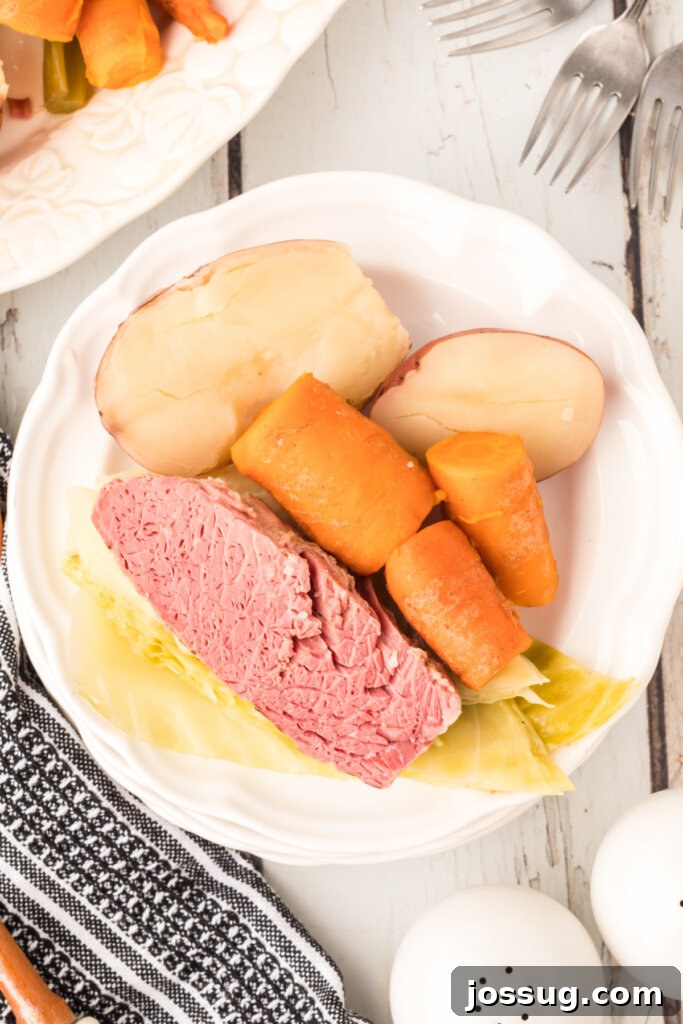
Essential Ingredients for Perfect Corned Beef and Cabbage
Crafting this incredible Corned Beef and Cabbage recipe requires a straightforward list of ingredients, most of which are readily available in any grocery store. Here’s what you’ll need, along with some insights and potential substitutions to help you achieve the best results and tailor the dish to your preferences:
Key Ingredients
- Corned Beef Brisket with Spice Packet: Aim for a 3-4 pound flat-cut or point-cut brisket. During the weeks leading up to St. Patrick’s Day, it’s common to find corned beef briskets pre-packaged with a spice packet. This packet typically contains a blend of mustard seeds, bay leaves, cinnamon, dill, red pepper flakes, and other complementary seasonings that infuse the beef with its signature taste. If your brisket doesn’t come with one, you can easily find corned beef spice blends online or make your own by combining peppercorns, bay leaves, mustard seeds, and a pinch of allspice.
- Water: The primary cooking liquid, essential for tenderizing the beef over a long simmering period and creating a rich, flavorful broth that will cook your vegetables. You’ll need about 12 cups for this recipe to ensure everything is adequately submerged.
- Onion: One large onion, quartered, adds a foundational layer of aromatic flavor to the broth, sweetening and deepening the overall taste as it slowly cooks. White or yellow onions work best here for their balanced flavor profile.
- Carrots: Three medium carrots, cut into large, robust chunks (to prevent them from becoming too soft), contribute natural sweetness, vibrant color, and essential nutrients. They absorb the rich flavors of the broth beautifully. For a slight variation, you can also use parsnips for a slightly different, earthy sweetness that complements the beef well.
- Celery: Three stalks, cut into 2-inch pieces, add another subtle layer of savory depth and a hint of freshness to the cooking liquid, enhancing the overall complexity of the dish without overpowering it.
- Red Potatoes: Approximately 1 ½ – 2 pounds of red potatoes, thoroughly scrubbed and halved, are perfect for this dish. Their waxy texture helps them hold their shape without becoming mushy during extended cooking, and they readily absorb the delicious, savory flavors from the broth. You could also use Yukon Gold potatoes for a slightly creamier texture.
- Salt: About ½ teaspoon of salt is generally needed for the initial cooking liquid, but always taste and adjust later. Remember that corned beef itself is already quite salty due to the curing process, so add additional salt cautiously to the cooking liquid to avoid over-salting the final dish.
- Cabbage: The other star of the show! A small head of vibrant green cabbage, carefully cut into eight sturdy wedges (ensuring the core remains intact in each wedge to help them hold their shape), is ideal. The wedges should be large enough to withstand simmering without falling apart, yet small enough to cook through and absorb the incredible flavors. Cabbage becomes wonderfully tender, sweet, and incredibly savory when cooked gently in the beef broth.
Preparing Your Delicious Corned Beef and Cabbage: A Detailed Step-by-Step Guide
Making this traditional dish is a straightforward process, largely hands-off, allowing the flavors to slowly meld and develop into something truly extraordinary. Patience is key, and following these steps will ensure a perfect result every time, culminating in a meal that’s both comforting and impressive:
Step 1: Combine Ingredients and Begin Initial Simmering
In a generously sized pot or a sturdy Dutch oven – preferably one that can hold at least 6 quarts – carefully place your corned beef brisket. Empty the entire contents of the spice packet directly over the beef, ensuring it’s evenly distributed. Pour in the specified amount of water, and then add the quartered onion, chunky carrots, celery pieces, and the initial ½ teaspoon of salt. Bring this mixture to a gentle simmer over medium-high heat. As it heats, you’ll likely notice some foam or scum rising to the surface. It’s important to diligently skim this foam off using a spoon or a fat skimmer. This crucial step helps to keep your broth clear and clean-tasting, removing impurities that can make the final dish look less appetizing and slightly alter the flavor profile.
Step 2: Slow Simmering the Beef and Strategic Potato Addition
Once you’ve successfully removed the foam, reduce the heat to low, cover the pot tightly, and allow the corned beef to slow-simmer. This prolonged, gentle cooking is absolutely crucial for achieving that signature fork-tender texture and allowing the flavors to deeply penetrate the meat. Depending on the size and cut of your brisket, this process typically takes around 3 hours. Periodically check the meat for tenderness using a fork; it should offer some resistance but be nearly ready to shred. After the beef is almost fork-tender, it’s time to introduce the potatoes. Add the halved red potatoes to the pot, ensuring they are mostly submerged in the flavorful broth. Continue to simmer, this time uncovered, for approximately 30 minutes, or until the potatoes are nearly tender. This staggered addition ensures all components cook evenly without any becoming overdone or mushy.
Step 3: Integrating the Cabbage for Optimal Tenderness and Flavor
With the beef and potatoes progressing beautifully, it’s time for the final vegetable star: cabbage. Carefully arrange the cabbage wedges on top of and around the meat and potatoes in the pot. It’s important not to stir it in aggressively at this stage, as the cabbage will soften and integrate naturally, absorbing the rich flavors. Covering the pot helps steam the cabbage evenly. Cover the pot once more and allow the mixture to simmer again until the cabbage is wonderfully tender, translucent, and sweet. This usually takes about 20-30 minutes, depending on the thickness of your wedges and your preferred tenderness. The cabbage will absorb the rich, savory flavors of the broth, turning delicate and incredibly delicious.
Step 4: Rest, Slice, and Serve Your Hearty Meal
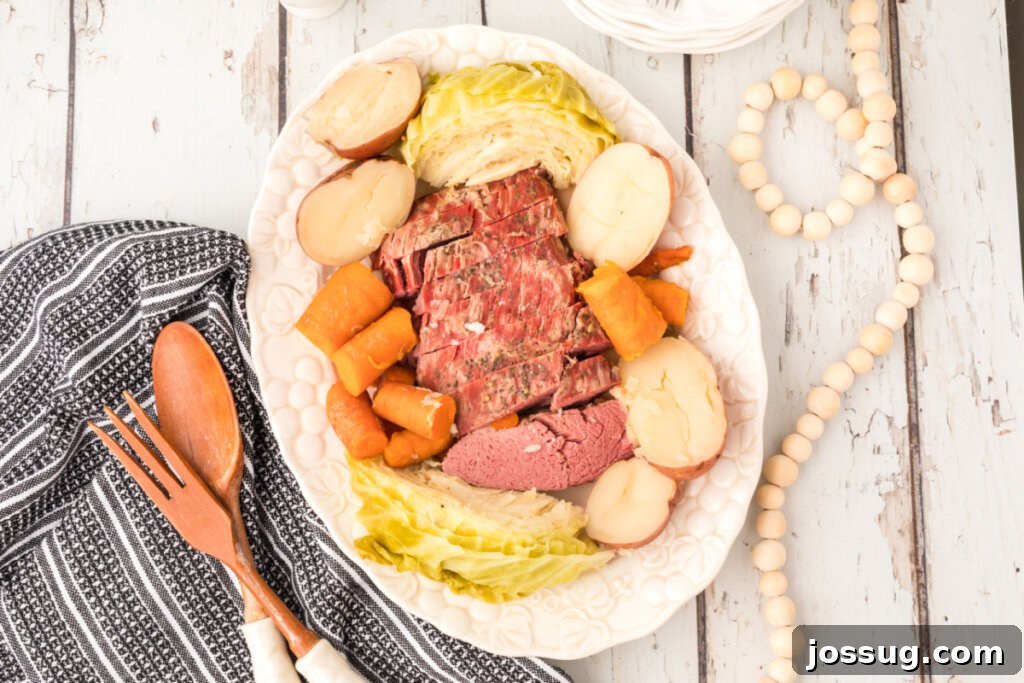
Once all components are tender and perfectly cooked, carefully remove the entire corned beef brisket from the pot and transfer it to a clean cutting board. It’s vital to let the meat rest for 10 to 15 minutes. This resting period allows the juices to redistribute throughout the meat fibers, ensuring it remains incredibly moist, juicy, and tender when sliced. Do not skip this step, as it’s key to a superior texture! After resting, using a sharp knife, slice the meat across the grain. Serving across the grain is key to maximizing tenderness and making each bite enjoyable. Arrange the sliced corned beef alongside the perfectly cooked vegetables – carrots, potatoes, and cabbage – on a large serving platter. Ladle some of that delicious, aromatic broth over everything, if desired, to keep it moist and further enhance the flavor. Serve warm and enjoy your culinary masterpiece, a true celebration of tradition and taste!
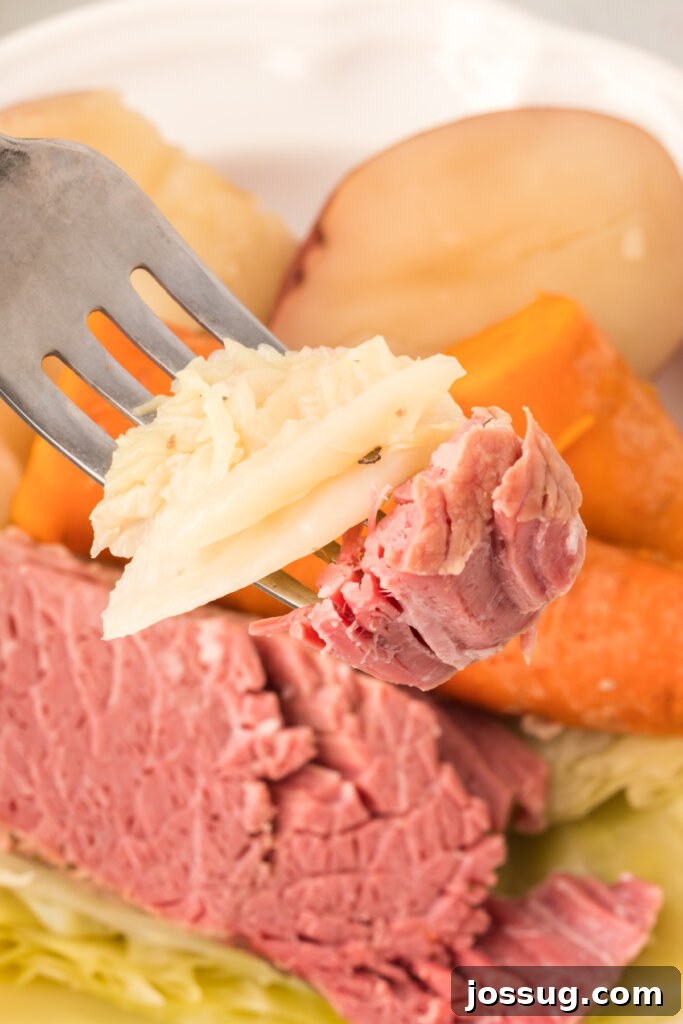
Tips for Success and Flavor Enhancements for Your Corned Beef and Cabbage
While the recipe above provides a solid foundation for an amazing Corned Beef and Cabbage dish, there are always ways to elevate your cooking and ensure spectacular results every time. Here are some pro tips and answers to frequently asked questions to help you master this classic:
How to Intensify the Flavor of Your Corned Beef and Cabbage
If you find your dish a little bland or want to add an extra layer of complexity to the broth, there’s a fantastic secret: substitute some of the water with other liquids. A portion of apple juice can introduce a subtle sweetness that complements the savory beef beautifully, while a dark beer (such as a stout or a lager) can add a rich, malty depth of flavor that’s truly exceptional. Experiment with what you have on hand or what pairs well with beef. Furthermore, don’t underestimate the power of condiments at the table. Serving the dish with spicy brown mustard, creamy horseradish sauce, a splash of apple cider vinegar, or even a classic dill pickle relish can significantly enhance each bite and allow guests to tailor the taste to their preference, adding a burst of flavor and acidity.
Exploring Other Vegetables for Your Dish
While cabbage, potatoes, and carrots are the cherished traditional trio, don’t hesitate to get creative with other root vegetables. Onions (beyond just the quartered ones for the broth), turnips, and parsnips are excellent additions that cook well in the savory broth and add different textures and flavors, introducing more earthy notes. Some adventurous cooks even enjoy adding a touch of unexpected sweetness with sliced apples or a handful of raisins to the pot, creating a unique sweet-and-savory profile that’s surprisingly delicious and adds another dimension to the meal.
Can I Make Corned Beef and Cabbage in a Slow Cooker or Instant Pot?
Absolutely! This dish is wonderfully adaptable to both slow cookers and Instant Pots, making it perfect for busy days or hands-off cooking. For a slow cooker, simply place the corned beef brisket at the bottom, then arrange the quartered vegetables (onions, carrots, celery, potatoes, and cabbage) around and on top of it. Cook on low for 6-8 hours, or until both the beef and vegetables are exceptionally tender. In an Instant Pot, the cooking time is dramatically reduced. Typically, you would cook the beef for about 90 minutes on high pressure with a natural release. Then, you can add the harder vegetables (like carrots and potatoes) and cook for another 5-10 minutes on high pressure, followed by the cabbage for a quick 2-3 minutes on high pressure. Always refer to your specific appliance’s instructions and recommended pressure cooking times for the best and safest results.
Storing and Reheating Leftovers for Future Enjoyment
Corned Beef and Cabbage leftovers are a treat in themselves, often tasting even better the next day as the flavors continue to meld! To store, ensure the food has cooled completely to room temperature before transferring it to an airtight container. It will keep well in the refrigerator for up to 3-4 days. For longer storage, you can freeze the leftovers for up to 2 months; simply thaw overnight in the refrigerator before reheating. When reheating, gently warm on the stovetop with a little extra broth or water to prevent drying, or in the microwave. Leftover corned beef is also fantastic for making classic Reuben sandwiches, a savory corned beef hash for breakfast, or even adding to a hearty soup or stew for a new meal.
The Cultural Significance and Rich History of Corned Beef and Cabbage
The story of Corned Beef and Cabbage is fascinating and deeply rooted in the history of Irish immigration to America. In Ireland, the traditional meat for celebrations and everyday meals was typically pork, particularly salt pork or bacon, as beef was often too expensive and primarily raised for dairy or export. When large waves of Irish immigrants arrived in the United States in the 19th century, particularly during the Great Famine, they found beef to be more affordable and readily available than back home, especially brisket, which was a less expensive cut. They adapted their traditional salted pork recipes to use this more accessible beef, curing it with salt (the “corning” process) similar to how they prepared pork to create the familiar taste and texture.
They then cooked this cured beef with the readily available and inexpensive cabbage and potatoes, common staples in their new home, creating the iconic dish we know today. This meal became a staple, particularly in urban areas with large Irish-American populations like New York and Boston, symbolizing both adaptation to new resources and the preservation of culinary heritage in a new land. It’s a testament to the resilience and resourcefulness of a community that forged new traditions while honoring old ones.
Today, while it’s undeniably linked to St. Patrick’s Day celebrations and often seen as a quintessential “Irish” dish (though it’s more accurately Irish-American), its comforting nature and rich history make it a beloved meal year-round for many. It offers a taste of history and heartwarming sustenance, connecting generations through its simple yet profound flavors.
More Hearty and Comforting Recipes to Explore
If you enjoyed this traditional Corned Beef and Cabbage recipe, you might also love these other comforting and flavorful dishes. Perfect for family dinners or special occasions, these recipes promise to satisfy:
- Corned Beef and Cabbage Soup: A lighter, yet equally flavorful way to enjoy these classic ingredients.
- Ham Bean Cabbage Soup: Another hearty soup packed with savory ham and wholesome beans.
- Garlic Butter Roasted Cabbage: A simple yet incredibly delicious side dish that transforms humble cabbage.
- Crustless Reuben Quiche: All the classic flavors of a Reuben sandwich in a comforting, easy-to-make quiche form.
- Loaded Leprechaun Mint Bark: A fun, festive, and sweet treat perfect for St. Patrick’s Day celebrations.
8
servings
Corned Beef and Cabbage
Jamie Sherman
10
mins
4
hrs
4
hrs
10
mins
Print Recipe
Would you like to save this?
We’ll email this post to you, so you can come back to it later!
Equipment
-
Silicone Oven Mitt with Magnet
-
Durable Kitchen Tongs
-
Sharp Chef’s Knife
-
Sturdy Cutting Board
-
Fat Skimmer Spoon
-
6-Quart Enameled Cast Iron Dutch Oven
Ingredients
- 1 corned beef brisket with spice packet, 3-4 pound (flat cut or point cut)
- 12 cups water
- 1 large onion, quartered
- 3 carrots, peeled and cut into large chunks
- 3 stalks celery, cut into 2-inch pieces
- ½ teaspoon salt
- 1 ½ – 2 pounds red potatoes, scrubbed and halved (or quartered if very large)
- 1 small head cabbage, core intact, cut into eight sturdy wedges
Instructions
-
1. Initial Simmer: Combine the corned beef, spice packet contents, 12 cups of water, quartered onion, carrot chunks, celery pieces, and ½ teaspoon of salt in a large pot or a 6-quart Dutch oven. Bring the mixture to a gentle simmer over medium-high heat. As foam rises to the surface, diligently skim it off using a spoon or fat skimmer to ensure a clear and clean broth.
-
2. Slow Cook the Beef: Once the foam is removed, reduce the heat to low, cover the pot tightly, and let the corned beef slowly simmer. This slow cooking is vital for achieving a fork-tender texture and deeply infused flavors. Continue to simmer for approximately 3 hours, or until the meat is almost tender, offering slight resistance when pierced with a fork.
-
3. Add Potatoes: After the beef is nearly tender, add the halved red potatoes to the pot, ensuring they are mostly submerged in the flavorful broth. Continue to simmer, now uncovered, for about 30 minutes, or until the potatoes are almost tender. This staggered addition allows for even cooking of all ingredients.
-
4. Cook the Cabbage: Carefully arrange the cabbage wedges on top of and around the meat and potatoes in the pot. Cover the pot once more and simmer until the cabbage is wonderfully tender and translucent, typically taking about 20-30 minutes. The cabbage will absorb the rich flavors from the broth, becoming sweet and delicate.
-
5. Rest the Beef: Once all components are cooked to perfection, carefully remove the corned beef brisket from the pot and transfer it to a clean cutting board. Allow the meat to rest for 10 to 15 minutes. This crucial resting period allows the juices to redistribute, ensuring the beef remains incredibly moist and tender when sliced.
-
6. Slice and Serve: Finally, using a sharp knife, slice the corned beef across the grain. Arrange the sliced beef alongside the tender vegetables (carrots, potatoes, and cabbage) on a large serving platter. Ladle some of the aromatic cooking broth over everything, if desired, to keep it moist and enhance the flavors. Serve warm and enjoy your delicious, traditional Corned Beef and Cabbage!
Notes
- Flavor Boost: For a deeper, more complex flavor profile, consider replacing some of the water (e.g., 2-4 cups) with an equal amount of apple juice or a dark beer like stout or lager.
- Serving Suggestions: Enhance your meal by serving with condiments such as spicy brown mustard, creamy horseradish sauce, a dash of apple cider vinegar, or even a side of classic dill pickle relish.
- Leftover Ideas: Don’t let leftovers go to waste! Use them to make delicious Reuben sandwiches, savory corned beef hash, or incorporate into a hearty soup.
Nutrition Facts (per serving)
Carbohydrates: 23g
Protein: 28g
Fat: 26g
Saturated Fat: 8g
Polyunsaturated Fat: 1g
Monounsaturated Fat: 12g
Cholesterol: 92mg
Sodium: 2293mg
Potassium: 1183mg
Fiber: 5g
Sugar: 6g
Vitamin A: 3983IU
Vitamin C: 89mg
Calcium: 85mg
Iron: 4mg
Nutrition information is automatically calculated and should be used as an approximation. Exact values may vary based on ingredients and preparation methods.
Enjoyed this recipe? Leave a comment below!
Your feedback helps us improve and brings more delicious recipes your way.