
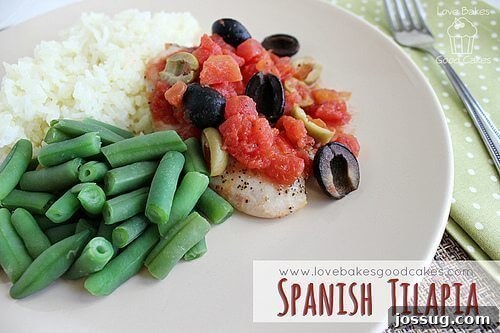
Welcome to a recipe that proves healthy eating doesn’t have to be complicated or expensive. This Spanish Tilapia is not only super easy to prepare and incredibly budget-friendly, but it also delivers a burst of vibrant Mediterranean flavors that will transport your taste buds straight to the sunny coasts of Spain. I love serving it with aromatic saffron rice and a side of fresh green vegetables for a complete, nutritious, and satisfying meal. If you’re looking for a simple yet elegant fish dish that’s big on flavor, you’ve found your new go-to!
Spanish Tilapia: A Journey from Fish Sticks to Flavorful Feasts
The truth is, fish and seafood weren’t exactly staples in my household growing up. My husband, Brian, isn’t particularly fond of it, and my own early experiences with seafood were limited to the predictable: frozen fish sticks, canned salmon patties, and the occasional tuna sandwich. There was that one memorable shark steak, and maybe shrimp a handful of times, but my culinary exposure to the vast world of seafood was, shall we say, minimal. I genuinely believed I simply “didn’t like that kind of stuff” because, well, I rarely had the chance to try anything beyond the basics. This early lack of exposure meant my knowledge of how to cook or prepare fish was severely lacking compared to other types of cuisine.
However, as an adult, my palate has become significantly more adventurous. I’ve embraced new flavors and ingredients, eager to explore the culinary landscape. (Oh, if only I could tell you the story of my friend Ty and me at the Chinese restaurant! Bahahaha! If not, I’ll have to enlighten you to my shenanigans! Be forewarned, you may never want to be seen dining with me in public again after that tale!) This renewed spirit of exploration led me to try various fish and seafood dishes, many of which I’ve thoroughly enjoyed. Most of these delightful experiences, though, have been in restaurants, as my confidence in preparing seafood at home remained a work in progress. That is, until this Spanish Tilapia recipe came along. It’s one of the few fish dishes I’ve successfully adapted from a version my mom makes, and it quickly became a treasured part of our home cooking repertoire. It truly represents a breakthrough in my personal culinary journey with seafood, proving that delicious and easy fish dishes are entirely within reach.
Why Tilapia? A Perfect Canvas for Spanish Flavors
Tilapia is an excellent choice for this recipe for several reasons. It’s a mild, white fish, making it incredibly versatile and appealing even to those who might be hesitant about stronger fish flavors. Its delicate texture cooks quickly and absorbs the vibrant Spanish-inspired sauce beautifully, making it an ideal candidate for a fast weeknight meal. Furthermore, tilapia is generally a lean protein source, offering a healthy and satisfying option for dinner without a heavy feeling. When paired with the robust flavors of tomatoes, garlic, olives, and lemon, tilapia truly shines, acting as the perfect canvas for a Mediterranean masterpiece. Its affordability also makes it a fantastic budget-friendly choice for families looking to incorporate more seafood into their diet without breaking the bank.
The Heart of the Dish: Crafting the Spanish-Inspired Sauce
The secret to this Spanish Tilapia’s incredible flavor lies in its rich, aromatic sauce. This isn’t just any sauce; it’s a medley of ingredients thoughtfully chosen to deliver a taste that’s both comforting and exciting. We start with a foundation of sautéed onion and minced garlic, which creates an aromatic base that permeates the entire dish. The sweetness of the softened onions and the pungent warmth of the garlic are essential for building layers of flavor.
Next, we introduce canned Italian-style diced tomatoes. While the recipe is “Spanish” Tilapia, the use of Italian-style diced tomatoes (often seasoned with basil, oregano, and garlic) adds a wonderful depth and a hint of herbaceousness that complements the Spanish elements. These tomatoes provide the luscious liquid base for the sauce, becoming sweet and savory as they simmer. The briny kick comes from a generous combination of both sliced black olives and sliced green olives. These olives not only add a delightful salty tang but also contribute to the Mediterranean authenticity of the dish. Finally, fresh lemon slices are added to the sauce, infusing it with a bright, zesty aroma that cuts through the richness and adds a refreshing finish. The gentle simmering allows all these components to meld together, creating a sauce that is bold, fresh, and utterly irresistible. This sauce is not just a topping; it’s an integral part of the experience, moistening the fish and enhancing every bite.
Beyond the Basics: Tips for Perfect Tilapia Every Time
Cooking fish can sometimes feel intimidating, but with a few simple tips, you can achieve perfectly flaky tilapia every time. The most crucial rule for any fish, especially delicate white fish like tilapia, is to avoid overcooking it. Overcooked fish becomes dry and rubbery, losing its appealing texture and flavor. To ensure your tilapia is cooked just right, watch for it to turn opaque throughout and flake easily with a fork. This usually happens quite quickly, especially in the oven or on the stovetop.
When working with tilapia, whether fresh or frozen, proper preparation is key. If using frozen fillets, make sure to thaw them completely in the refrigerator overnight or under cold running water before cooking. Patting the fillets dry with paper towels before seasoning is also important, as it helps create a better sear (if pan-frying) and allows the seasonings to adhere more effectively. Don’t be shy with salt and pepper; proper seasoning enhances the natural flavors of the fish. You can also experiment with a sprinkle of smoked paprika, a pinch of dried oregano, or a dash of garlic powder in addition to the salt and pepper for an extra layer of flavor before adding the Spanish sauce. Remember, a little attention to detail goes a long way in transforming a simple ingredient into a remarkable meal.
Serving Suggestions and Pairings to Complete Your Meal
While Spanish Tilapia is a star in its own right, pairing it with the right accompaniments can elevate your meal to a truly memorable experience. As mentioned, saffron rice is a fantastic choice, offering a fragrant and colorful counterpoint to the savory fish. The subtle floral notes of saffron complement the Mediterranean flavors beautifully. If saffron rice isn’t an option, a simple white rice or brown rice works perfectly, or even couscous or quinoa for a healthier grain alternative.
For a fresh burst of color and nutrients, don’t forget your green vegetables. Steamed asparagus, roasted broccoli, sautéed spinach, or green beans tossed with a bit of garlic and lemon juice are all excellent choices. A simple side salad with a light vinaigrette would also be refreshing. For a heartier meal, consider serving alongside roasted potatoes or a crusty loaf of bread to sop up every last drop of that delicious tomato-olive sauce.
To truly complete the Spanish dining experience, consider a beverage pairing. A crisp, dry white wine like a Spanish Albariño or a Sauvignon Blanc would complement the fish and bright flavors of the sauce wonderfully. For a non-alcoholic option, sparkling water with a slice of lemon or lime is always a refreshing choice.
Customizing Your Spanish Tilapia Experience: Variations and Substitutions
One of the joys of cooking is the ability to customize a recipe to suit your preferences and what you have on hand. This Spanish Tilapia recipe is incredibly forgiving and open to various modifications. If you’re looking to add more vegetables, consider tossing in some diced bell peppers (red or yellow for sweetness) with the onions and garlic, or a handful of cherry tomatoes that will burst and release their juices during cooking. For an extra layer of Mediterranean flavor, a teaspoon of capers can be added to the sauce, providing a briny, tangy kick.
Herb lovers can experiment with fresh parsley or cilantro, chopped and sprinkled generously over the finished dish for a burst of freshness. A pinch of smoked paprika (pimentón) can also be stirred into the sauce for a subtle smoky depth that leans even more into traditional Spanish culinary profiles. If you prefer a different type of olive, Kalamata olives would offer a bolder, fruitier flavor profile than the black and green olives specified.
And what if you don’t have tilapia? Don’t worry! This versatile recipe works beautifully with other mild white fish fillets such as cod, snapper, flounder, or even haddock. Just be mindful of the cooking times, as thicker fillets might require a few extra minutes in the oven or skillet. This adaptability makes the Spanish Tilapia a truly flexible and rewarding recipe to add to your collection.
Other Recipes You May Enjoy
- Easy Veggie Pasta Bake
- Summer Veggie Pasta Salad
- Tuna Salad
- Fried Fish Recipe
- Weekend Round-Up {7-27-13}
4
servings
Spanish Tilapia Recipe
Jamie Sherman
15
25
40
Pin
Ingredients
- 1 pound tilapia fillets
- salt & pepper, to taste
- a swirl of olive oil
- 1 small onion, chopped
- 2 cloves garlic, minced
- 1 can Italian-style diced tomatoes, 14.5 oz.
- ¼ cup sliced black olives
- ¼ cup sliced green olives
- ½ lemon, sliced
- cooked rice or pasta, for serving (optional)
Instructions
-
Preheat your oven to 400°F (200°C).
-
Season the tilapia fillets generously with salt and pepper. Place them in a lightly sprayed or buttered baking dish or on a sheet pan.
-
In a large skillet, heat the olive oil over medium-high heat. Add the chopped onion and minced garlic and cook, stirring occasionally, until the onion softens and becomes translucent, about 4-5 minutes.
-
Stir in the diced tomatoes (undrained), sliced black olives, sliced green olives, and lemon slices. Bring the mixture just to a boil, then reduce the heat to medium-low to maintain a gentle simmer. Let the sauce simmer for 10 minutes to allow the flavors to meld.
-
Spoon the tomato-olive mixture evenly over the tilapia fillets in the baking dish.
-
Bake for 10-13 minutes, or until the fish is opaque throughout and flakes easily with a fork.
-
Serve the Spanish Tilapia immediately with a generous portion of the tomato-olive mixture spooned over the top. It pairs wonderfully with cooked rice (such as saffron rice) or pasta on the side, and your favorite green vegetable.
Notes
To cook in a skillet on the stovetop for a quicker option:
- Season the tilapia fillets with salt and pepper and set aside.
- In a large skillet, heat the olive oil over medium-high heat. Add the chopped onion and minced garlic and cook until the onion softens, about 4-5 minutes.
- Stir in the diced tomatoes (undrained), black and green olives, and lemon slices. Bring just to a boil and reduce heat to medium-low to maintain a simmer. Allow the mixture to simmer for 10 minutes.
- Carefully add the seasoned fish fillets to the simmering sauce in the skillet. Cook for 7-9 minutes, or until the fish is cooked through and flakes easily with a fork.
- Discard the lemon slices before serving. Serve the tilapia with some of the tomato-olive mixture spooned over the top, alongside rice or pasta.
Nutrition (Approximate per serving)
Carbohydrates: 8g,
Protein: 24g,
Fat: 5g,
Saturated Fat: 1g,
Polyunsaturated Fat: 1g,
Monounsaturated Fat: 2g,
Cholesterol: 57mg,
Sodium: 470mg,
Potassium: 593mg,
Fiber: 2g,
Sugar: 4g,
Vitamin A: 190IU,
Vitamin C: 18mg,
Calcium: 62mg,
Iron: 2mg
Nutrition information is automatically calculated and should be used only as an approximation.
Enjoyed this recipe? Share your thoughts below!
Your feedback helps others discover delicious meals.
Originally published on October 3, 2013. Updated on April 24, 2021.