
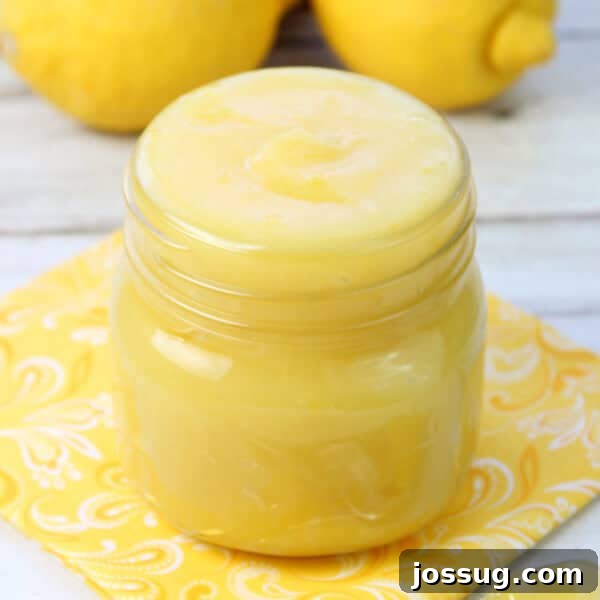
Prepare to be delighted by this incredibly simple yet luxurious Homemade Lemon Curd! It’s the perfect accompaniment to fluffy scones, warm muffins, crispy waffles, or as a vibrant filling in your most cherished desserts. This thick, beautifully sweet, and wonderfully citrusy spread is remarkably easy to whip up at home, bringing a burst of sunshine to your palate with every spoonful. Forget store-bought versions – once you taste the freshness and rich flavor of homemade, you’ll never look back!
Homemade Lemon Curd: Brighten Your Day with Every Bite
What do you do when a generous neighbor blesses you with an abundance of fresh lemons? You embark on a glorious lemon-making spree, of course! From lemonade to cookies, the possibilities are endless. Even after crafting a multitude of lemon-infused treats, you might still find yourself with a few bright yellow gems remaining. This delightful scenario is precisely how many discover the sheer joy of making homemade lemon curd – a truly rewarding culinary experience.
I must confess, lemon treats hold a special place in my heart. There’s something inherently comforting and uplifting about their zesty flavor, especially on a dreary day when you need a little pick-me-up. My family, particularly the kids, adore spreading this sunshine-yellow curd on just about anything – our current favorite is pairing it with light and airy crepes, creating a dessert that feels both elegant and incredibly comforting.
This exquisite homemade lemon curd recipe is surprisingly straightforward, requiring just a handful of everyday ingredients. Gather your butter, granulated sugar, fresh eggs, and, of course, those glorious lemons, and let’s transform them into a truly unforgettable treat. The process is simple, and the reward is a luscious, velvety curd that tastes infinitely better than anything you can buy in a jar.

Essential Ingredients for the Best Lemon Curd
Crafting the perfect lemon curd begins with selecting high-quality ingredients. Each component plays a crucial role in achieving that rich flavor and silky-smooth texture we all crave. Here’s what you’ll need for this vibrant spread, along with a little insight into why each one matters:
- Butter: Unsalted butter is preferred, allowing you to control the overall saltiness of the curd. Softened butter creamed with sugar forms the creamy base, contributing to the curd’s luxurious mouthfeel and rich flavor.
- Granulated Sugar: Not just for sweetness, sugar also helps in the emulsification process and acts as a preservative. It perfectly balances the tartness of the lemon, creating a harmonious sweet-and-sour profile.
- Large Eggs & Egg Yolks: Eggs are the primary thickening agent in lemon curd, giving it that characteristic custardy texture. Using extra egg yolks adds an incredible richness and a deeper, more vibrant yellow color, making the curd even more decadent.
- Fresh Lemon Juice: This is where the magic happens! Always use freshly squeezed lemon juice for the brightest, most authentic lemon flavor. Bottled lemon juice simply won’t yield the same vibrant taste. Approximately 6 medium lemons will give you the ⅔ cup needed for this recipe.
- Grated Lemon Zest: The zest contains essential oils that provide an intense burst of lemon aroma and flavor without adding extra acidity. Make sure to only grate the bright yellow part of the peel, avoiding the bitter white pith.

Step-by-Step Guide: How to Make Silky Smooth Lemon Curd
Making lemon curd is a wonderfully satisfying process, and with a few key techniques, you’ll achieve a perfect, velvety consistency every single time. Follow these detailed steps to create your own batch of liquid sunshine:
- Prepare the Base: In a medium-sized mixing bowl, combine the softened butter and granulated sugar. Use an electric mixer to cream them together until the mixture is light and fluffy. This aeration helps create a smoother curd.
- Incorporate Eggs Gradually: Add the large eggs and extra egg yolks one at a time to the butter and sugar mixture, mixing well after each addition. This ensures proper emulsification and prevents the eggs from scrambling when heat is applied later. Once all eggs are incorporated, gently mix in the fresh lemon juice. The mixture might look a little curdled at this stage, but don’t worry, it will smooth out as it cooks.
- Slow Cook to Perfection: Transfer the butter, sugar, and egg mixture to a medium saucepan, preferably one with a heavy bottom to ensure even heat distribution and prevent scorching. Cook the mixture over low heat, stirring constantly with a whisk or a wooden spoon. Continue cooking until the butter has completely melted and the mixture appears smooth.
- Thicken with Care: Increase the heat to medium-low (it’s crucial to avoid high heat). Continue to cook, stirring constantly and diligently, for about 15 minutes. The key is patience here – you want the curd to gently thicken without boiling. Boiling can cause the eggs to curdle, resulting in a grainy texture. The curd is ready when it coats the back of a wooden spoon thickly and holds a line when you draw your finger across it. It should have the consistency of a thick custard or thin pudding.
- Add the Zest and Cool: Immediately remove the lemon curd from the heat once it reaches the desired thickness. Stir in the grated lemon zest. The residual heat will infuse the curd with the vibrant lemon oil from the zest.
- Proper Storage: Transfer the warm lemon curd into a clean container, such as glass jars or an airtight bowl. To prevent a “skin” from forming on the surface as it cools, press a piece of plastic wrap directly onto the surface of the curd. This creates an airtight seal. Allow it to cool completely at room temperature, then refrigerate for at least 2-3 hours, or until thoroughly chilled and firmly set.

Homemade Lemon Curd: Your Questions Answered
Making lemon curd is simple, but a few common questions can arise. Here are some frequently asked questions and helpful tips to ensure your homemade lemon curd is always a success:
- How will I know when it’s thick enough? The curd will continue to thicken significantly as it cools and chills in the refrigerator. Don’t expect it to be super thick straight off the stove. It should be thick enough to coat the back of a spoon, and when you run your finger across the spoon, it should leave a clear path.
- How long does homemade lemon curd last? Store your lemon curd in an airtight container in the refrigerator for up to one week. Always keep it chilled for optimal freshness and safety.
- Can I freeze lemon curd? Yes, lemon curd freezes beautifully! Pour the cooled curd into freezer-safe containers, leaving about half an inch of headspace. Cover tightly and freeze for up to 3-4 months. Thaw overnight in the refrigerator before using.
- Can I make other citrus curds using this recipe? Absolutely! This recipe is incredibly versatile. You can easily adapt it to make lime curd, orange curd, or even grapefruit curd by simply swapping out the lemon juice and zest for your desired citrus. The method remains the same.
- Why did my curd curdle or become grainy? This usually happens if the heat was too high, causing the eggs to cook too quickly. Remember to cook over low to medium-low heat and stir constantly. If it does curdle slightly, you can try pressing it through a fine-mesh sieve to remove any small cooked egg bits for a smoother texture.
- My curd is too thin, what happened? It likely didn’t cook long enough. While it thickens as it cools, if it was very runny off the stove, it might remain too thin. You can try gently reheating it over low heat, stirring constantly, to cook it a bit longer until it properly coats the back of a spoon. Be very careful not to boil it.

Creative Ways to Enjoy Your Homemade Lemon Curd
As I mentioned, this lemon curd truly is like sunshine on a spoon – bright, delightful, and utterly irresistible! Its versatility makes it a fantastic addition to countless dishes, elevating both simple breakfasts and elaborate desserts. Here are just a few ideas to inspire you:
- Classic Pairings: Spread generously on warm biscuits, fluffy scones, or toast for a simple yet elegant breakfast or afternoon tea treat.
- Dessert Dynamo: Use it as a luscious filling for tarts, pies, layer cakes, cupcakes (like Lemon Cupcakes with Raspberry Buttercream Frosting), or trifles. It adds a vibrant tang that cuts through richness beautifully.
- Breakfast Brilliance: Drizzle over pancakes, waffles, French toast, or oatmeal for an extraordinary morning meal. Swirl it into yogurt or top your favorite granola.
- Beyond the Basics: Fold it into whipped cream for a light and airy lemon mousse, or layer it with berries and cream for a quick parfait. It’s also delicious dolloped over fresh fruit salads.
- Simple Indulgence: Don’t underestimate the joy of simply enjoying it by the spoonful straight from the jar. No judgment here – it’s that good!
Did you try this recipe? Perhaps you added a special ingredient or found a unique way to enjoy it? Or did you encounter any confusion during the process? Please don’t hesitate to share your thoughts in the comments below! I’m always happy to hear from you and provide any assistance needed. Your culinary adventures inspire us all!
More Lemon & Citrus Delights to Explore
If you’re a fan of bright, zesty flavors, you’ll love these other lemon and citrus-inspired recipes:
- Lemon Lush Delight
- White Chocolate Lemon Truffles
- Cranberry Curd Tart
- Lemon Crinkle Cookies
- Lemon Cupcakes with Raspberry Buttercream Frosting

Rated 4.27 from 23 votes
16 servings
Homemade Lemon Curd
Jamie Sherman
This Lemon Curd is great with scones, muffins, waffles, or used in your favorite desserts! This thick, sweet, and citrusy spread is so easy to make at home – it’s like sunshine on a spoon!
10 mins
20 mins
30 mins
Rate Recipe
Print Recipe
Equipment
-
Simply Calphalon Nonstick 10 Piece Cookware Set
-
8 oz. Mason Jars, 15 PACK
Ingredients
- 6 tablespoons unsalted Challenge Butter, softened
- 1 cup granulated sugar
- 2 large eggs
- 2 large egg yolks
- ⅔ cup lemon juice (approximately 6 lemons)
- 1 teaspoon grated lemon zest
Instructions
- Combine the softened butter and granulated sugar in a medium mixing bowl with an electric mixer until light and fluffy. Add the eggs and egg yolks one at a time, mixing well between each addition until fully incorporated. Stir in the lemon juice.
- Transfer the butter and egg mixture to a medium saucepan with a heavy bottom. Cook and stir the mixture over low heat until the butter melts and the mixture looks smooth. Increase the heat to medium-low and continue to cook, stirring constantly, until the mixture thickens significantly and coats the back of a wooden spoon (about 15 minutes). It should be thick enough to hold a line when a finger is drawn across the spoon. Do NOT boil the mixture, as this can cause the eggs to curdle.
- Remove the lemon curd from the heat and stir in the grated lemon zest. Transfer the warm lemon curd to a clean container. To prevent a skin from forming, press plastic wrap directly onto the surface of the curd, ensuring it touches completely. Allow it to cool completely at room temperature, then refrigerate for at least 2-3 hours, or until thoroughly chilled and set.
Notes
- The curd will thicken more as it cools in the refrigerator.
- Ensure to use the homemade lemon curd within a week. Always keep it refrigerated.
- For variations, you can make lime curd or orange curd by simply substituting the lemon juice and zest with your preferred citrus.
Nutrition
Nutrition information is automatically calculated and should be used as an approximation only. Actual values may vary.
Like this recipe? Leave a comment below!
Originally published on February 5, 2015. Updated on July 5, 2020, and further expanded for clarity and detail in [Current Year].