
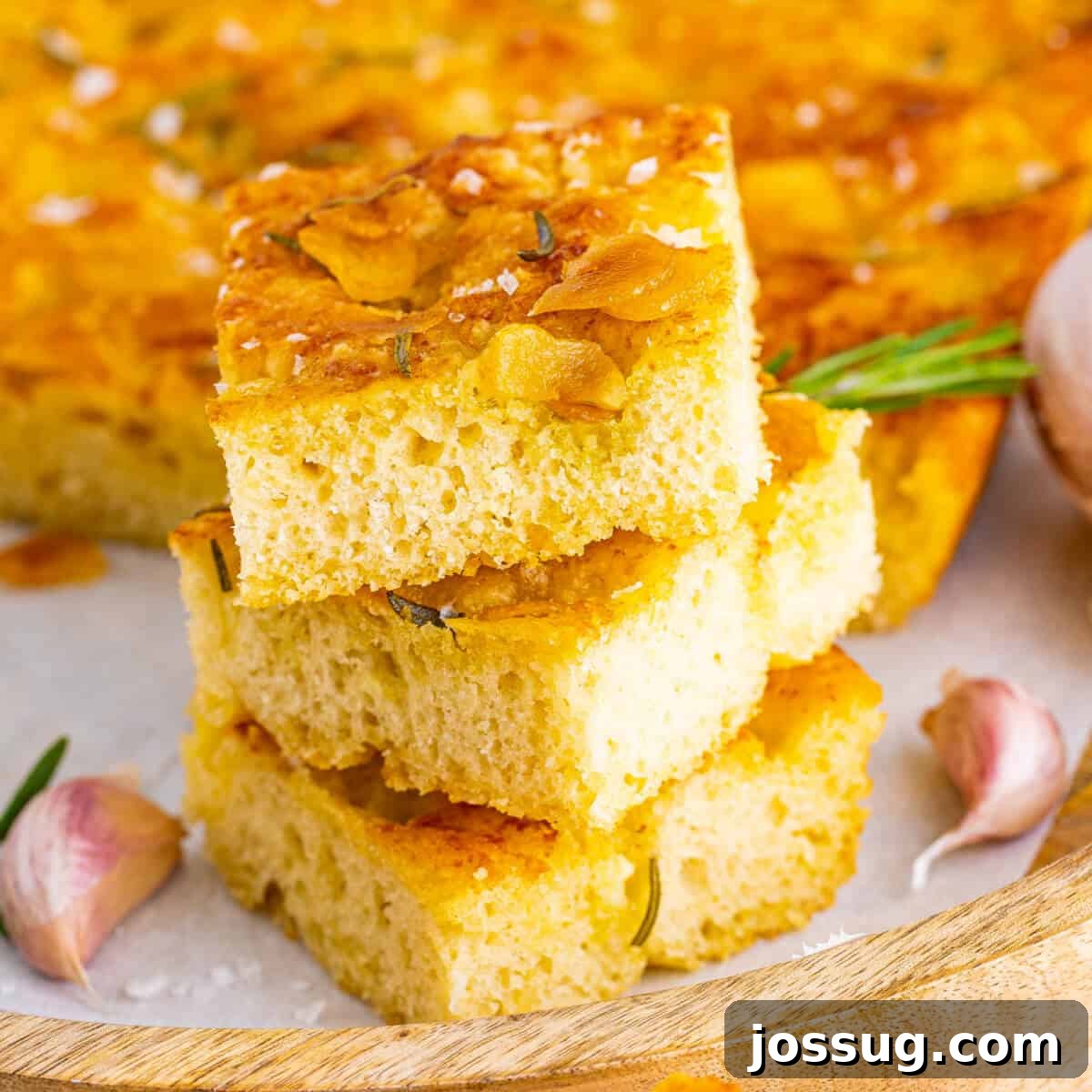
The Ultimate Rosemary Focaccia Bread Recipe: Crispy, Fluffy, and Fragrant
Prepare to fall in love with this incredible Rosemary Focaccia Bread! Made with the freshest rosemary, savory Parmesan cheese, and infused with delightful garlic oil, this recipe is an absolute triumph. Its versatile nature makes it perfect for crafting gourmet sandwiches, serving alongside hearty soups, or simply enjoying on its own.
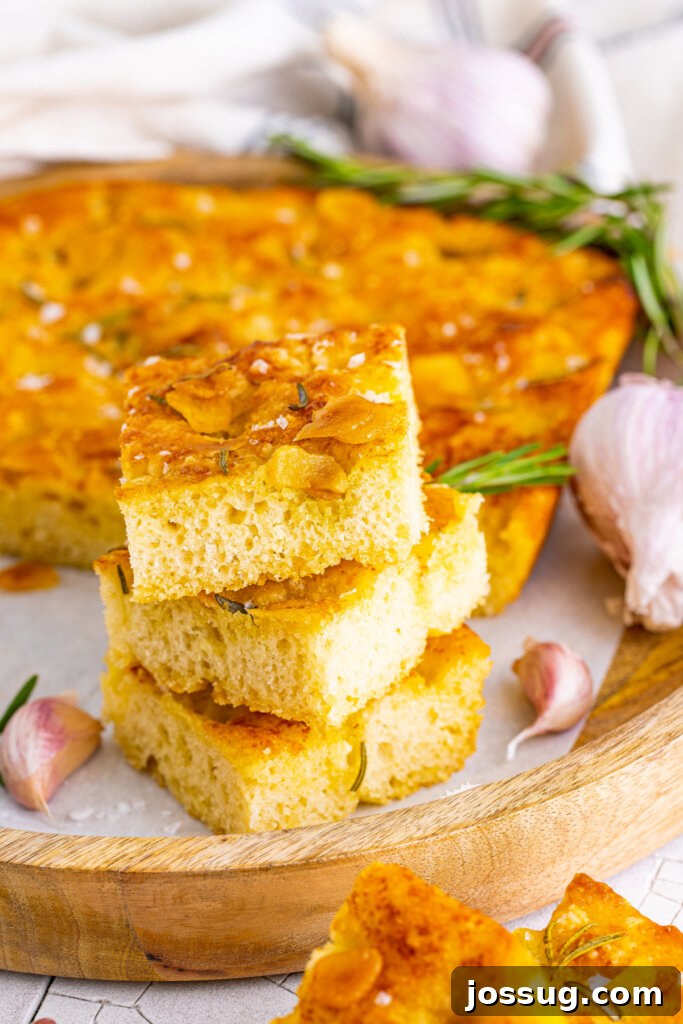
The Irresistible Charm of Focaccia Bread
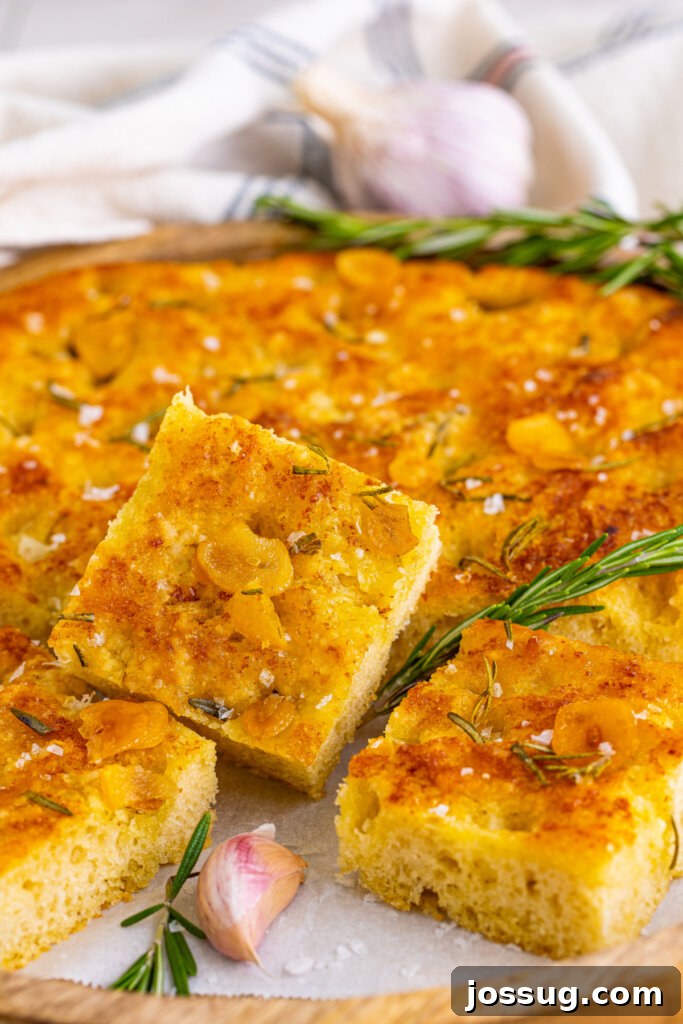
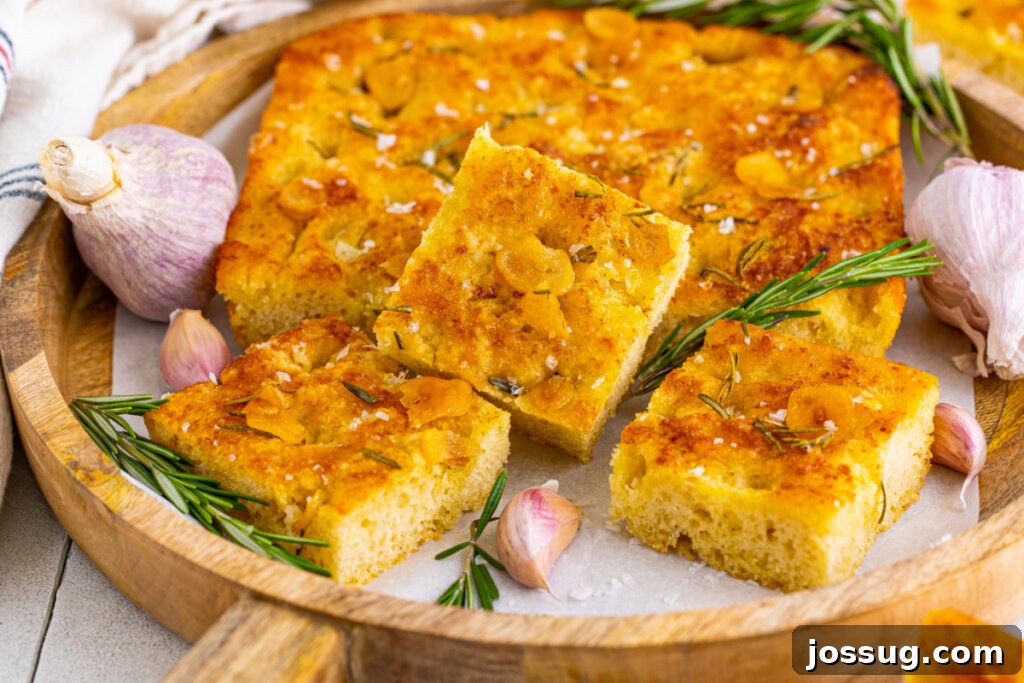
Rosemary Focaccia is a time-honored classic from Italian culinary tradition, celebrated and cherished in kitchens worldwide. This distinctive flatbread is renowned for its perfectly crispy crust, wonderfully tender and airy interior, and the captivating aroma of fresh rosemary that permeates every bite.
Focaccia boasts a rich history, serving as a staple of Italian cuisine for centuries. Its origins trace back to ancient times, where it was traditionally prepared as a simple flatbread, combining basic ingredients like flour, water, yeast, and salt. Over generations, this humble bread evolved, taking on diverse forms and flavors, leading to the beloved varieties we enjoy today.
Among its many delightful iterations, Rosemary Focaccia stands out. In this particular version, fresh rosemary is thoughtfully incorporated into the dough, imparting a subtle yet profoundly aromatic herbal flavor. This infusion transforms a simple flatbread into an exquisite culinary experience, making it a favorite for its unique taste profile.
Beyond its incredible flavor, Rosemary Focaccia is remarkably versatile, lending itself to countless serving possibilities. It’s utterly delicious when enjoyed on its own, perhaps lightly toasted for a delightful breakfast or a quick, satisfying snack. Its robust texture and flavor make it an excellent foundation for gourmet sandwiches, warm paninis, or vibrant bruschetta. Some culinary enthusiasts even repurpose it as a rustic pizza crust, adorning it with their favorite toppings before baking to perfection.
Achieving a truly exceptional Rosemary Focaccia hinges on the quality of its ingredients. Opting for fresh rosemary is paramount, as its vibrant oils contribute significantly to the bread’s signature aroma. High-quality olive oil is another non-negotiable component, adding richness, moisture, and that characteristic Mediterranean flavor. While all-purpose flour works, using a higher gluten flour can contribute to a more elastic dough and a chewier texture, enhancing the overall focaccia experience.
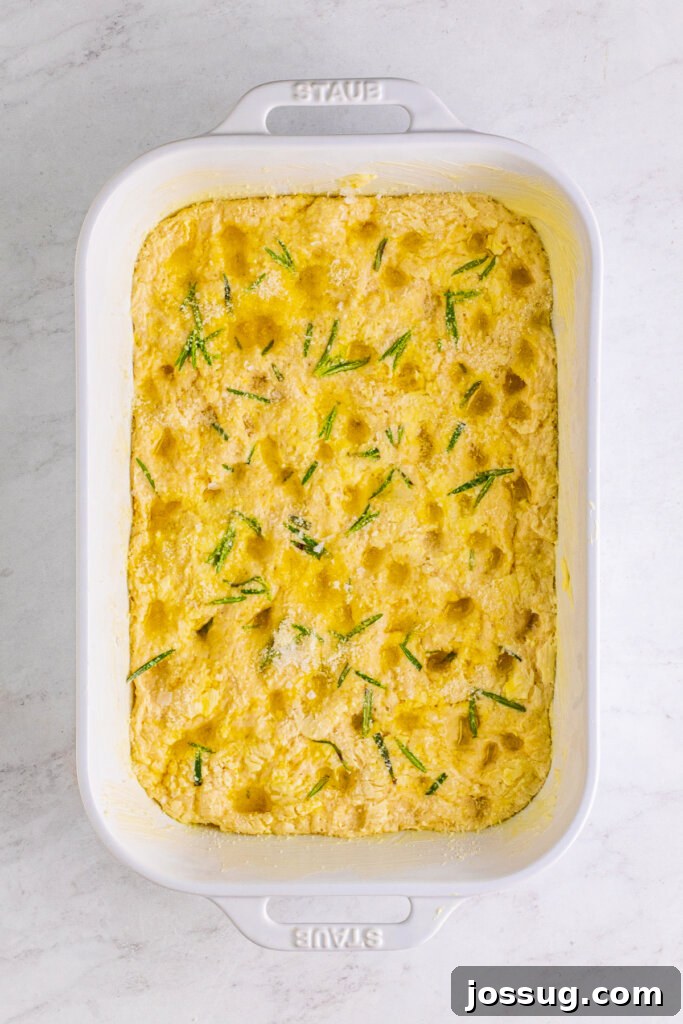
Equally critical to the success of this bread is the baking process itself. To achieve that coveted crispy crust coupled with a soft, airy interior, baking the focaccia on a preheated baking stone or a heavy-duty baking sheet is highly recommended. The radiant heat helps create an optimal crust. A defining characteristic of focaccia preparation involves gently dimpling the dough with your fingertips just before baking. These small indentations create pockets that allow steam to escape and the bread to rise beautifully, resulting in a light, bubbly, and exquisitely textured crumb.
Whether savored as a delightful appetizer, a complement to a larger meal, or a simple indulgence, Rosemary Focaccia is a profoundly satisfying bread that rarely fails to impress. Its aromatic essence, inviting texture, and boundless serving applications explain why this classic Italian flatbread has captivated palates and become a cherished favorite across the globe. Mastering this recipe promises a rewarding baking journey and a delectable treat for all.
Crafting Your Perfect Rosemary Focaccia: Ingredients & Substitutions
To embark on your journey of making this delightful Rosemary Focaccia, you’ll need a careful selection of fresh, quality ingredients. Each component plays a vital role in creating the bread’s distinct texture and flavor profile.
Essential Ingredients
Understanding each ingredient and its role will empower you to create a perfect loaf every time, and even experiment with thoughtful substitutions.
For the Dough: The Foundation of Flavor
- Flour, Water, and Yeast: These three form the fundamental triumvirate of nearly all bread. For the best results, ensure your water is warm, ideally around 115°F (46°C). This temperature is crucial for activating the yeast without killing it. While all-purpose flour is suitable, bread flour (with higher protein content) can yield a chewier texture.
- Honey: Not just for sweetness, honey provides vital food for the yeast, helping it to activate and thrive, which contributes to a more flavorful and well-risen dough. You can substitute with an equal amount of granulated sugar.
- Salt: Kosher salt or sea salt is recommended. Salt is indispensable for enhancing the flavor of the bread, controlling yeast activity, and strengthening the gluten structure.
- Parmesan Cheese: Grated Parmesan adds a wonderful salty, umami depth to the dough itself, distinguishing this focaccia. If unavailable, another hard, aged cheese like Pecorino Romano could be a flavorful alternative, or omit for a simpler focaccia.
- Olive Oil: A good quality extra virgin olive oil is non-negotiable. It adds richness, moisture, and a characteristic fruity note to the dough. It also helps in preventing the dough from sticking and contributes to the golden crust.
For Assembly and Topping: The Finishing Touches
- Unsalted Butter: Brushed generously on your baking dish and dough, butter contributes to a beautifully browned crust and prevents sticking. Using unsalted butter allows you to control the overall saltiness of the bread.
- Fresh Rosemary Leaves: This is the star of our Rosemary Focaccia! Fresh leaves provide an unparalleled fragrant aroma and robust flavor that dried rosemary cannot fully replicate. Finely chop them for even distribution.
- Olive Oil (again): A drizzle of olive oil over the dimpled dough before baking ensures a moist top, enhances flavor, and contributes to that signature focaccia crispness.
- Parmesan Cheese and Flake Salt: A final sprinkle of grated Parmesan adds another layer of savory flavor and a lovely golden finish. Flake sea salt not only adds bursts of salinity but also provides a delightful textural crunch.
- Garlic: Thinly sliced garlic is cooked in olive oil to create an exquisite garlic oil. This aromatic oil is brushed over the hot, freshly baked focaccia, infusing it with irresistible garlicky goodness. Use fresh garlic cloves for the best flavor.
How to Master Homemade Rosemary Focaccia Bread
Baking bread can sometimes feel intimidating, but with this detailed, step-by-step guide, you’ll find the process both manageable and immensely rewarding. Once you master this recipe, you’ll have a fantastic, reliable method for producing the most delicious focaccia bread, comparable to any artisan bakery!
Part 1: Preparing the Dough – The Key to a Fluffy Interior
- Activate the Yeast: In a large mixing bowl, combine the warm water (approximately 115°F), active dry yeast, and honey. Whisk these ingredients thoroughly until well combined. Allow the mixture to rest undisturbed for 5 to 10 minutes. During this time, the yeast should become visibly frothy and bubbly on the surface. This frothing is a crucial indicator that your yeast is alive and active. If, after 10 minutes, there’s no frothy activity, your yeast may be old or “dead,” and you will need to start over with fresh yeast to ensure proper rising.
- Form the Dough: To the activated yeast mixture, add 2 tablespoons of olive oil, the grated Parmesan cheese, and kosher salt. Stir these additions gently to integrate them. Next, gradually incorporate the all-purpose flour into the bowl. Continue to stir until a shaggy, somewhat sticky dough begins to form. At this stage, turn the dough out onto a lightly floured surface or continue in the bowl, and knead it a few times by hand (about 1-2 minutes) until it comes together into a relatively smooth ball. It doesn’t need to be perfectly smooth, just cohesive.
- First Rise (Overnight Cold Fermentation): Drizzle the remaining olive oil (from the dough ingredients) into the same large bowl. Place the dough ball into the oiled bowl, turning it once to ensure it’s completely coated in the oil. This prevents it from drying out. Cover the bowl tightly with plastic wrap and transfer it to the refrigerator. Allow the dough to rise slowly and rest overnight (for at least 12 hours, up to 24 hours). This long, cold fermentation significantly enhances the flavor and develops a superior airy texture, which is a hallmark of excellent focaccia.
Part 2: Shaping and Baking – Achieving Golden Perfection
- Prepare the Baking Dish: The next day, retrieve your dough from the refrigerator. Generously brush a 9×13-inch baking dish with half of the very soft unsalted butter, ensuring the bottom and sides are well coated. This step prevents sticking and contributes to the focaccia’s golden-brown crust.
- Second Rise (Room Temperature Proofing): Gently use a fork to prick the cold dough a few times, allowing it to deflate slightly. Carefully transfer the dough into your prepared baking dish. Using your fingertips, gently spread and press the dough to evenly fill the dish. It may spring back a little, but don’t force it too much. Brush the remaining soft butter over the exposed surface of the dough. Cover the baking dish again with plastic wrap and let it rise at room temperature. This second rise typically takes about 2-4 hours, or until the dough has noticeably doubled in size and looks puffy. The exact time depends on your room’s temperature.
- Preheat Oven & Prepare for Topping: While the dough is completing its second rise, preheat your oven to 425°F (220°C). This ensures the oven is hot enough to create an immediate crust when the focaccia goes in.
- Dimple and Top the Dough: Once the dough has doubled, remove the plastic wrap. Sprinkle the fresh rosemary leaves evenly over the entire surface of the dough. Now, using your fingers, gently dimple the dough all over. Press your fingers down into the dough, creating little indentations. This action helps to release any large air bubbles and ensures the toppings adhere nicely, and it’s characteristic of focaccia’s texture. Drizzle 2 tablespoons of olive oil over the dimpled dough and use a pastry brush to gently spread it, ensuring the entire surface is coated. Finally, sprinkle the remaining Parmesan cheese and flake sea salt evenly over the top.
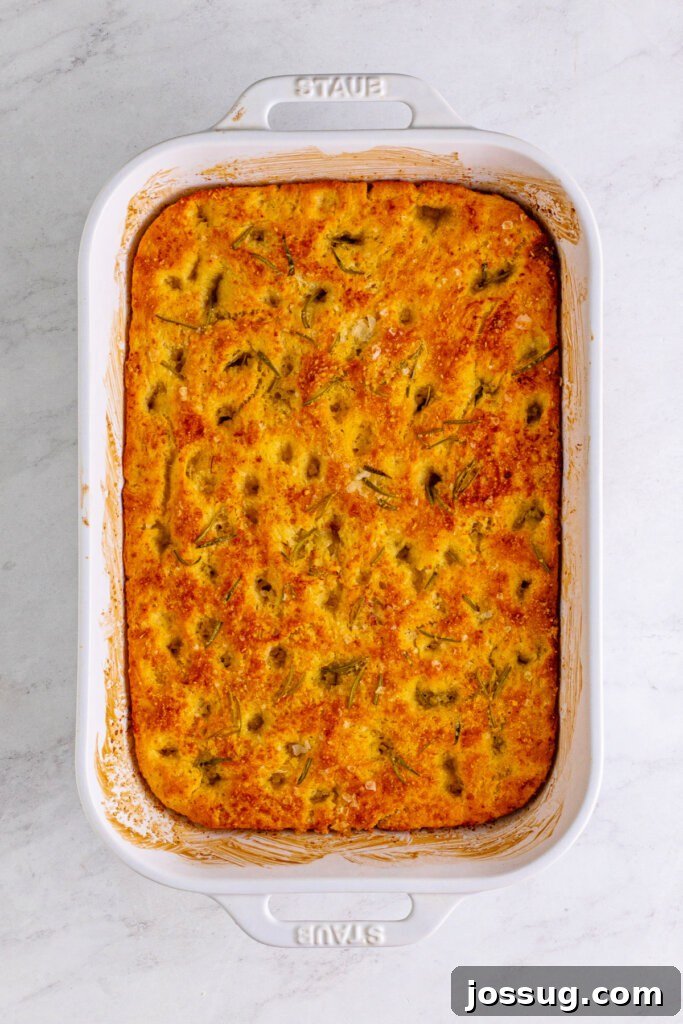
- Bake the Focaccia: Carefully transfer the prepared baking dish to the preheated oven. Bake for 20-25 minutes, or until the focaccia is beautifully golden brown on top and the edges are crispy. Keep an eye on it to prevent over-browning.
Part 3: Finishing Touches & Serving – The Grand Finale
- Prepare the Toasted Garlic Oil: While your focaccia is baking, prepare the aromatic toasted garlic oil. In a small skillet, combine the remaining 3 tablespoons of olive oil with the thinly sliced garlic cloves. Place the skillet over medium-low heat. Cook slowly, stirring occasionally, until the garlic slices are lightly golden brown and fragrant, but crucial, not burned. This slow cooking extracts maximum flavor from the garlic without making it bitter. This usually takes about 10-15 minutes.
- Serve Your Masterpiece: As soon as the golden focaccia emerges from the oven, immediately drizzle or brush it generously with the warm toasted garlic oil. Let the bread cool in the pan for about 10 minutes. This brief cooling period allows it to set slightly and makes it easier to handle. Then, carefully remove it from the pan, slice it into desired portions, and serve immediately while it’s still warm and fragrant.
Rosemary Focaccia Bread Recipe: FAQs & Expert Tips
This recipe is designed to make one generous 9×13-inch loaf of focaccia, which can typically be divided into about 15 substantial servings. Perfect for sharing or enjoying throughout the week!
While the hands-on preparation time is surprisingly short – only about 15 minutes for mixing the dough and another 25 minutes for baking – this isn’t a quick, same-day recipe. The dough requires an overnight rise in the refrigerator, followed by an additional 2-4 hours for its second rise the next day. So, while it demands patience, the active steps are relatively easy, especially for a homemade bread recipe!
Yes, absolutely! We cannot emphasize this step enough. While tempting to rush, allowing the dough to undergo a slow, cold fermentation overnight in the refrigerator is the secret to achieving the incredibly light, airy, and flavorful focaccia you desire. It develops the gluten structure and deepens the flavor profile, resulting in an unbeatable texture.
Focaccia is undoubtedly at its peak when enjoyed fresh, straight from the oven. However, any leftovers can be stored in an airtight container at room temperature for up to two days. To revive its delicious warmth and texture, simply place the bread in a 350°F (175°C) oven for 5-10 minutes until it’s heated through and slightly crispy again. Avoid using a microwave, as it can make the bread tough.
Focaccia is an incredibly versatile bread that pairs beautifully with a wide array of dishes. It’s a fantastic accompaniment to robust soups, fresh salads, or your favorite pasta dishes. Beyond meals, it shines as a delightful snack or appetizer, especially when served simply with high-quality olive oil for dipping, or with a creamy hummus. And of course, its sturdy yet soft nature makes it perfect for constructing delicious sandwiches and paninis.
Other Delicious Recipes You May Enjoy
If you loved making this Rosemary Focaccia, explore these other fantastic bread and meal recipes:
- Soft Italian Breadsticks
- Skillet Chicken and Peppers Dinner Recipe
- Garlic & Herb Cheese Bombs
- No-Knead Skillet Olive Bread
- Perfect Homemade Pizza Dough Recipe
15
servings
Rosemary Focaccia Bread
Jamie Sherman
15 minutes
25 minutes
12 hours
12 hours
40 minutes
Print Recipe
Equipment
-
9×13 inch Baking Dish
-
Silicone Oven Mitt
-
Small Skillet
-
Pastry Brush
-
Plastic Wrap
-
Whisk
-
Large Mixing Bowl
-
Measuring Cups and Spoons
Ingredients
For the Dough
- 2 ¼ teaspoons active dry yeast, 1 packet
- 1 cup warm water, 115°F (46°C)
- 2 tablespoons honey
- ¼ cup olive oil, divided
- 2 tablespoons grated Parmesan cheese
- 1 teaspoon Kosher salt
- 2 ½ cups all-purpose flour
For Assembly
- ¼ cup unsalted butter, very soft
- 1 tablespoon fresh rosemary leaves
- 5 tablespoons olive oil, divided
- 1 tablespoon grated Parmesan cheese
- 1 teaspoon flake sea salt
- 3 cloves garlic, thinly sliced
Instructions
-
Place the yeast, warm water, and honey in a large bowl, and whisk to combine. Let it sit until frothy, 5-10 minutes. If it is not frothy by this time, your yeast is dead, and you need to start over with new yeast.
-
Add 2 tablespoons of olive oil, cheese, and salt to the yeast mixture and stir to combine. Add the flour to the bowl and stir until a shaggy dough forms. Knead it a few times by hand in the bowl until a smooth ball forms.
-
Drizzle the remaining olive oil (from the dough ingredients) into the bowl and turn to coat the dough in the oil. Cover with plastic wrap and place in the fridge overnight to slowly rise and rest.
-
The next day, generously brush a 9×13 baking dish with half of the soft butter.
-
Use a fork and prick the dough a few times to gently deflate it. Add the dough to the prepared baking dish. Gently spread it out to fill the dish and brush the remaining butter over the exposed dough. Cover with plastic wrap and let it rise again, allowing it to double in size at room temperature for about 2-4 hours.
-
Preheat the oven to 425°F (220°C).
-
Sprinkle the fresh rosemary leaves over the top of the dough. Using your fingers, dimple the dough all over so it deflates again slightly, creating small indentations. Drizzle 2 tablespoons of olive oil on top and use a pastry brush to spread it around, ensuring all of the dough is covered with oil. Finally, sprinkle the remaining Parmesan cheese and flake salt evenly over the top.
-
Bake for 20-25 minutes until the focaccia is beautifully golden brown.
-
While the bread is baking, prepare the toasted garlic oil: Place the remaining 3 tablespoons of olive oil into a small skillet and add the thinly sliced garlic. Cook over medium-low heat, stirring occasionally, until the garlic is lightly browned but not burned (approximately 10-15 minutes).
-
Once the bread is out of the oven, immediately drizzle or brush it with the warm garlic oil. Let the bread cool for 10 minutes in the pan, then carefully remove it, cut into squares or strips, and serve immediately for the best experience.
Notes & Tips for Success
- Garlic Oil Serving Suggestion: The garlic oil can be drizzled directly onto the bread as instructed, or you can serve it on the side in a small bowl as a delicious dipping oil. If garlic isn’t your preference, you can also omit this step entirely.
- The Importance of the Overnight Rise: The overnight rise in the refrigerator is crucial for developing a richer flavor and achieving the signature light and airy texture of this focaccia. If you are pressed for time and absolutely cannot wait, you can skip the overnight step. Mix the dough as directed, but instead of refrigerating, cover it with plastic wrap and let it rise at room temperature until doubled in size (about 2 hours). Continue with the directions for the second rise, which will likely be ready in a shorter timeframe, approximately 60-90 minutes.
- Serving Temperature: This focaccia bread is truly best enjoyed warm, ideally straight out of the oven. However, it is also perfectly delicious served at room temperature. It makes fantastic sandwich bread when sliced horizontally to create two layers.
- Smaller Loaves: For those who prefer smaller portions or two separate loaves, you can use two 9×9-inch baking pans instead of one 9×13-inch pan. If using smaller pans, adjust the baking time to 15-20 minutes, or until golden brown.
- Flavor Variations: Use this recipe as a base and feel free to customize it with your favorite flavors! Other delicious additions include roasted garlic cloves, sun-dried tomatoes (chopped), Kalamata olives, caramelized onions, or even a sprinkle of red pepper flakes for a subtle kick.
- Reheating Instructions: To rewarm leftover focaccia, place it in a 350°F (175°C) oven for 4-5 minutes until it’s warmed through and the crust is slightly crispy. Do not microwave the bread, as it can cause it to become tough and rubbery.
- Storage and Freezing: Store leftover focaccia in an airtight container at room temperature for up to 3 days. For longer storage, it can be frozen for up to 3 months. To freeze, wrap slices tightly in plastic wrap, then aluminum foil, and place in a freezer-safe bag. Thaw at room temperature and reheat as directed above.
Nutrition Information (per serving)
Calories: 191kcal,
Carbohydrates: 19g,
Protein: 3g,
Fat: 12g,
Saturated Fat: 3g,
Polyunsaturated Fat: 1g,
Monounsaturated Fat: 7g,
Trans Fat: 0.1g,
Cholesterol: 9mg,
Sodium: 330mg,
Potassium: 34mg,
Fiber: 1g,
Sugar: 2g,
Vitamin A: 108IU,
Vitamin C: 0.2mg,
Calcium: 15mg,
Iron: 1mg
Nutrition information is automatically calculated and should only be used as an approximation.
Loved this recipe? Leave a comment below!
Your feedback helps us create more delicious content for you.