
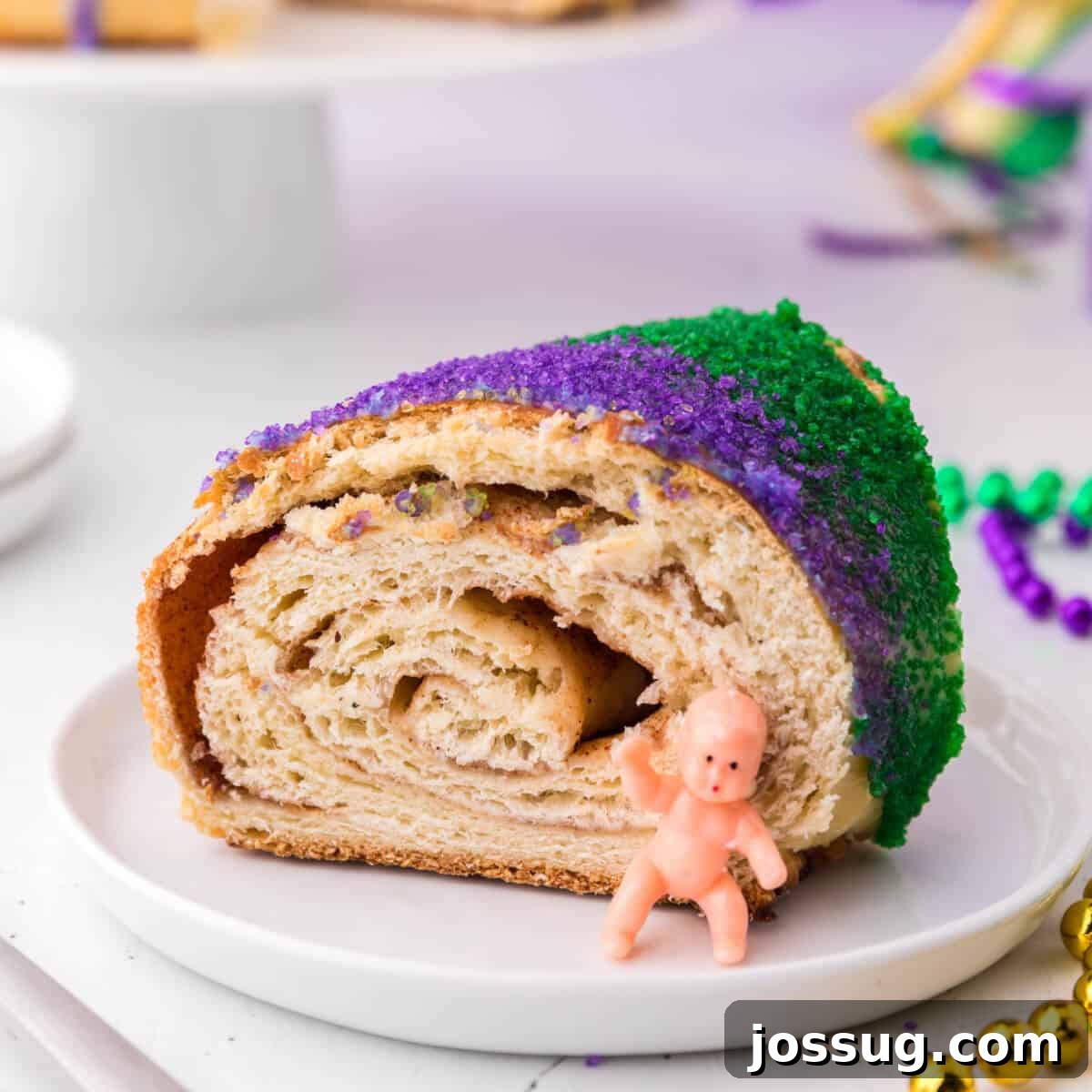
Laissez les bons temps rouler! Embrace the vibrant spirit of Mardi Gras by baking a truly authentic New Orleans King Cake. This traditional, sweet, and festive delight is more than just a dessert; it’s a cornerstone of Carnival celebrations, bursting with the warm flavors of cinnamon and nutmeg, and adorned with the iconic purple, green, and gold.
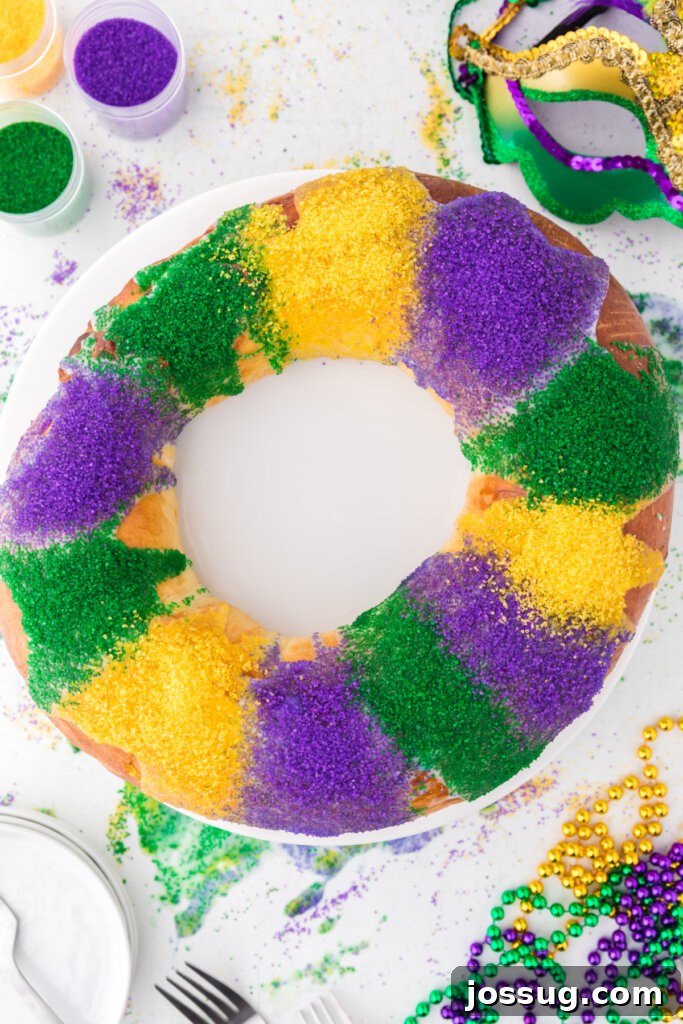
The Essence of Mardi Gras: The King Cake Tradition
As Mardi Gras approaches, the air in New Orleans fills with anticipation, music, parades, and, of course, the irresistible aroma of freshly baked King Cake. This delightful pastry is an absolute must-have for any Mardi Gras celebration, bringing sweetness and a touch of magic to gatherings across Louisiana and beyond.
Mardi Gras, famously known as Fat Tuesday, marks the culmination of the festive Carnival season and signals the advent of Lent, a period of reflection and fasting observed by many Christians. Throughout this jubilant season, which typically commences on January 6th (Epiphany) and concludes on Fat Tuesday, King Cakes are readily available in bakeries, grocery stores, and specialty shops, symbolizing the heart of the festivities.
A Rich History and Deep Symbolism
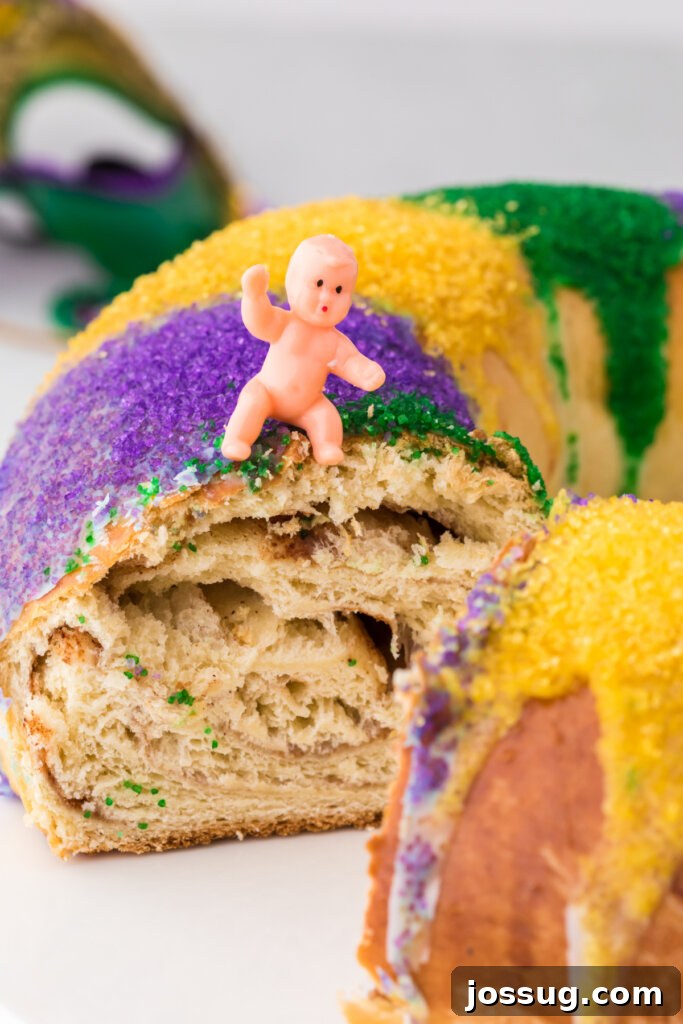
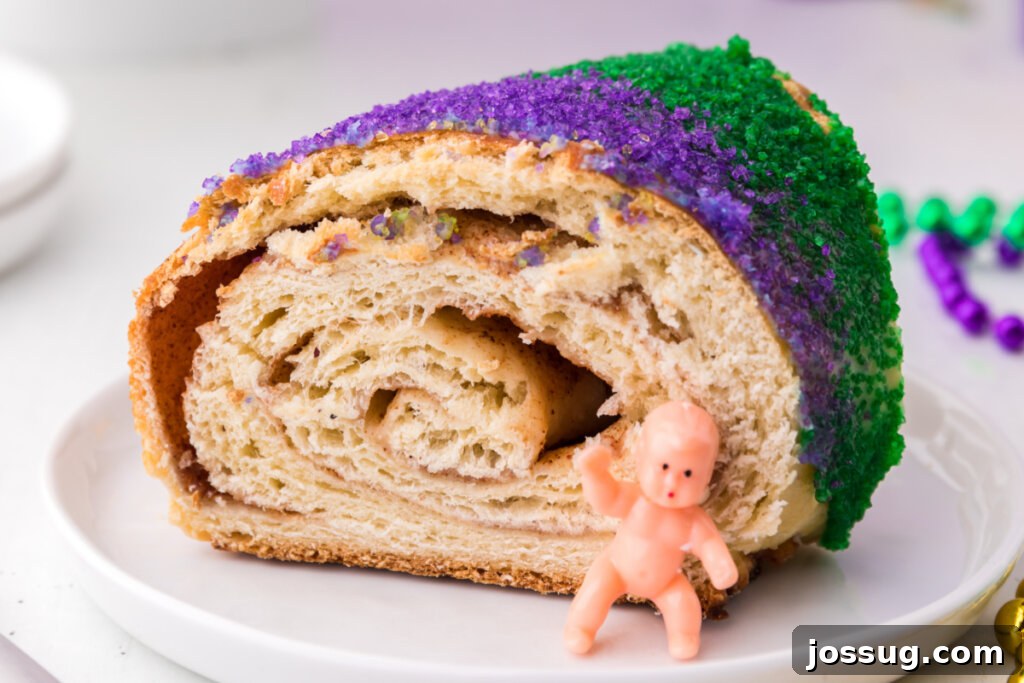
The tradition of the King Cake journeyed to New Orleans from France in the 1870s, deeply rooted in Christian history. Its origins trace back to the Epiphany, a celebration commemorating the visit of the Three Kings (Magi) to the baby Jesus. The cake’s circular shape, reminiscent of a crown, pays homage to these regal visitors. Traditionally, a small token—often a dried pea, a coin, or a tiny plastic baby figurine—is carefully hidden within the cake. The lucky individual who discovers this token in their slice is said to be blessed with good fortune for the coming year. They also traditionally bear the responsibility of either hosting the next Mardi Gras party or purchasing the next King Cake, perpetuating the joyful cycle of celebration. While the plastic baby is a classic inclusion, it’s always optional, and can be especially fun for families with children, adding an extra layer of excitement to the experience.
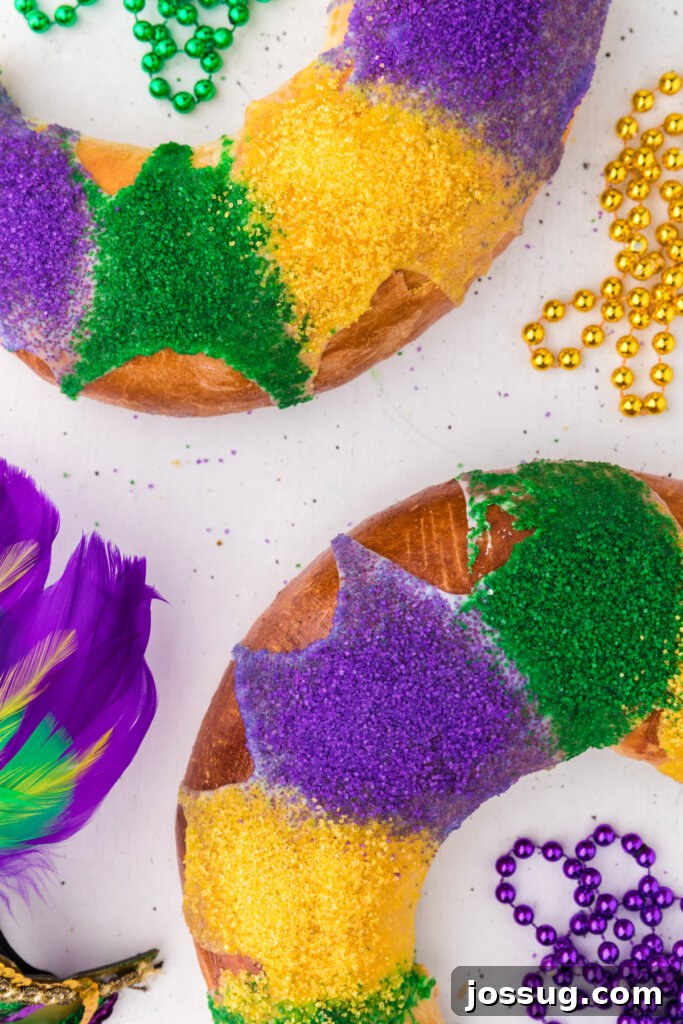
Beyond its shape and hidden treasure, the King Cake is instantly recognizable by its vibrant decoration in the “royal” colors of Mardi Gras: **violet**, symbolizing justice; **gold**, representing power; and **green**, signifying faith. These colors are not merely decorative but are imbued with meaning, making each slice a piece of history and celebration.
King Cake holds an unparalleled place in Louisiana’s Mardi Gras festivities, enjoyed by people of all generations. Whether you opt to purchase one from a local bakery, embark on the rewarding journey of baking one at home, or share a slice at a lively Mardi Gras party, this iconic cake is guaranteed to infuse your celebration with joy and deliciousness. So go ahead, indulge in a slice (or perhaps two!) of this delightful pastry, and fully immerse yourself in the exuberant spirit of Mardi Gras!
Mastering Your King Cake: Ingredients and Preparation
Creating a traditional New Orleans King Cake from scratch is a rewarding experience. Here’s a detailed look at the ingredients you’ll need and some tips for substitutions to ensure your cake turns out perfectly moist, flavorful, and festive.
Essential Ingredients for the Cake:
- Active Dry Yeast: Crucial for the cake’s rise. Ensure your yeast is active and not expired.
- Warm Water (110°F – 115°F): The perfect temperature to activate the yeast without killing it. A kitchen thermometer is very helpful here.
- Granulated Sugar: Sweetens the dough and provides food for the yeast, aiding in fermentation and rise.
- Softened Butter: Adds richness, tenderness, and flavor to the cake. Unsalted butter is usually preferred for baking to control salt levels.
- Warm Milk (110°F – 115°F): Like the water, ensures proper yeast activation and contributes to a soft, tender crumb.
- Egg Yolks: Enrich the dough, adding color, flavor, and moisture. They also help create a tender texture.
- Salt: Balances the sweetness and enhances all the other flavors.
- Grated Lemon Peel (Zest): Infuses the cake with a bright, citrusy aroma and taste, a classic touch in many traditional pastries.
- Ground Nutmeg: A key spice, contributing to the signature warm, nutty flavor of King Cake.
- All-Purpose Flour: The structural base of your dough. Having a range (3-4 cups) allows you to adjust for stickiness, as humidity can affect flour absorption.
- Ground Cinnamon: Mixed with sugar, this forms the delicious, aromatic filling that spirals through the cake.
- Beaten Egg: Used as an egg wash to brush the cake before baking, giving it a beautiful golden-brown crust and a slight sheen.
For the Vibrant Glaze and Decoration:
- Powdered Sugar: Forms the base of the sweet, smooth glaze.
- Lemon Juice: Adds a subtle tartness that cuts through the sweetness and brightens the flavor of the glaze.
- Water: Used to thin the glaze to your desired consistency. Start with a small amount and add more gradually.
- Green, Purple, and Yellow Sugars: These colored sugars are essential for decorating the King Cake in its traditional Mardi Gras colors. You can find them at most craft or baking stores, or easily make your own by mixing granulated sugar with a few drops of food coloring.
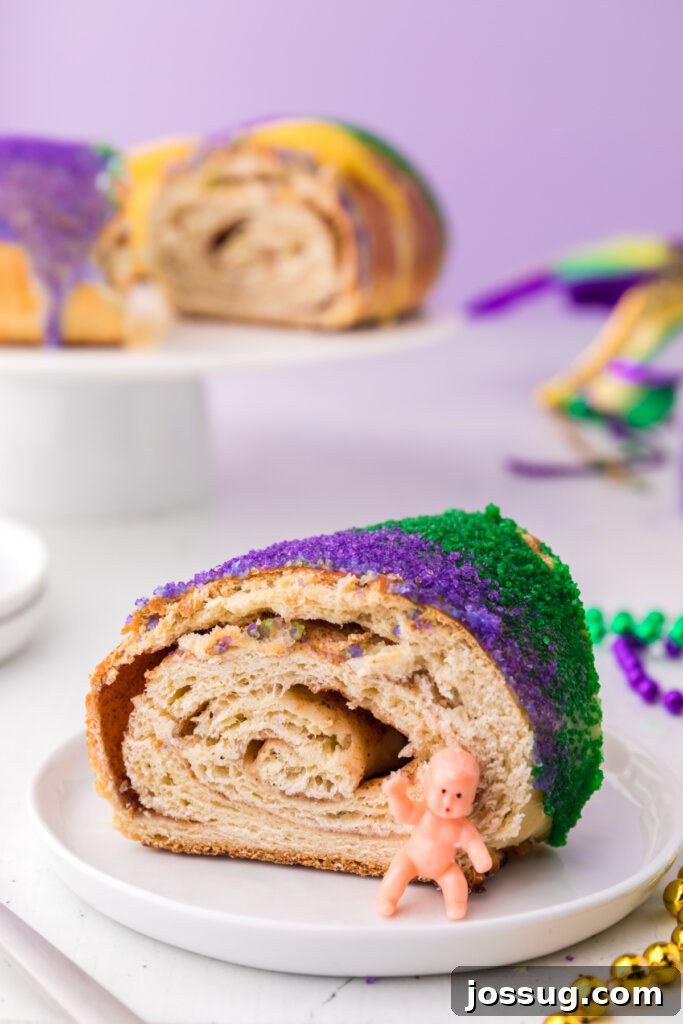
Step-by-Step Guide to Baking Your New Orleans King Cake
Baking this festive King Cake involves a few key stages, from preparing the rich dough to its iconic decoration. Follow these steps carefully for a delicious result that will impress everyone at your Mardi Gras celebration.
1. Preparing the Dough
Begin by activating your yeast. In a large mixing bowl, gently dissolve the active dry yeast in warm water (ensure the water temperature is between 110°F and 115°F to properly activate the yeast without killing it). Once dissolved, add ½ cup of granulated sugar, softened butter, warm milk, egg yolks, salt, grated lemon peel, ground nutmeg, and 2 cups of all-purpose flour. Using an electric mixer or a sturdy spoon, beat this mixture until it’s smooth and well combined. Gradually stir in enough of the remaining flour, a little at a time, until a soft, slightly sticky dough forms. Avoid adding too much flour, as this can lead to a dry cake. The dough should still be somewhat sticky to the touch.
2. First Rise and Kneading
Turn the soft dough out onto a lightly floured surface. Knead the dough for approximately 6-8 minutes until it becomes smooth and elastic. This process develops the gluten, which is essential for the cake’s texture. Once kneaded, transfer the dough to a greased bowl, turning it once to ensure the top is also lightly greased. Cover the bowl with plastic wrap or a clean kitchen towel and place it in a warm, draft-free spot. Let the dough rise until it has doubled in size, which typically takes about one hour. This “hands-off” time is crucial for developing flavor and texture.
3. Filling, Shaping, and Second Rise
Once the dough has doubled, gently punch it down to release the air. Turn the dough out onto a lightly floured surface. Using a rolling pin, roll the dough into a rectangular shape, roughly 16×10 inches. In a small separate bowl, combine 1 teaspoon of ground cinnamon with ¼ cup of granulated sugar. Evenly sprinkle this cinnamon-sugar mixture over the entire surface of the dough, leaving about a ½-inch border along the edges. Starting from one of the long sides, carefully roll the dough up jelly-roll style. Pinch the seam firmly to seal it completely, preventing the filling from escaping during baking. Place the seam-side down on a greased baking sheet. Gently bring the ends of the dough roll together to form a ring, pinching them firmly to seal. Cover the shaped cake and let it rise again in a warm place for another hour, or until it has doubled in size.
4. Baking and Glazing
Preheat your oven to 375°F (190°C). Before placing the cake in the oven, brush the entire surface with a beaten egg. This egg wash will give your King Cake a beautiful golden-brown finish as it bakes. Bake for 25-30 minutes, or until the cake is gloriously golden brown and cooked through. Once baked, transfer the cake to a wire rack and allow it to cool completely. While the cake cools, prepare the glaze. In a small bowl, whisk together the powdered sugar, lemon juice, and enough water (start with 2 tablespoons and add more drop by drop) until you achieve a smooth, pourable consistency. Spread or pour the glaze evenly over the cooled King Cake. Immediately sprinkle with the vibrant green, purple, and yellow colored sugars to complete its festive look.
New Orleans King Cake: FAQs and Tips
How long does it take to make this Mardi Gras Cake?
The active preparation and cooking time for this recipe is approximately 20 minutes for prep and 30 minutes for baking. However, you will need to account for two crucial rising periods for the dough, each lasting about an hour. Thankfully, these are “hands-off” times, allowing you to focus on other tasks while your dough develops.
How many servings does this King Cake recipe make?
This recipe is designed to yield a generous King Cake, typically providing enough for 12 to 15 servings, depending on how thinly you slice each piece. It’s perfect for sharing at a gathering!
Can you prepare the dough ahead of time?
Absolutely! If you anticipate a busy Mardi Gras, you can prepare the dough a day in advance. After the first rise, punch down the dough, place it in a greased bowl, cover it tightly with plastic wrap, and refrigerate it overnight. The next day, simply take it out of the fridge, let it come to room temperature for about 30-60 minutes, and then proceed with the shaping, second rise, and baking steps.
What are some popular fillings for King Cake?
While a simple cinnamon-sugar filling is classic, many variations exist. Popular additions include cream cheese filling, fruit fillings (like berry or apple), or a decadent pecan praline filling. Feel free to experiment with your favorite!
How long does King Cake last, and how should it be stored?
When stored properly in an airtight container at room temperature, King Cake will typically remain fresh and delicious for up to five days. For longer preservation, you can freeze the cake (unglazed or lightly glazed) for up to three months. Thaw it at room temperature before serving or glazing.
What is the significance of the baby in King Cake?
The small plastic baby figurine hidden inside the King Cake represents the Christ child. According to tradition, the person who finds the baby in their slice is considered lucky and is bestowed with the responsibility of either purchasing the next King Cake or hosting the subsequent Mardi Gras celebration.
How should I add a plastic baby to the King Cake?
It is strongly recommended NOT to bake the plastic baby in the cake, as it could melt or pose a safety hazard. The best practice is to add the baby *after* the cake has baked and cooled. Once your King Cake is cool and before you apply the glaze, make a small slit or cut a tiny hole in the bottom of the cake. Carefully insert the plastic baby into this opening. This way, the baby is hidden but safe to find.
Other Cajun & Creole Recipes You May Enjoy
- Homemade Cajun-Creole Seasoning
- Blackened Seasoning
- Blackened Steak and Shrimp with Citrus Butter Sauce
- Jambalaya
- Quick and Easy Cajun Shrimp
New Orleans King Cake Recipe
Laissez les bons temps rouler with this traditional New Orleans King Cake! This easy, festive recipe is perfect for celebrating Mardi Gras.
Equipment
- Rolling Pin
- Rubber Spatula or Wooden Spoon
- Stand Mixer (or Hand Mixer)
- Measuring Cups and Spoons
- Silicone Basting Brush
- Whisk
- Large Mixing Bowl
- Wire Cooling Rack
- Baking Sheet
Ingredients
For the Cake:
- 2 packages active dry yeast (¼ oz. each)
- ½ cup warm water (110°F – 115°F)
- ½ cup granulated sugar
- ½ cup butter, softened (1 stick)
- ½ cup warm milk (110°F – 115°F)
- 2 large egg yolks
- 1 teaspoon salt
- 1 teaspoon grated lemon peel
- ¼ teaspoon ground nutmeg
- 3 – 4 cups all-purpose flour
- 1 teaspoon ground cinnamon (for filling)
- ¼ cup sugar (for filling)
- 1 large egg, beaten (for egg wash)
For the Glaze:
- 1 ½ cups powdered sugar
- 2 teaspoons lemon juice
- 2-3 tablespoons water (as needed for consistency)
- Green, purple, and yellow sugars (for decorating)
Additional items:
- Plastic baby, optional
Instructions
- In a large bowl, dissolve the yeast in the warm water. Add the ½ cup sugar, softened butter, warm milk, egg yolks, salt, lemon peel, nutmeg, and 2 cups of flour. Beat until the mixture is smooth. Gradually stir in enough of the remaining flour to form a soft, slightly sticky dough.
- Turn the dough out onto a lightly floured surface. Knead the dough until it is smooth and elastic, approximately 6-8 minutes. Place the kneaded dough in a greased bowl, turning it once to ensure the top is also greased. Cover the bowl and let the dough rise in a warm place until it has doubled in size (about 1 hour).
- Once risen, gently punch down the dough. Turn it onto a lightly floured surface and roll it into a 16×10-inch rectangle. In a small bowl, combine the 1 teaspoon of cinnamon with the ¼ cup sugar. Sprinkle this mixture evenly over the dough, leaving a ½-inch border around the edges. Roll the dough up jelly-roll style, starting from one of the long sides. Pinch the seam firmly to seal.
- Place the dough ring, seam-side down, on a greased baking sheet. Pinch the ends together to form a continuous ring. Cover and let the cake rise again in a warm place until doubled in size (about another hour).
- Preheat your oven to 375°F (190°C). Brush the top of the risen cake with the beaten egg. Bake for 25-30 minutes, or until the cake is golden brown. Once baked, transfer the cake to a wire rack and allow it to cool completely.
- For the glaze, combine the powdered sugar, lemon juice, and enough water (starting with 2 tablespoons) to achieve your desired smooth, pourable consistency. Spread or pour the glaze over the cooled cake. Immediately sprinkle with the green, purple, and yellow colored sugars to decorate.
- (Optional: If adding a plastic baby, make a small slit in the bottom of the cooled cake before glazing and insert the baby.)
Notes
- King Cake typically lasts up to five days when stored in an airtight container at room temperature. It can also be frozen for up to three months.
- A small plastic baby figurine is often hidden inside the cake. Tradition dictates that whoever finds the baby in their slice of cake is responsible for buying the next King Cake or hosting the next Mardi Gras celebration.
- To add a plastic baby to your cake: After baking and once the cake has cooled completely, but before decorating, make a small slit in the bottom of the cake and carefully place the baby into the hole. Avoid baking the plastic baby directly in the cake.
Nutrition Information
(Nutrition information is an approximation and will vary based on ingredients and preparation.)
Calories: 251 kcal,
Carbohydrates: 42g,
Protein: 4g,
Fat: 8g,
Saturated Fat: 4g,
Polyunsaturated Fat: 1g,
Monounsaturated Fat: 2g,
Trans Fat: 0.2g,
Cholesterol: 54mg,
Sodium: 167mg,
Potassium: 59mg,
Fiber: 1g,
Sugar: 22g,
Vitamin A: 254IU,
Vitamin C: 0.4mg,
Calcium: 23mg,
Iron: 1mg
Originally published on February 25, 2014. Updated on February 6, 2023.