
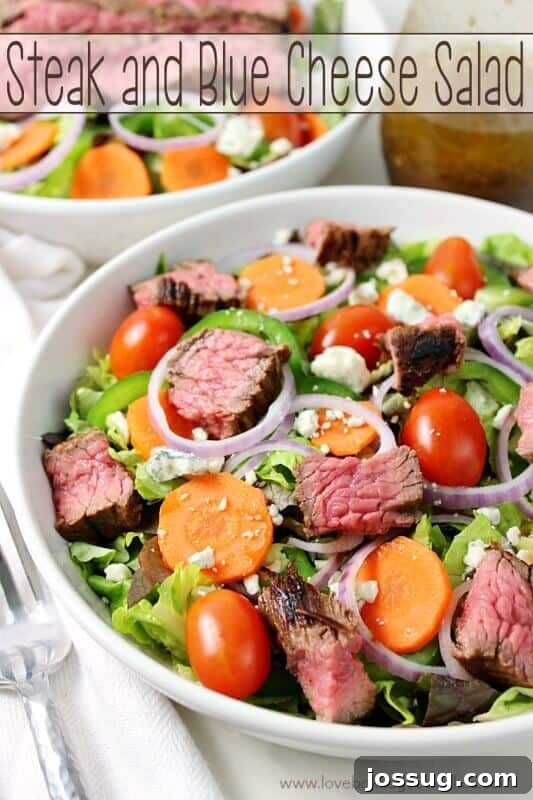
Are you searching for a meal that’s both incredibly satisfying and effortlessly simple to prepare? This Steak and Blue Cheese Salad is the answer! It’s an ideal choice for a quick and easy weeknight dinner, bursting with flavor that your entire family will absolutely love. Join us as we explore the delicious journey of this recipe, inspired by the remarkable dairy farms of Arizona.
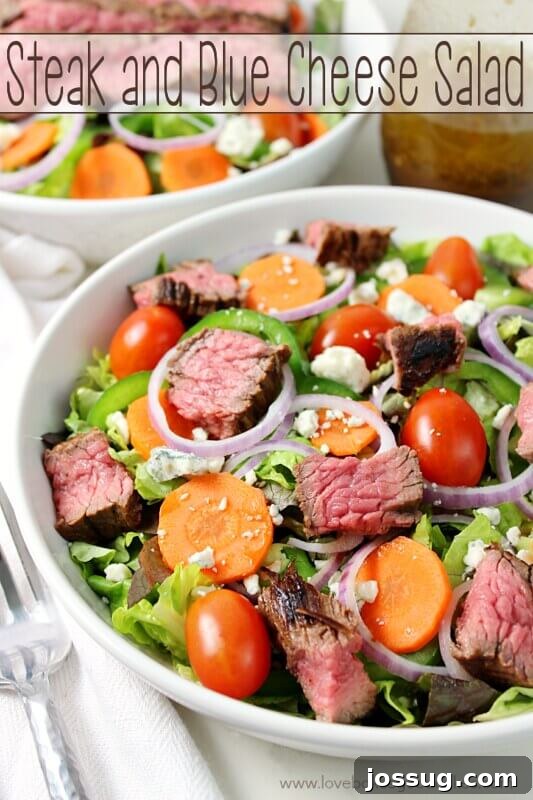
Steak and Blue Cheese Salad: A Farm-to-Table Inspired Delight
This culinary creation isn’t just a recipe; it’s a testament to quality ingredients, many of which find their roots in unexpected places. My appreciation for dairy products deepened significantly after an enriching experience. I had the wonderful opportunity to visit a local dairy farm, facilitated by the Dairy Council of Arizona through a campaign with Blended Extended. While all opinions expressed here are genuinely my own, the insights gained were truly invaluable.
Arizona’s Unexpected Dairy Wonderland
If you’ve been following my social media, you might have caught a glimpse of my recent dairy farm tour. I’m sure some of you, much like myself initially, might have wondered, “Do they really have dairy farms in Phoenix, in the middle of a desert?” It’s a surprising revelation, but indeed, Arizona boasts a thriving dairy industry with numerous farms scattered across the region!
Far from a small-scale operation, Arizona is home to an impressive 100 dairy farms, collectively housing over 190,000 cows! What’s even more remarkable is that an overwhelming 98% of these dairies are family-owned and operated. This strong family heritage ensures a deep commitment to animal welfare, sustainable practices, and the production of high-quality milk. It’s truly inspiring to see how these dedicated families uphold a legacy of farming, contributing significantly to both local communities and the national food supply.
Innovation in the Desert: The Ingenuity of “Saudi Barns”
When one pictures a dairy farm, traditional barns in lush, green pastures often come to mind. However, Arizona’s unique climate necessitates innovative solutions. Unlike the barns seen in cooler regions, Arizona dairies have ingeniously adapted to our hot summers with specialized structures known as “Saudi Barns.” These aren’t just ordinary sheds; they are meticulously designed environments equipped with state-of-the-art cooling systems.
Each Saudi Barn features an array of powerful fans and strategically placed misters that work in tandem to create a significantly cooler microclimate for the cows. The effectiveness of this system is truly astounding – it can make the shade within the barn up to 30 degrees Fahrenheit cooler than the scorching outdoor temperatures! This commitment to ensuring cow comfort and mitigating heat stress highlights the advanced animal welfare practices employed by Arizona’s dairy farmers. Healthy, comfortable cows are happier cows, and happier cows produce better milk, showcasing the farmers’ dedication to both their animals and the quality of their products.
A Glimpse into Farm Life: The Caballero Dairy Farm Experience
My children and I, alongside several other Phoenix-area bloggers and their families, had the distinct privilege of visiting one of these remarkable local dairy farms: The Caballero Dairy Farm. Established in 1957, the Caballero family has a long-standing history in dairy farming, eventually relocating to its current, modern facility in Eloy, Arizona, in 2006.
This firsthand look into the daily operations of a dairy farm truly offered a profound perspective. As a parent, I constantly strive to provide my family with safe and wholesome food. The tour revealed the countless, meticulous measures in place to ensure the safety and integrity of our food supply. From the moment products leave the farm gates to when they reach store shelves, every single step is rigorously monitored, tested, and documented. This comprehensive oversight offers immense reassurance, knowing that the dairy products we consume adhere to the highest standards of safety and quality.
Prioritizing Cow Health and Natural Practices
In an era where consumers are increasingly concerned about what goes into their food, especially regarding livestock, I was particularly interested in learning about the use of antibiotics and hormones. It was incredibly reassuring to discover that the dairy cows in Arizona are not treated with artificial hormones. This commitment to natural processes is a cornerstone of their farming philosophy.
Furthermore, the protocols for animal health are exceptionally stringent. When a cow falls ill and requires veterinary care, including antibiotics, it is immediately separated from the main herd. During this period, its milk is strictly excluded from the general food supply. Only once the cow has fully recovered and is completely free of all antibiotics, as confirmed by rigorous testing, is it allowed to rejoin the milking herd. This meticulous approach prevents any antibiotic residues from entering the milk supply, safeguarding public health. Veterinarians play an absolutely vital role in this system, visiting frequently to ensure that all cows remain in optimal health, preventing illness where possible, and providing expert care when needed. Their continuous oversight is fundamental to maintaining the well-being of the herd and the purity of the dairy products.
The Science of Sustenance: Feeding Dairy Cows
Just like humans, dairy cows thrive on a healthy, balanced diet. The adage “you are what you eat” holds true for cows, too; what they consume directly influences the quality and quantity of the milk they produce. What many people might not know is that dairy farms employ dedicated cow nutritionists! These specialists work diligently to formulate personalized eating plans for each cow, tailored to their specific needs throughout different life stages. For instance, a pregnant cow will receive a specially adjusted diet to support her and her growing calf, ensuring she gets the additional nutrients required during this crucial time, differing significantly from the diet of a milking cow.
And speaking of eating, prepare to be amazed by a cow’s daily intake! A typical dairy cow can consume an astonishing 100 pounds of food and drink over 50 gallons of water every single day. This substantial and carefully managed diet fuels their incredible productivity. With such robust nutrition, it’s no wonder that a single cow can produce enough milk to fill up to 100 glasses per day! This incredible output underscores the efficiency and dedication involved in modern dairy farming, where optimal nutrition is key to both animal health and milk production.
Arizona: A Hidden Hub for Blue Cheese Production
During our fascinating tour of the Caballero Dairy Farm, we uncovered another intriguing fact: the Arizona Dairy Co-op is actually the second-largest producer of blue cheese in the entire United States! This revelation was quite a surprise, given the desert landscape, and it only seemed right to feature this incredible local product in a delicious recipe. I had initially considered sharing a recipe highlighting local cheese curds – those irresistible bites of fresh cheese often don’t last long enough to make it into a recipe at my house!
On that note, if you ever find yourself in the Phoenix area, you absolutely must seek out the Jalapeno Cheese Curds from the Arizona Cheese Company in Tempe. Trust me, they are an explosion of flavor – totally “the bomb-dot-com” as they say! You’ll thank me later for that recommendation.
Crafting the Perfect Steak and Blue Cheese Salad
This Steak and Blue Cheese Salad is designed for simplicity without compromising on taste or nutritional value. It’s a quick, healthy, and utterly delicious meal that comes together with minimal fuss. This salad is particularly perfect for those sweltering summer days when the last thing you want to do is spend hours over a hot stove, but you still need a substantial and satisfying meal. It’s light yet filling, offering a wonderful alternative to heavier dishes.
The beauty of this recipe lies in its versatility. You can easily adapt it to your family’s preferences, adding or substituting vegetables, or even experimenting with different cuts of steak. The star combination of tender, perfectly grilled steak and pungent, creamy blue cheese creates a symphony of flavors that is both sophisticated and comforting.
Making the Steak and Blue Cheese Salad: Step-by-Step
I sincerely hope you’ll try this Steak and Blue Cheese Salad recipe. Imagine: you might just be enjoying blue cheese made with high-quality Arizona milk, a product of the dedicated farmers and innovative practices we’ve explored! It’s a delicious way to experience the local bounty.
For those eager to delve deeper into the fascinating world of Arizona dairy, I highly recommend visiting the Dairy Council of Arizona’s website. Not only can you learn more about dairy farming practices and the nutritional benefits of milk, but you’ll also find a treasure trove of other awesome recipes. Don’t forget to stay updated on the latest news and discover more delicious creations by following the Dairy Council of Arizona on their social media channels: Facebook, Twitter, Pinterest, and Instagram. Enjoy your meal and happy cooking!
No ratings yet
Steak and Blue Cheese Salad Recipe
Jamie Sherman
30
30
1
Pin Recipe
Print Recipe
Ingredients
For the Steak Marinade & Salad Dressing
- ⅓ cup olive oil
- 3 tablespoons red wine vinegar
- 2 tablespoons lemon juice
- 2 cloves garlic, minced
- ½ teaspoon salt
- ⅛ teaspoon ground black pepper
- 1 teaspoon Worcestershire sauce
- 1 teaspoon Dijon mustard
For the Steak
- 1 – 1 ½ lb. flank steak
For the Salad Assembly
- 8 cups romaine lettuce, rinsed, dried and torn into bite-sized pieces
- 1 container grape tomatoes, 10.5 oz.
- 1 small green pepper, seeded and cut into slices
- 1 large carrot, peeled and cut into slices
- ½ cup sliced red onion
- ¾ cup crumbled blue cheese
Instructions
-
In a large zip-top bag, combine all of the ingredients for the steak marinade and salad dressing. Gently squeeze the mixture to combine thoroughly. Place the flank steak in the bag, seal, ensuring most of the air is removed. Allow the steak to marinate for 30 minutes, or for enhanced flavor, up to 8 hours in the refrigerator, turning the bag over at least once to ensure even marination. Reserve a portion of the marinade for dressing the salad, if desired.
-
Preheat your grill to high heat.
-
Lightly oil the grill grates. Remove the steak from the marinade, discarding any remaining marinade (or if you reserved a portion, set it aside for dressing). Place the steak on the preheated grill and cook for 3-5 minutes per side, or until your desired level of doneness is achieved. Once cooked, transfer the steak to a cutting board and let it rest for 7 minutes. This crucial step allows the juices to redistribute, ensuring a tender and flavorful steak.
-
While the steak is resting, if you didn’t reserve marinade, prepare your salad dressing by whisking together the separate dressing ingredients in a small bowl. (Note: the marinade ingredients are the same as the dressing ingredients, so you can either reserve half before marinating or prepare a fresh batch.)
-
After the steak has rested, slice it thinly against the grain. For easier eating in a salad, you may also cut the slices into bite-sized pieces.
-
To assemble the salad, divide the fresh romaine lettuce, grape tomatoes, green pepper, carrot, and red onion evenly among 6 plates. Arrange the sliced beef over the vegetables. Finish by crumbling blue cheese generously over each salad and drizzling with the prepared dressing. Serve immediately for optimal freshness and flavor.
Notes
- Adjust steak cooking time to achieve your preferred doneness (rare, medium-rare, medium, well-done). A meat thermometer can help ensure accuracy.
- For a richer flavor, consider grilling the vegetables lightly before adding them to the salad.
- Experiment with other types of cheese if blue cheese is not to your liking, such as feta or goat cheese.
Nutrition
Calories:
468
kcal
,
Carbohydrates:
9
g
,
Protein:
30
g
,
Fat:
35
g
,
Saturated Fat:
9
g
,
Polyunsaturated Fat:
3
g
,
Monounsaturated Fat:
21
g
,
Cholesterol:
81
mg
,
Sodium:
704
mg
,
Potassium:
797
mg
,
Fiber:
3
g
,
Sugar:
4
g
,
Vitamin A:
7955
IU
,
Vitamin C:
24
mg
,
Calcium:
155
mg
,
Iron:
3
mg
Nutrition information is automatically calculated, so should only be used as an approximation.
Like this recipe? We’d love to hear from you!
Leave a comment or share your thoughts below.
Other Delicious Recipes You May Enjoy:
- Peach & Raspberry Chicken Salad with Peach Vinaigrette
- Fiesta Lime Shrimp Salad