
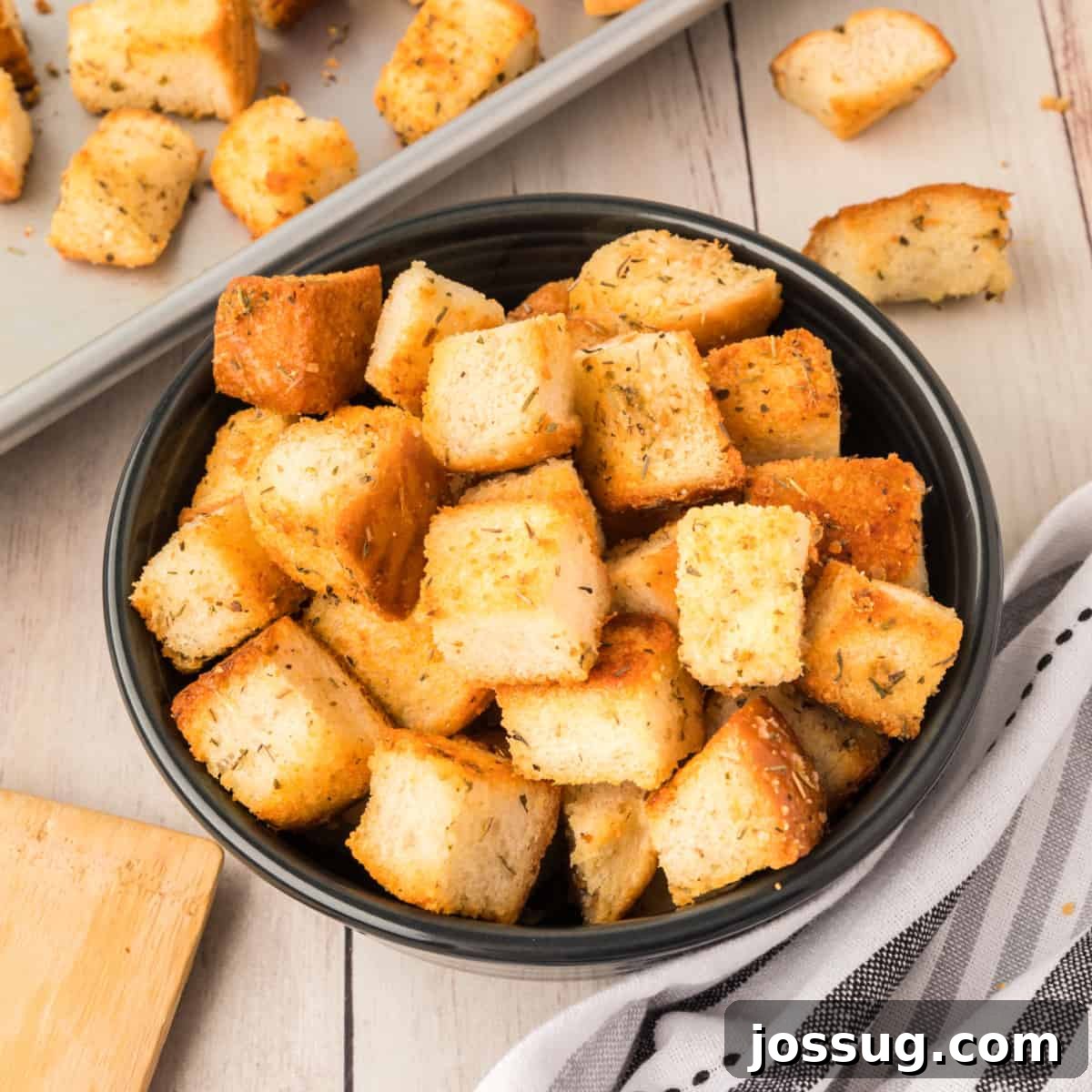
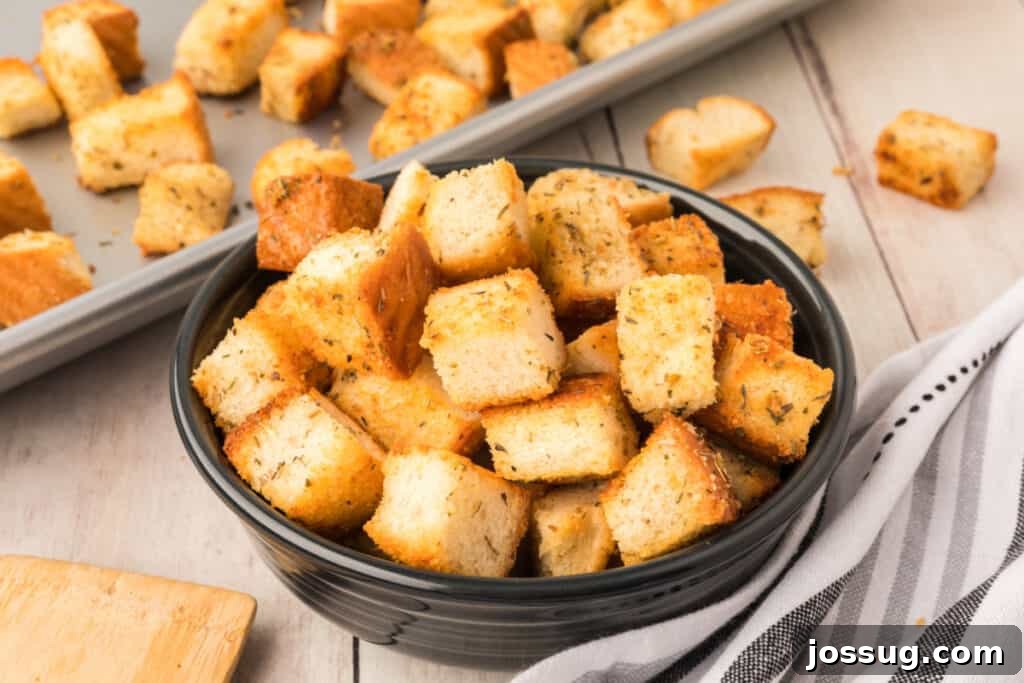
Transform your everyday salads, soups, and even snacks with the irresistible crunch and savory goodness of homemade Garlic Parmesan Croutons. Forget store-bought options; crafting your own croutons is surprisingly easy, incredibly rewarding, and ensures a burst of fresh flavor with every bite. Elevate simple dishes into gourmet experiences with this quick and delicious recipe.
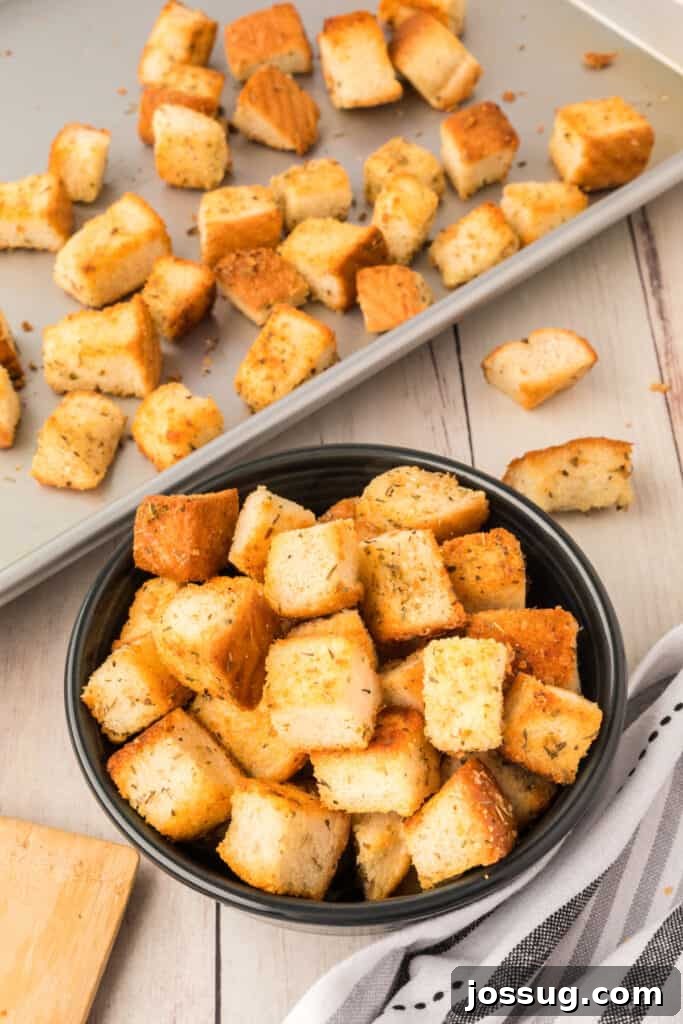
Unlock Flavor: Easy Homemade Garlic Parmesan Croutons for Every Meal
There’s a special kind of magic that happens when you create something delicious from scratch in your own kitchen. This holds particularly true for croutons. Often an afterthought, these crunchy morsels have the power to transform a humble bowl of greens or a comforting cup of soup into a culinary delight. And when they’re infused with the robust flavors of garlic and Parmesan cheese, they become truly unforgettable.
Why Homemade Croutons Are a Game-Changer
Many home cooks might reach for a bag of pre-made croutons at the grocery store, but once you experience the superior taste and texture of homemade, there’s simply no turning back. This recipe for Garlic Parmesan Croutons is not just an excellent way to add crunch; it’s a testament to how simple ingredients can yield extraordinary results.
One of the primary advantages of making croutons at home is the unparalleled freshness. Store-bought croutons often contain preservatives and can taste stale or bland. Homemade versions, however, are made with fresh bread and quality ingredients, resulting in a crispness and depth of flavor that a commercial product simply cannot replicate. The aroma alone as they toast in your oven is enough to convince you!
Beyond taste, homemade croutons offer fantastic economic and environmental benefits. They provide a brilliant solution for using up day-old or slightly stale bread that might otherwise go to waste. Instead of discarding those forgotten loaves or leftover baguette ends, you can give them a delicious new life. This reduces food waste and saves money, making it a win-win for your pantry and your wallet.
Beyond the Bag: The Unmatched Taste of Freshly Baked Croutons
The sensory experience of homemade croutons goes far beyond just crunch. Each bite delivers a harmonious blend of savory garlic, salty Parmesan, and aromatic herbs, all perfectly toasted into a golden, irresistible cube. You have complete control over the seasoning, allowing you to adjust the garlic intensity, cheese richness, and herb blend to suit your personal preferences. This level of customization is impossible with mass-produced croutons.
Selecting Your Bread: The Foundation of Perfect Croutons
The type of bread you choose forms the backbone of your croutons, influencing their final texture and flavor. While this recipe is incredibly versatile, opting for certain varieties can elevate your crouton game even further.
French bread, baguettes, or Italian bread are often preferred for their sturdy crumb and ability to achieve a beautiful crispness without becoming too hard. Their neutral flavor also provides an excellent canvas for the robust garlic and Parmesan. Artisan loaves like sourdough can also introduce a delightful tangy note, adding another layer of complexity to your croutons.
The term “day-old bread” is frequently mentioned in crouton recipes, and for good reason. Slightly stale bread has lost some of its moisture, making it easier to cut into cubes and more receptive to absorbing the butter and seasonings. This pre-drying also means it will toast faster and more evenly in the oven, resulting in a perfectly crisp, rather than chewy, crouton. If you only have fresh bread, you can still use it; simply cut it and let it air dry for an hour or two, or toast the plain bread cubes in the oven for a few minutes before adding the wet ingredients.
Don’t limit yourself to just artisan loaves. Regular white or whole wheat sandwich bread slices can also be transformed into delicious croutons. This is particularly useful for reducing waste in your everyday kitchen. Even leftover hot dog or hamburger buns, when cut into cubes and seasoned, can make surprisingly delightful croutons. The key is to ensure the bread is firm enough to hold its shape once cubed and not overly soft.
Essential Ingredients & Savvy Substitutions
Creating these flavorful Garlic Parmesan Croutons requires just a few basic ingredients, many of which you likely already have on hand. The beauty of this recipe also lies in its flexibility, allowing for various substitutions to match your pantry or dietary needs.
- Butter: Melted butter provides a rich, indulgent base for the seasonings and helps achieve that golden-brown crisp. For a dairy-free option, olive oil or vegetable oil are excellent substitutes, offering a slightly different but equally delicious flavor profile. You could also try clarified butter for an even purer butter taste.
- Grated Parmesan Cheese: This adds a distinctive salty, umami kick. For the best flavor, freshly grated Parmesan Romano is recommended. If unavailable, other hard, salty cheeses like Pecorino Romano or Asiago can be used. For a vegan alternative, nutritional yeast offers a cheesy, savory taste. This ingredient can also be omitted entirely for plain garlic herb croutons.
- Dried Oregano and Dried Thyme: These classic herbs contribute an earthy, aromatic depth. Feel free to experiment with other dried herbs such as basil, rosemary, marjoram, or a pre-mixed Italian seasoning blend. Adjust the quantities to your preference, or even use fresh finely chopped herbs if you have them, though they might require slightly less baking time.
- Garlic Powder: A staple for consistent garlic flavor. If you prefer fresh garlic, mince one clove for approximately every 1/8 teaspoon of garlic powder. For a roasted garlic flavor, you could even mash roasted garlic and mix it into the butter. Just be mindful that fresh garlic burns faster, so watch your croutons carefully.
- Salt: Essential for enhancing all the other flavors. Fine sea salt or kosher salt works perfectly. If you’re managing sodium intake, a salt substitute like Mrs. Dash or a low-sodium seasoning blend can be used. Flaky sea salt added after baking can also provide a pleasant textural crunch.
- Day-old Bread: As discussed, sturdy, slightly stale bread is ideal. Cut it into uniform 3/4-inch cubes for even toasting. If using fresh bread, a brief dry toast in the oven before adding butter can help achieve optimal crispness.
Crafting Your Croutons: A Simple Step-by-Step Guide
The process of making homemade Garlic Parmesan Croutons is remarkably straightforward, requiring minimal effort for maximum flavor. Follow these simple steps for perfect results every time.
Begin by preheating your oven to 325°F (160°C). This moderate temperature allows the croutons to toast evenly and slowly, ensuring they dry out and become crisp throughout without burning on the outside. While the oven warms up, prepare your bread and seasonings.
In a large mixing bowl, combine the melted butter with the grated Parmesan cheese, dried oregano, dried thyme, garlic powder, and salt. Whisk these ingredients together until well combined, creating a fragrant, savory coating. Add your cubed bread to this mixture. Using a rubber spatula or wooden spoon, gently toss the bread cubes until they are evenly coated with the butter and seasoning mixture. Ensure every cube gets a share of the delicious flavor.
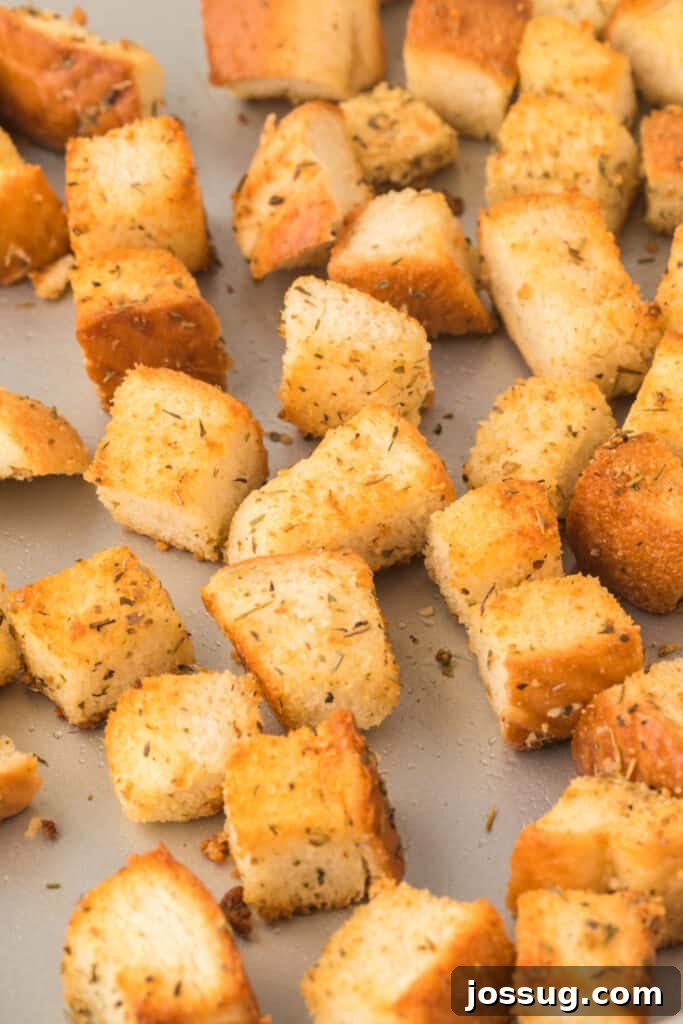
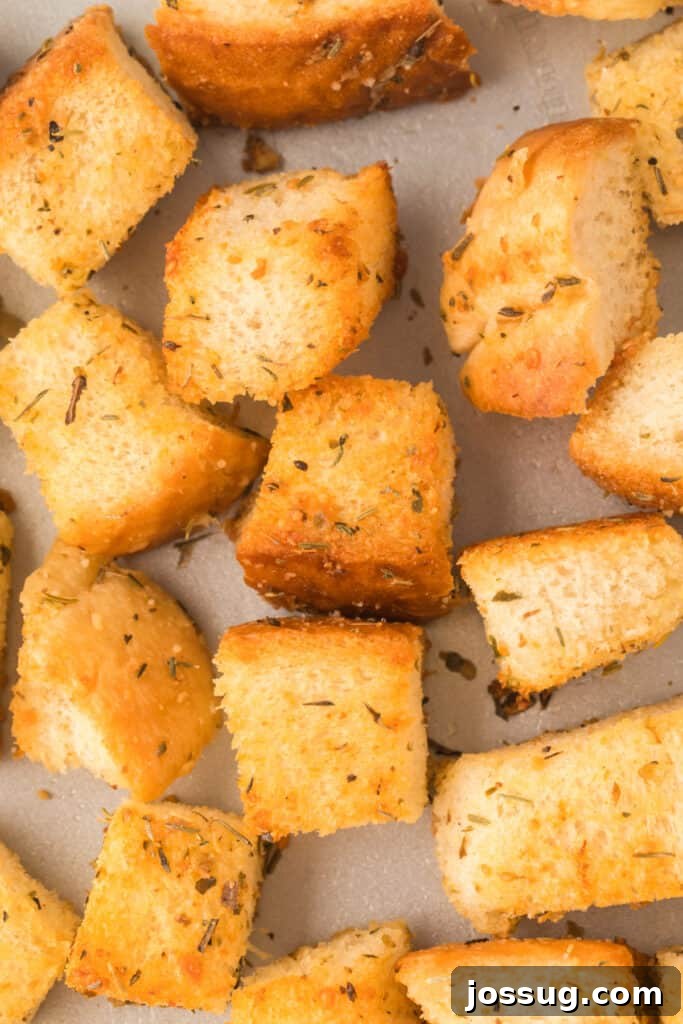
Next, spread the coated bread cubes in a single layer onto a large baking sheet. It’s crucial not to overcrowd the pan, as this can steam the bread instead of toasting it, leading to soggy croutons. If necessary, use two baking sheets. Bake in the preheated oven for 12 to 18 minutes, or until the croutons are beautifully golden brown and delightfully crispy. Keep a close eye on them, especially towards the end, as oven temperatures can vary.
Once baked to perfection, remove the croutons from the oven and allow them to cool completely on the baking sheet. This cooling period is essential for them to achieve their ultimate crispness. As they cool, any residual moisture will evaporate, locking in that satisfying crunch.
Versatile Serving Suggestions: More Than Just Salad Toppers
While Garlic Parmesan Croutons are famous for their role in salads, their savory crunch makes them incredibly versatile. Here are numerous ways to enjoy these homemade delights beyond the obvious:
- Salads: The quintessential pairing! Elevate any green salad, from a classic Caesar salad to a vibrant Caprese, by tossing in a handful of these flavorful croutons. They add a delightful textural contrast and a burst of savory flavor that complements fresh greens and tangy dressings.
- Soups: A handful of these croutons floating atop a warm bowl of soup is pure comfort. They’re perfect with creamy tomato soup, hearty potato soup, a chunky minestrone, or even a rich French onion. They slowly absorb some of the broth, offering both crunch and a tender, flavor-soaked bite.
- Pasta Dishes: Sprinkle crushed or whole croutons over pasta dishes like spaghetti carbonara, creamy fettuccine Alfredo, or a simple pasta with marinara. They introduce a textural element that can replace or complement breadcrumbs, adding a gourmet touch.
- Chili: For a unique twist on a classic, scatter Garlic Parmesan Croutons over a piping hot bowl of hearty chili. The crunch provides a wonderful contrast to the soft, savory beans and meat, making each spoonful more exciting.
- Casserole Topping: Move over, traditional breadcrumbs! Use these croutons as a creative, flavorful topping for baked casseroles. They’re fantastic on macaroni and cheese, baked chicken dishes, or even vegetable gratins, baking to a golden, crispy perfection.
- Snacking: Don’t underestimate their power as a standalone snack! These savory, cheesy, and garlicky bites are addictive straight off the baking sheet or from a storage container. Keep a batch handy for satisfying those mid-day cravings.
- Appetizers: Incorporate them into your appetizer spread. Use them as a crunchy element for dips like spinach and artichoke, or scatter them around a charcuterie board for an unexpected savory crunch alongside cheeses and cured meats.
- Stuffed Vegetables: Add a layer of texture and flavor to your stuffed creations. Mix finely crushed croutons into the filling for bell peppers, mushrooms, or zucchini boats before baking, enhancing both taste and consistency.
- Breakfast: Get creative with breakfast! Top your morning scrambled eggs, omelets, or even avocado toast with a few croutons for a surprising and savory crunch that elevates your first meal of the day.
- Garnish for Risotto: For a delightful contrast, sprinkle a few Garlic Parmesan Croutons over a creamy risotto. The crispy texture cuts through the richness of the rice, adding a refreshing dimension to each spoonful.
- Side Dish: Serve them alongside roasted vegetables, grilled chicken, or pan-seared fish as a flavorful, crunchy side. They add a simple yet elegant touch that complements a variety of main courses.
Homemade Croutons: FAQs
Sturdy breads such as French bread, baguette, Italian bread, or even sourdough are ideal. Their firm texture holds up well during toasting, resulting in a perfectly crispy crouton. Day-old or slightly stale bread is often preferred as it has less moisture, which helps it absorb flavors better and crisp up more effectively. Uniformly cut cubes ensure even baking.
Absolutely! Gluten-free bread can be used to make excellent croutons. Look for a sturdy gluten-free loaf that doesn’t crumble easily. The process remains the same: cube the bread, toss with seasonings, and bake until golden and crispy. You might find some gluten-free breads crisp up even faster, so monitor them closely in the oven.
Once completely cooled, store your homemade croutons in an airtight container at room temperature. A glass jar or a zip-top bag works wonderfully. This will help them retain their crispness and flavor for several days, typically up to a week. Ensure they are fully cooled before storing to prevent condensation, which can lead to sogginess.
Yes, homemade croutons freeze beautifully! To freeze, ensure they are completely cooled, then place them in a single layer on a baking sheet and flash-freeze for about an hour. Once frozen, transfer them to an airtight, freezer-safe bag or container. They can be stored in the freezer for up to 2-3 months. Thaw at room temperature or re-crisp in the oven before use.
If your croutons lose their crunch due to humidity or improper storage, they can easily be re-crisped. Simply spread them out on a baking sheet and reheat in a preheated oven at 350°F (175°C) for a few minutes (typically 5-10 minutes). Keep an eye on them to prevent burning, and they will quickly regain their delightful crispiness.
Absolutely! Sweet croutons are a fantastic addition to desserts. Toss bread cubes in melted butter, cinnamon sugar (or pumpkin spice blend), and a pinch of salt, then bake until crispy. They make a wonderful topping for ice cream, fruit salads, yogurt parfaits, or even as a crunchy element in bread puddings. Adjust spices like nutmeg or ginger for different flavor profiles.
The possibilities are endless! Beyond garlic and Parmesan, consider adding smoked paprika for a smoky flavor, a pinch of cayenne for a subtle heat, or even a lemon zest for a bright, citrusy note. Onion powder, dill, or a specialized herb blend like Herbes de Provence can also create unique and delicious croutons tailored to your meal.
Soggy croutons often result from overcrowding the baking sheet, which steams rather than toasts the bread. Ensure a single layer with space between cubes. Too much butter or oil can also contribute to sogginess. If they are too hard, it might be due to over-baking or using overly dry bread. Aim for a golden-brown color and a crisp, but not rock-hard, texture. Using a slightly softer bread type can also prevent them from becoming too tough.
Other Recipes You May Enjoy
- Parmesan Muffins
- Slow Cooker Garlic Parmesan Potatoes
- Slow Cooker Italian Parmesan Tomato Soup
- BEST Garlic Bread
- Simple Vanilla Buttercream Frosting
8
servings
Garlic Parmesan Croutons
Jamie Sherman
10 minutes
18 minutes
28 minutes
Equipment
-
Measuring cups and spoons
-
Calphalon 5-Piece Nylon Kitchen Cooking Utensil Set
-
Silicone Pot Holder Trivet Mats – Hot Pads Spoon Rest, Multipurpose Trivet for Hot Dishers Heat Resistant Food Grade Silicone Set of 4
-
Silicone Oven Mitt with Magnet, Licorice Black
-
Baking sheets
-
Rubber spatula or wooden spoon
-
Mixing bowl
Ingredients
- 5 tablespoons butter, melted
- 2 teaspoons grated Parmesan cheese
- ½ teaspoons dried oregano
- ½ teaspoons dried thyme
- ½ teaspoons garlic powder
- ¼ teaspoon salt
- 5 slices day-old bread, 3/4-inch thick, cut into cubes
Instructions
-
Preheat oven to 325°F (160°C).
-
In a large bowl, mix butter, Parmesan cheese, oregano, thyme, garlic powder, and salt together. Add bread cubes and gently mix with a spatula to coat evenly. Spread coated bread cubes onto a baking sheet in a single layer.
-
Bake in preheated oven until golden brown and crispy, 12-18 minutes.
-
Cool croutons completely on the baking sheet before using or storing.
-
Store in an airtight container at room temperature.
Notes
- You can remove the crusts from the bread if you prefer, but it’s not necessary.
- Almost any kind of bread can be turned into croutons – leftover hot dog and hamburger buns, sandwich bread, baguettes, etc. I like to save odds and ends pieces of bread in a zip-top bag in the freezer until I have enough bread to make croutons.
How do I store homemade croutons?
- Store homemade croutons in an airtight container at room temperature. They should stay crispy for several days to a week.
Can I freeze homemade croutons?
- Yes, you can freeze homemade croutons. Place them in an airtight container or a freezer-safe bag, and they can be stored in the freezer for up to 2-3 months.
How do I re-crisp soggy croutons?
- If your croutons have become soggy, you can re-crisp them by placing them on a baking sheet and reheating them in a preheated oven at 350°F (175°C) for a few minutes until they regain their crispiness.
Nutrition
Carbohydrates: 9g,
Protein: 2g,
Fat: 8g,
Saturated Fat: 5g,
Polyunsaturated Fat: 1g,
Monounsaturated Fat: 2g,
Trans Fat: 0.3g,
Cholesterol: 20mg,
Sodium: 233mg,
Potassium: 33mg,
Fiber: 1g,
Sugar: 1g,
Vitamin A: 234IU,
Vitamin C: 0.1mg,
Calcium: 38mg,
Iron: 1mg
Nutrition information is automatically calculated, so should only be used as an approximation.
Like this? Leave a comment below!
Originally published on December 29, 2015. Updated on January 25, 2024.