

Unlock the secrets to crafting the ultimate Porchetta, a culinary masterpiece that combines succulent, herb-infused pork with incredibly crispy crackling skin. This Italian classic is more than just a roast; it’s an experience, perfect for transforming any holiday gathering into a memorable feast or elevating your everyday sandwiches to gourmet status. Prepare to impress with a dish that’s rich in flavor, steeped in tradition, and surprisingly accessible for the home cook. 🐖

The Ultimate Porchetta Recipe: A Guide to Italian Roast Perfection
Searching for a show-stopping centerpiece that promises to captivate your guests and satisfy every palate? This comprehensive porchetta recipe is your answer. It delivers an unparalleled combination of bold, aromatic flavors, exquisitely crispy skin, and unbelievably tender, juicy meat in every single bite. Originating from the heart of Italy, porchetta is a beloved traditional roast, most famously associated with the central regions like Lazio and Umbria. It’s meticulously prepared by rolling a slab of flavorful pork belly with a generous stuffing of fresh garlic, fragrant herbs, and a blend of spices. The magic truly happens during its cooking process: a patient low-and-slow roast to ensure maximum tenderness, followed by a blast of high heat to achieve that coveted, shatteringly crisp skin.
Whether you’re planning an opulent Sunday dinner, orchestrating a grand holiday meal, or simply seeking to master a truly iconic dish, this authentic Italian porchetta recipe is an endeavor well worth your time and effort. The journey from raw ingredients to a golden, irresistible roast is incredibly rewarding, culminating in a dish that looks as spectacular as it tastes. You might be surprised to learn that mastering porchetta at home is more straightforward than you think. With just a few fresh, high-quality ingredients and a clear, step-by-step technique, you’ll be serving up restaurant-quality porchetta that will earn you endless accolades.
This detailed guide will walk you through every critical stage, from selecting the best pork belly to achieving that perfect crackling. We’ll delve into the nuances of seasoning, the art of rolling, and the precise roasting methods that guarantee success. Beyond just the recipe, we’ll explore the history of porchetta, offer expert tips for troubleshooting, and provide creative ways to enjoy your delicious leftovers. Get ready to embark on a culinary adventure that will transform your kitchen into a hub of Italian tradition and flavor.
⭐ Why This Porchetta Recipe Will Become Your Favorite
- **Effortlessly Impressive:** While looking like a gourmet masterpiece, this porchetta recipe is crafted to be approachable for home cooks. The steps are clear, and the results are consistently spectacular, making it perfect for both seasoned chefs and those new to roasting.
- **Explosion of Savory Garlic-Herb Flavor:** The succulent pork belly is generously infused with a vibrant blend of fresh garlic and aromatic herbs like rosemary, sage, and thyme. This creates a deeply savory profile that penetrates every fiber of the meat, ensuring a truly unforgettable taste experience.
- **Perfectly Balanced Textures:** Experience the incredible contrast of textures in every slice. The outer skin transforms into a golden, crispy crackling that audibly crunches, while the interior remains incredibly juicy, tender, and moist, a testament to proper slow roasting.
- **Versatile Culinary Delight:** This porchetta isn’t just for special occasions. Serve it hot as a magnificent main course, thinly sliced alongside your favorite sides, or enjoy it cold in hearty, gourmet sandwiches the next day. Its versatility ensures it’s a dish you’ll want to revisit often.
- **A True Taste of Italy:** Embrace the authentic flavors of central Italy with a dish that embodies rustic elegance and time-honored cooking traditions. Preparing porchetta at home is a delightful way to explore Italian culinary heritage.

🛒 Essential Ingredients & Smart Substitutions
Crafting exceptional porchetta begins with selecting the right ingredients. Here’s a breakdown of what you’ll need and how you can adapt the recipe to your pantry and preferences:
- Pork Belly, Skin On: This is the star of our show. Aim for a slab with relatively even thickness, which is crucial for achieving a uniform roll and even cooking. Pork belly is prized for its generous fat content, which renders down beautifully during slow roasting, keeping the meat incredibly moist while developing that irresistible crispy skin. If pork belly is unavailable or you prefer a leaner cut, a pork shoulder can be used, but be aware that it won’t yield the same coveted crackling or the signature rich texture of porchetta.
- Garlic Cloves (Fresh is Best): Fresh garlic is indispensable for the pungent, savory base of our herb rub. We recommend 4-5 cloves, peeled and crushed, for optimal flavor release.
- Substitution: In a pinch, you can substitute with 1½ teaspoons of garlic powder, though fresh provides a more vibrant taste.
- Fresh Rosemary: Its piney, slightly peppery notes are a classic pairing with pork. Two tablespoons, roughly chopped, will infuse your porchetta with incredible aroma.
- Substitution: Use 1 tablespoon of dried rosemary if fresh is not accessible.
- Fresh Sage: Earthy and slightly peppery, fresh sage is a cornerstone of Italian pork seasonings. Two tablespoons, roughly chopped, will add depth and warmth.
- Substitution: Swap for 1 tablespoon of dried sage, though the flavor will be less intense.
- Fresh Thyme: Delicate yet distinct, fresh thyme brightens the herb mixture. One tablespoon is recommended.
- Substitution: Use 1½ teaspoons of dried thyme.
- Lemon Zest: The zest from one lemon provides a bright, citrusy counterpoint that cuts through the richness of the pork and enhances the herbal notes.
- Substitution: Orange zest can be used for a slightly sweeter, more floral citrus twist, offering an intriguing variation.
- Crushed Red Pepper Flakes: A hint of heat elevates the overall flavor profile. Half a teaspoon adds a subtle warmth.
- Adjustment: Feel free to add more or less to control the level of spiciness according to your preference.
- Salt and Black Pepper: These fundamental seasonings are not just for taste; salt also plays a vital role in drawing out moisture from the skin, which is essential for achieving that perfect crackle. We use 1 tablespoon of salt (divided) and ½ teaspoon of black pepper.
✨ Creative Variations to Personalize Your Porchetta
While the classic porchetta recipe is a triumph in itself, don’t hesitate to experiment with different flavor profiles. Here are some exciting variations to inspire your culinary creativity:
- **Herb Swaps for a New Aroma:** Don’t limit yourself to rosemary, sage, and thyme.
- Consider incorporating fresh parsley for a brighter, greener note.
- Fennel seeds or ground fennel can introduce a wonderful anisy, licorice-like flavor that pairs exquisitely with pork.
- Fresh oregano offers a more robust, earthy, and slightly bitter character.
- **Spice It Up:** Elevate the savory depth with additional spices.
- A touch of smoked paprika can add a beautiful smoky complexity and a reddish hue to the meat.
- Chili powder, beyond just heat, can bring a nuanced blend of earthy and warm spices.
- **Sweet Citrus Infusion:** For a distinctive sweet-savory balance, try using orange zest instead of lemon. The sweeter, more aromatic notes of orange complement the richness of the pork wonderfully. This variation is particularly appealing for those who enjoy a hint of sweetness in their savory dishes.
- **Amp Up the Heat:** If you’re a fan of spicy food, here are some ways to kick things up a notch:
- Increase the amount of crushed red pepper flakes significantly.
- Add a pinch of cayenne pepper for a sharp, fiery kick.
- Include chipotle powder for a smoky heat that adds another layer of flavor dimension.
- **Nutty or Umami Boost:**
- Finely chopped pistachios or walnuts can be added to the herb rub for textural contrast and a nutty flavor.
- A small amount of finely minced anchovies (don’t worry, it won’t taste fishy!) or a dash of fish sauce can add an incredible umami depth.
- **Wine or Liquor Infusion:** Before rolling, you could lightly brush the meat side of the pork belly with a small amount of dry white wine, vermouth, or even a splash of brandy for added aromatic complexity.


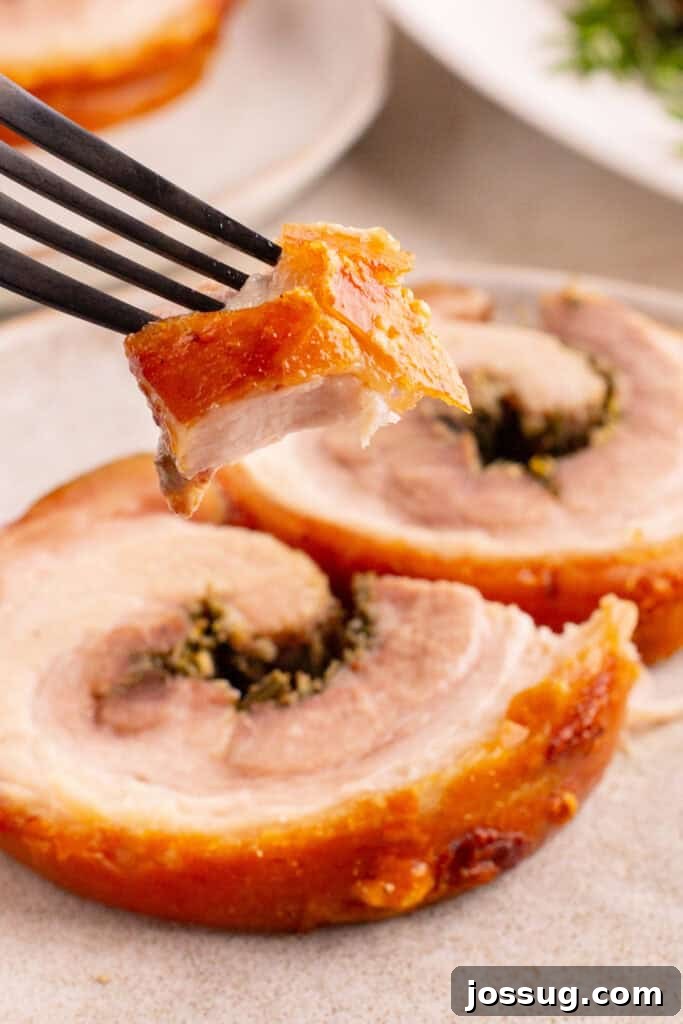
🔥 Expert Tips for Porchetta Perfection
Achieving the perfect porchetta involves a few key techniques and considerations. Follow these expert tips to ensure your roast turns out incredibly flavorful with that coveted crispy crackling:
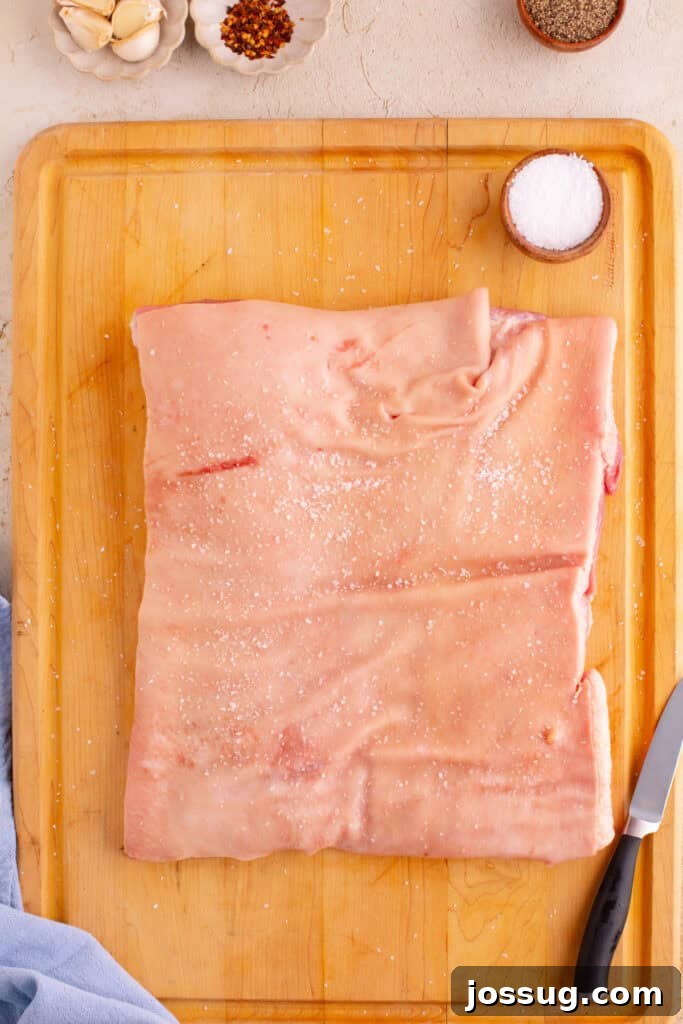
- **Score the Pork Belly Thoughtfully:** Before applying any seasoning, use a sharp paring knife to score the skin of the pork belly. Make small, shallow pokes or a crosshatch pattern about every inch, being careful not to cut too deeply into the meat itself. This crucial step helps the seasoning penetrate the skin and allows excess fat to render out more efficiently during roasting, which is essential for achieving an evenly crispy crackling.
- **Air Dry for Unbeatable Crackling:** For truly spectacular, shatteringly crispy skin, the surface must be as dry as possible. After preparing and salting the pork belly, place it uncovered on a wire rack set over a baking sheet in the refrigerator overnight (or for at least 8-12 hours). The cool, circulating air in the fridge will draw out moisture from the skin, setting it up for maximum crispness during roasting. Don’t skip this step!
- **Bring to Room Temperature:** Before it goes into the oven, allow your porchetta to sit at room temperature for 1-2 hours. Roasting cold meat can lead to uneven cooking, where the outside cooks much faster than the inside. Bringing it to room temperature promotes more uniform cooking, ensuring the meat reaches tenderness simultaneously across the entire roast.
- **Trust Your Meat Thermometer:** Precision is key in roasting. Always use a reliable meat thermometer to check for doneness. Insert the thermometer into the thickest part of the meat, avoiding any bone or fat pockets. Aim for an internal temperature of 170°F (77°C) for perfectly cooked, juicy pork. This ensures food safety while preventing overcooking, which can dry out the meat.
- **Tie it Tightly and Evenly:** When rolling the pork belly, ensure it’s as tight and uniform as possible. Secure it firmly with butcher’s twine at 1 to 1½-inch intervals. A well-tied roast will cook more evenly and maintain its beautiful cylindrical shape, resulting in attractive, consistent slices.
❓ Frequently Asked Questions About Porchetta
Porchetta is a traditional Italian savory pork roast. It’s typically prepared by deboning a whole pig or a large cut like pork belly, stuffing it with a mixture of garlic, wild fennel, rosemary, and other herbs and spices, then rolling it into a log and slow-roasting it until the meat is incredibly tender and the skin becomes crispy crackling. It’s a celebratory dish, deeply rooted in the culinary traditions of central Italy, particularly regions like Lazio and Umbria.
Absolutely! Porchetta is an excellent dish for meal prepping. You can season and roll the roast up to 24 hours ahead of time. After rolling and tying, place it uncovered on a wire rack in the refrigerator overnight. This not only allows the flavors to meld beautifully but also helps to further dry out the skin, contributing to a crispier crackle during baking.
The secret to crispy porchetta skin lies in two main factors: dryness and high heat. First, ensure the skin is thoroughly dry before roasting; air-drying it uncovered in the refrigerator overnight is highly recommended. Second, after the initial low-and-slow roast, finish the porchetta at a much higher temperature (e.g., 450°F or 230°C) for 15-20 minutes. This final blast of heat will render out any remaining fat and puff up the skin, transforming it into irresistible crackling.
While pork belly is the most common and traditional cut used for porchetta due to its ideal fat-to-meat ratio and magnificent skin, variations exist. Some recipes combine pork belly with leaner cuts like pork loin or shoulder to create a meatier roast with less overall fat. However, using primarily pork belly is what gives authentic porchetta its signature tenderness and crispy skin.
Porchetta is incredibly delicious both ways, offering versatility in serving. It’s traditionally served hot as a glorious main dish for festive meals. However, it’s equally famous for being thinly sliced and served cold or at room temperature in sandwiches, particularly in Italy where it’s a popular street food. The flavors are so robust that it holds up beautifully in either presentation.
The ideal slice thickness depends on how you plan to serve it. For serving as a main roast alongside other dishes, slices between ½ inch to 1 inch thick are generally preferred, allowing you to appreciate the layers of meat and skin. For sandwiches, especially classic porchetta panini, slice the meat as thinly as possible to create delicate, flavorful layers that are easy to bite into.
Scoring the skin is not strictly mandatory, but it is highly recommended and widely practiced for good reason. Poking or scoring the skin helps in two ways: it allows rendered fat to escape more easily, preventing the skin from becoming tough or chewy, and it promotes more even crisping, resulting in that delightful crackle across the entire surface. It also aids in seasoning penetration.
Porchetta’s rich, savory flavors make it wonderfully compatible with a variety of side dishes. Classic Italian pairings include roasted vegetables like asparagus, potatoes, or root vegetables. Creamy polenta provides a comforting base, while a simple green salad with a sharp vinaigrette can cut through the richness. Crusty bread is perfect for soaking up juices, and sautéed greens or Italian-style potatoes are always excellent choices.
The most common reasons for non-crispy skin are insufficient drying and inadequate high heat. Ensure the pork belly skin is patted thoroughly dry with paper towels and ideally air-dried uncovered in the refrigerator overnight. This removes surface moisture. Secondly, the final stage of roasting at high heat (450°F / 230°C) is crucial to puff up and crisp the skin. If it’s still not crisping, you can try placing it under a preheated broiler for a few minutes, watching it very carefully to prevent burning.
🍽️ Other Delicious Pork & Italian-Inspired Recipes to Try
Pork
Hearty Slow Cooker Pork Roast
Pork
Effortless Italian Pork Chop Sheet Pan Dinner
Beef
Classic Italian-Style Meatloaf
Pork
Quick Instant Pot Pork Roast
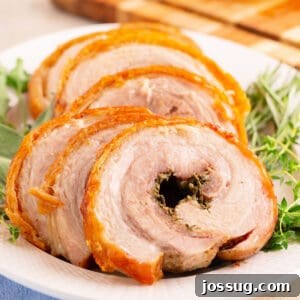
Porchetta: Savory Italian Rolled Pork Roast
Pin Recipe
Rate This
Print Recipe
Want to save this recipe for later?
Enter your email below, and we’ll send this post directly to your inbox!
Equipment You’ll Need
-
Two large baking sheets
-
Wire cooling rack (to fit inside baking sheet)
-
High-quality butcher’s twine
-
Reliable meat thermometer
-
Sharp paring knife (for scoring)
-
Food processor or a very sharp chef’s knife and cutting board for mincing herbs
-
Plenty of paper towels
-
Medium mixing bowl
-
Long serrated knife (for slicing)
Ingredients
- 4-5 lbs pork belly, skin on, evenly thick
- 4-5 garlic cloves, peeled and crushed or finely minced
- 2 tablespoons fresh rosemary, finely chopped
- 2 tablespoons fresh sage, finely chopped
- 1 tablespoon fresh thyme leaves
- 1 teaspoon lemon zest
- ½ teaspoon crushed red pepper flakes
- 1 tablespoon kosher salt, divided
- ½ teaspoon freshly ground black pepper
Step-by-Step Instructions
Preparation of the Pork Belly:
-
Begin by thoroughly patting the entire pork belly dry with paper towels. Any surface moisture can hinder crispness. Using a sharp paring knife, carefully score the pork skin all over. Create small, shallow pokes or a crosshatch pattern, ensuring the cuts are approximately every inch and do not pierce deeply into the meat. This allows fat to render and helps the skin crisp. Sprinkle 1 teaspoon of kosher salt evenly over the scored skin. Allow the pork belly to sit at room temperature for 10-15 minutes while your oven preheats to 325°F (160°C).
Crafting the Aromatic Herb Rub:
-
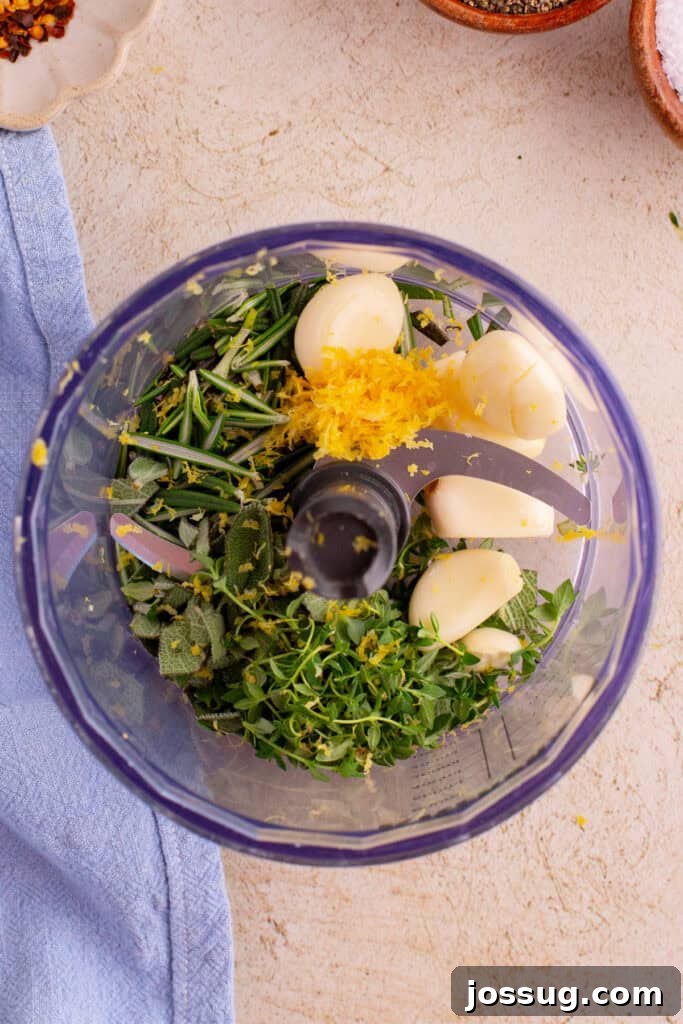
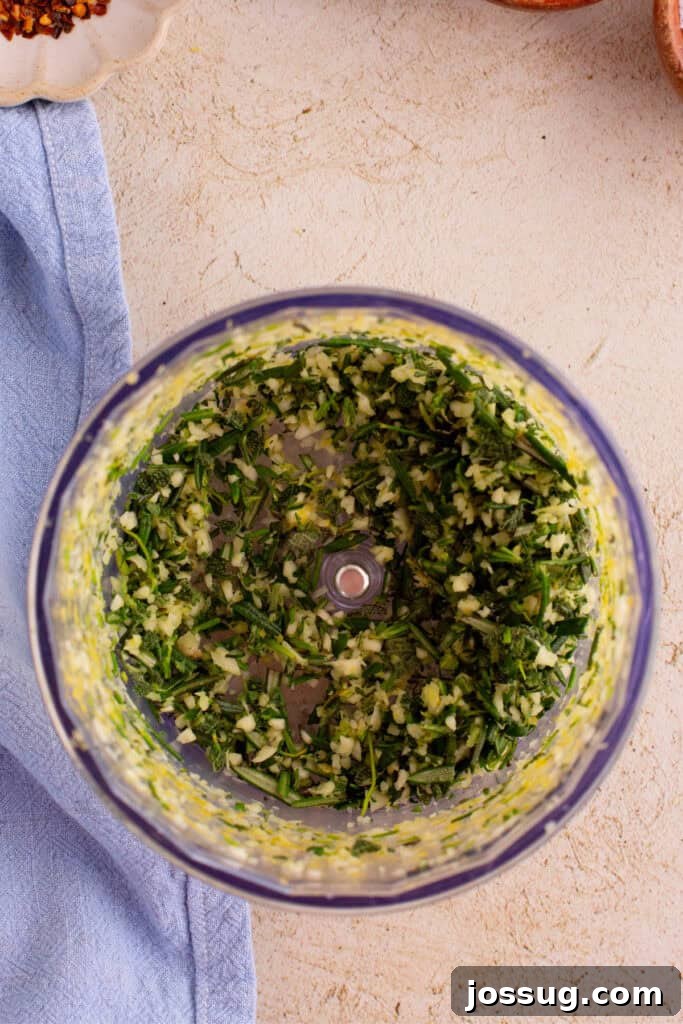
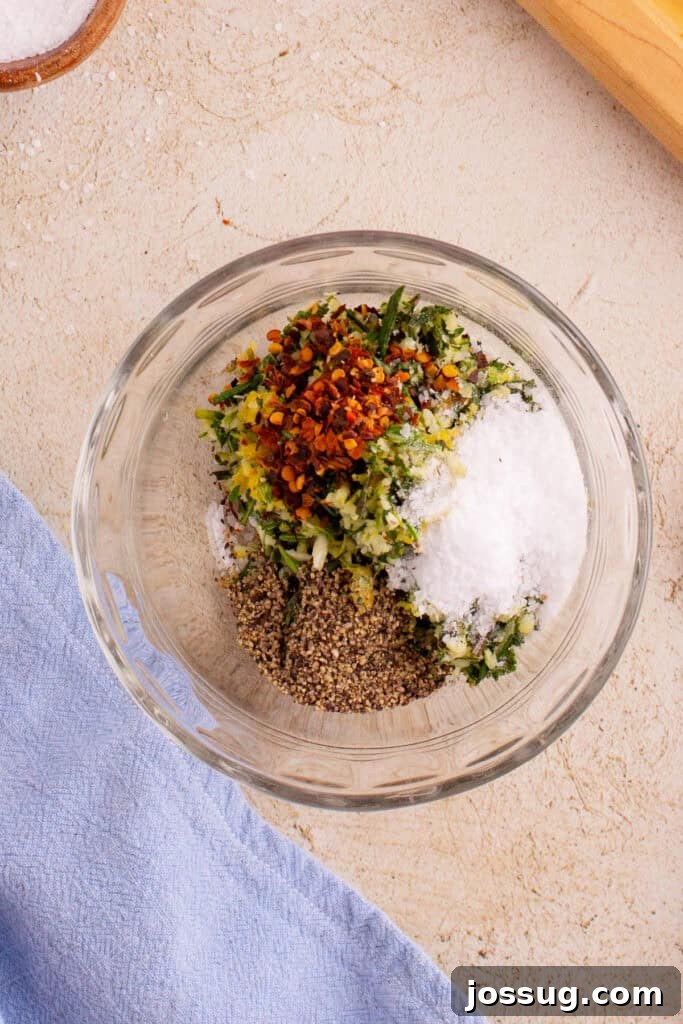
In a food processor, combine the peeled and crushed garlic cloves, finely chopped fresh rosemary, fresh sage, fresh thyme leaves, and lemon zest. Pulse the ingredients until they are finely minced and well combined, forming a fragrant paste (this typically takes 20-30 seconds). Alternatively, if you don’t have a food processor, you can achieve a similar result by finely chopping all the herbs and garlic by hand on a cutting board. Transfer the herb mixture to a small bowl. Stir in the crushed red pepper flakes, the remaining 2 teaspoons of kosher salt, and the freshly ground black pepper until fully incorporated.
Seasoning the Meat:
-
Once again, pat the pork belly dry with paper towels, particularly the underside. Flip the pork belly so the skin side is facing down. Using your sharp paring knife, score the meat side in a crosshatch pattern. These cuts should be about ½ inch deep and spaced evenly. This technique helps the herb rub adhere better and allows the flavors to deeply penetrate the meat. Generously rub the prepared herb mixture evenly over the entire surface of the meat, pressing it firmly into all the scored cuts and crevices.
Rolling and Tying the Porchetta:
-
Carefully roll the seasoned pork belly into a very tight log, ensuring the skin side remains on the outside. It’s important to roll it as tightly and uniformly as possible to ensure even cooking and a beautiful presentation. Once rolled, secure the porchetta firmly with butcher’s twine. Tie it at regular intervals, approximately every 1 to 1½ inches, along the entire length of the roast. Place the tied porchetta seam-side down on a wire rack that has been set over a rimmed baking sheet. This setup allows air to circulate around the roast and fat to drip away.
The Roasting Process (Slow & Low):
-
Transfer the porchetta on its wire rack and baking sheet to the preheated 325°F (160°C) oven. Bake uncovered for approximately 2½ to 3 hours. The precise time will depend on the thickness of your pork belly. During this slow roasting phase, the fat will gradually render, and the meat will become exceptionally tender. Monitor the internal temperature using your meat thermometer; the porchetta is ready for the next step when it reaches 170°F (77°C) in the thickest part.
Achieving Crispy Skin:
-
Once the porchetta has reached 170°F (77°C) internally, remove it from the oven. Carefully increase your oven temperature to a much higher setting: 450°F (230°C). Once the oven is fully preheated to the higher temperature, return the porchetta to the oven and continue roasting for another 15-20 minutes. This high-heat blast is critical for transforming the skin into a golden, blistered, and perfectly crispy crackling. Keep a close eye on it during this stage to prevent burning; every oven is different.
Resting and Serving Your Masterpiece:
-
After achieving the desired crispness, remove the porchetta from the oven and transfer it to a clean cutting board. Tent it loosely with foil (or leave uncovered for maximum crispness) and let it rest for a crucial 10-15 minutes. This resting period allows the juices to redistribute throughout the meat, ensuring every slice is as moist and flavorful as possible. After resting, carefully remove the butcher’s twine. Using a long, sharp serrated knife, slice the porchetta into ½ to 1-inch-thick pieces. Serve immediately while warm, savoring the rich flavors and delightful textures.
Chef’s Notes & Storage Guide
🥡 STORAGE SOLUTIONS
- Store any leftover porchetta in an airtight container in the refrigerator for up to 5 days.
- For the best texture and to prevent the skin from becoming soggy, store slices with the crispy skin side facing upwards.
♨️ REHEATING METHODS
- Microwave: For quick reheating, place slices on a microwave-safe plate and heat in 30-second intervals until warmed through. Note: the skin will likely not re-crisp in the microwave.
- Oven: Preheat your oven to 350°F (175°C). Place porchetta slices on a baking sheet and bake for 10-15 minutes, or until heated through. For crispier skin, you can finish under the broiler for 1-2 minutes, watching carefully.
- Air Fryer: Reheat slices in an air fryer at 400°F (200°C) for 5-8 minutes, or until hot and the skin is wonderfully crisp again. This is an excellent method for reviving the crackling.
- Skillet: For individual slices, sear them skin-side down in a dry, hot skillet over medium-high heat until the skin becomes crispy and the meat is warmed through. This method also works well for re-crisping the crackling.
❄️ FREEZING FOR LATER
- Porchetta freezes beautifully. You can freeze whole segments or individual slices. Tightly wrap them in heavy-duty foil, then place them in a freezer-safe bag or container. It will keep well for up to 2 months.
- When ready to enjoy, thaw the frozen porchetta overnight in the refrigerator before reheating using your preferred method.
💡 ADDITIONAL TIPS FOR BEST RESULTS
- **Pork Belly Selection:** Opt for a pork belly that is as evenly thick as possible. This makes rolling much easier and ensures the entire roast cooks consistently, leading to uniformly tender meat and crispy skin.
- **The Air Dry Advantage:** As mentioned, for truly superior crispy skin, allow the pork belly to sit uncovered on a wire rack in the fridge overnight. This crucial step removes surface moisture, which is the enemy of crackling.
- **Room Temperature Roast:** Always let the rolled porchetta rest at room temperature for 1-2 hours before placing it in the oven. This tempering step helps the meat cook more evenly from edge to center, preventing a cold core or overcooked exterior.
🍳 ALTERNATE COOKING METHODS
- Smoker: Achieve a delightful smoky flavor by smoking the porchetta at 275°F (135°C) until its internal temperature reaches 170°F (77°C). Finish it in a preheated 450°F (230°C) oven to crisp up the skin to perfection.
- Grill (Indirect Heat): For a different outdoor cooking experience, cook the porchetta on a covered grill using indirect heat. Once the internal temperature reaches 170°F (77°C), move it over direct heat for a few minutes (watching constantly) to crisp the skin.
- Convection Oven: If you have a convection oven, utilize its fan-assisted heat. This mode can slightly reduce the overall roasting time and is particularly effective at promoting a more even and superior crispness on the porchetta skin. Adjust cooking times as needed.
♻️ CREATIVE LEFTOVER IDEAS
- **Gourmet Porchetta Sandwiches:** Slice thinly and pile high on crusty Italian rolls with fresh arugula, a dollop of mustard aioli, and perhaps some pickled red onions.
- **Pasta or Risotto Enhancement:** Dice leftover porchetta and add it to your favorite pasta dishes, risottos, or even scrambled eggs for a rich, savory boost.
- **Versatile Additions:** Use porchetta in tacos, breakfast hash with roasted potatoes and onions, or as a flavorful protein component in grain bowls with fresh vegetables.
Nutrition Information (Approximate)
Nutrition information is automatically calculated and should be used as an approximation. Actual values may vary based on specific ingredients and preparation methods.
Loved this recipe? Share your thoughts!Leave a comment below and let us know how your porchetta turned out. We love hearing from you!