
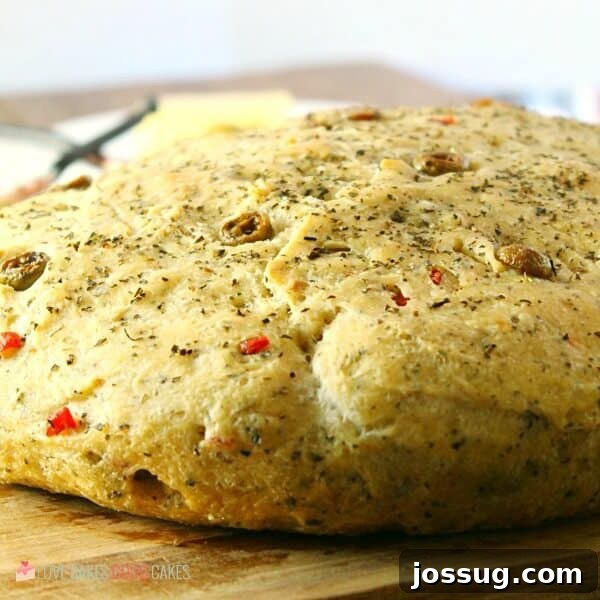
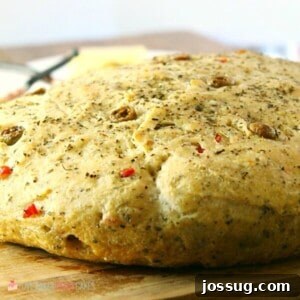
Don’t be intimidated by the idea of baking homemade bread! This No-Knead Skillet Olive Bread recipe is your gateway to a super easy-to-make, delightfully crusty loaf, generously packed with flavorful olives and fragrant herbs. It’s the perfect introduction to baking, yielding impressive results with minimal effort.
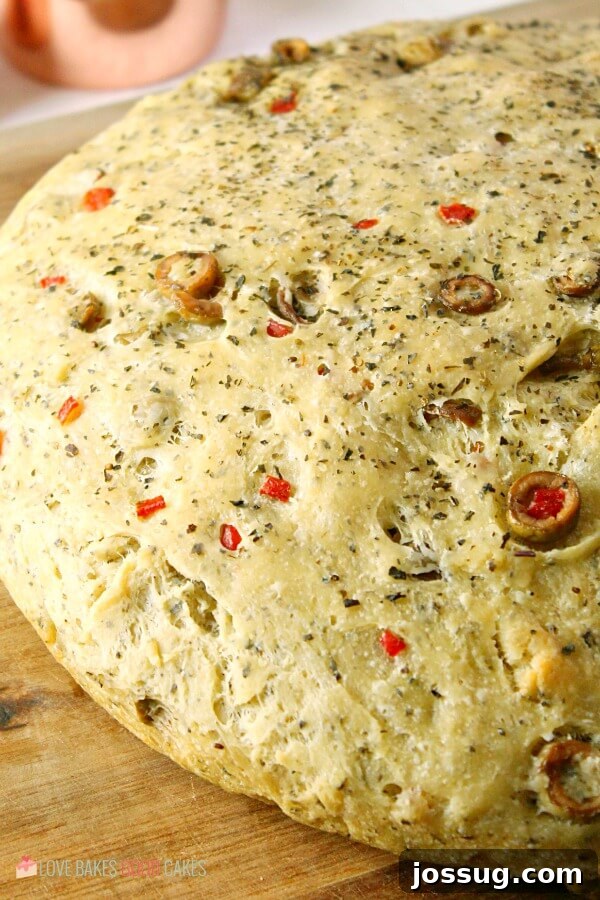
Master the Art of Easy Baking: No-Knead Skillet Olive Bread
There’s something uniquely satisfying about homemade bread, and this No-Knead Skillet Olive Bread truly embodies that joy. While many might associate holidays like Thanksgiving with elaborate, traditional meals, our family often embraces a different approach. We find immense pleasure in crafting a special meal that reflects our current cravings and allows us to gather without the pressure of strict culinary traditions. This year, our special occasion calls for sizzling grilled steaks, fluffy baked potatoes, a crisp side salad, and of course, this incredible homemade bread. Paired with a rich chocolate silk pie and a classic pumpkin pie, it creates a memorable feast.
In previous years, we’ve explored everything from smoked brisket to a lavish Italian spread. The beauty of a “choose your own adventure” holiday meal lies in its flexibility and the opportunity to introduce new favorites. This No-Knead Skillet Olive Bread has certainly earned its place as a cherished addition to our family’s special menu, offering a warm, inviting aroma and a taste that complements a wide array of dishes.
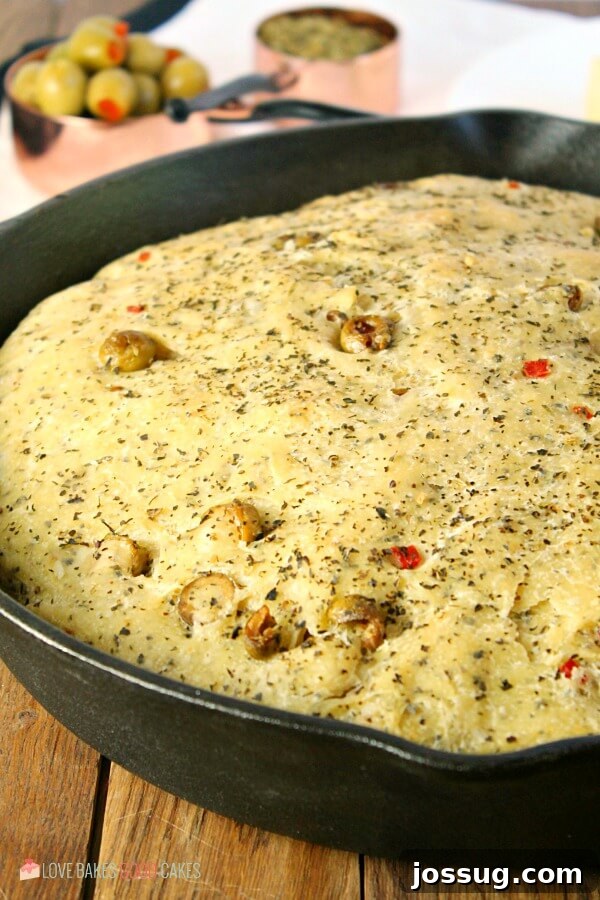
Baking bread doesn’t have to be a daunting task. The “no-knead” method simplifies the process dramatically, making it accessible even for novice bakers. This technique relies on time rather than intensive labor, allowing the gluten to develop naturally through a prolonged fermentation process. The result is a bread that boasts a complex flavor profile and a superior texture, rivaling loaves from artisan bakeries.
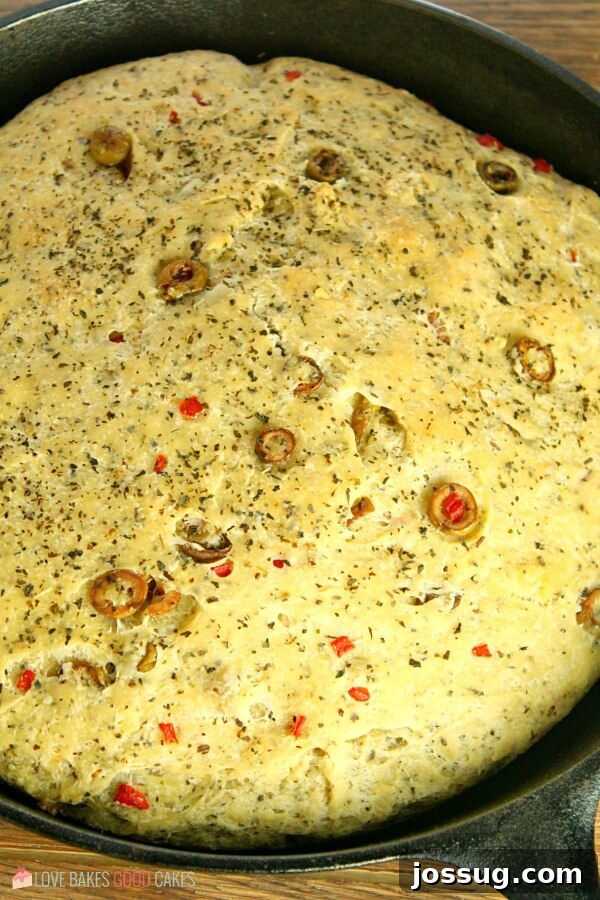
Crafting Your Perfect Loaf: The Simple Steps to No-Knead Skillet Olive Bread
The magic of this No-Knead Skillet Olive Bread truly lies in its incredible simplicity. Forget the strenuous kneading and complicated techniques; this recipe streamlines the baking process without sacrificing flavor or texture. Here’s a more detailed look at the straightforward steps:
You begin by activating your yeast in warm water. This crucial step ensures your bread will rise beautifully. Once bubbly, you’ll incorporate all-purpose flour, kosher salt, chopped green olives, and a blend of dried basil and garlic powder. The olives and herbs infuse the dough with a Mediterranean essence, creating a wonderfully aromatic and savory bread. A quick stir is all it takes to bring the ingredients together into a shaggy dough.
After mixing, the dough enters its first resting period, or bulk fermentation, for approximately one hour. During this time, the yeast gets to work, producing carbon dioxide and developing the gluten structure, which is essential for that desirable chewy texture. This hands-off approach allows the flavors to meld and deepen.
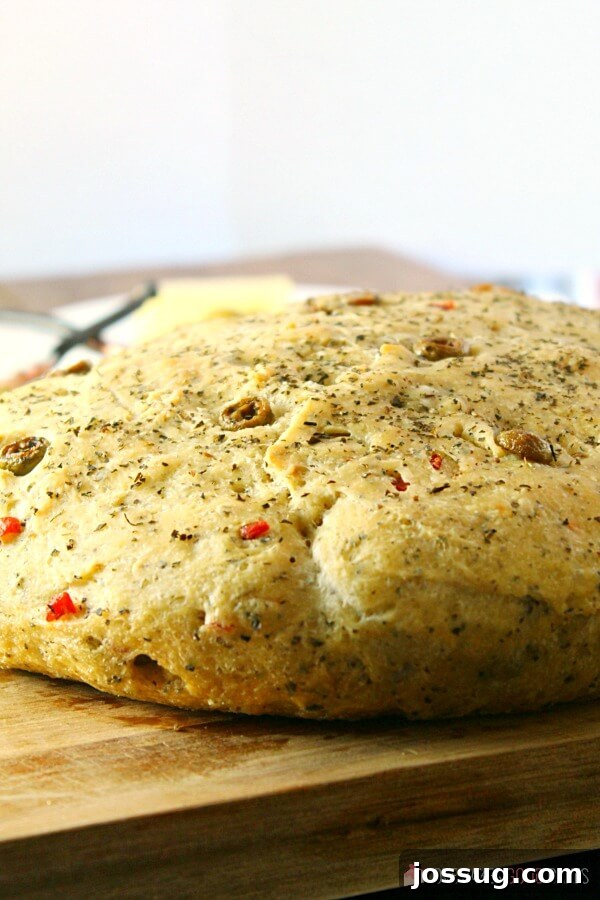
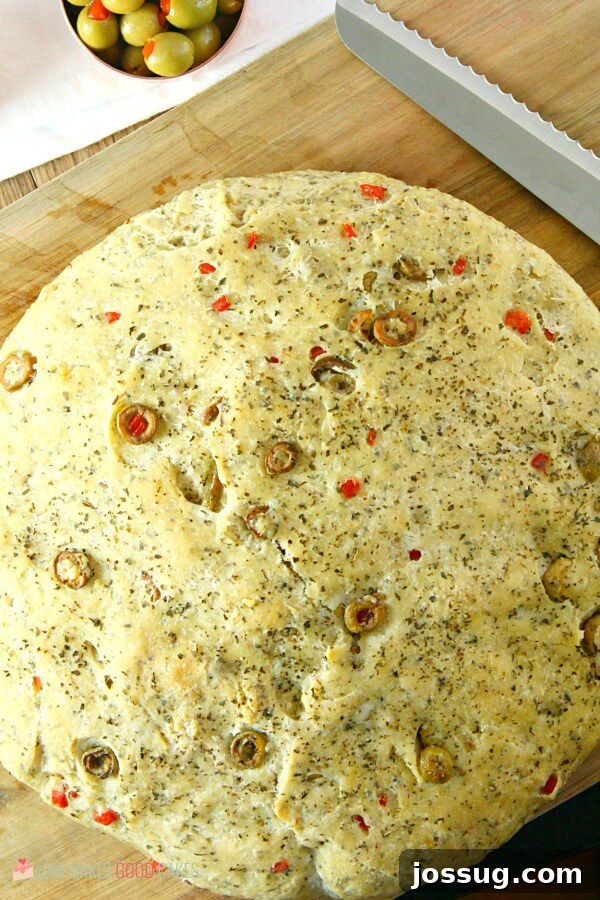
Next, the dough is gently transferred to a prepared cast iron skillet. A light coating of olive oil in the skillet not only prevents sticking but also contributes to the bread’s golden, crispy crust. The dough then undergoes a second, shorter rise in the skillet. This final proofing helps the bread achieve its optimal volume and airy crumb. Before baking, a drizzle of extra virgin olive oil and a sprinkle of sea salt add a finishing touch, enhancing both flavor and presentation. Optionally, you can score the top of the dough with a sharp serrated knife to guide the expansion during baking and create an attractive rustic look.
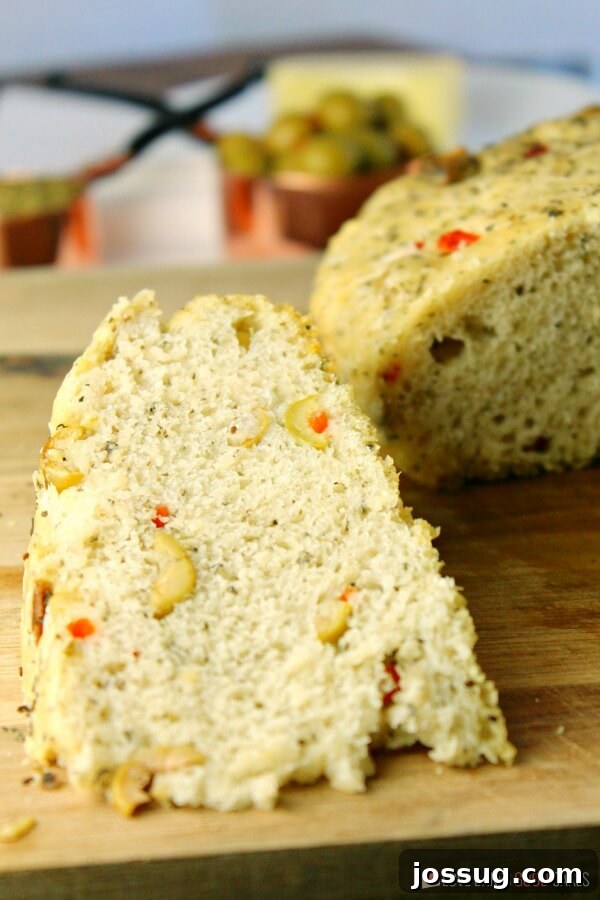
Once baked to a golden perfection, the bread needs to cool completely on a wire rack before being removed from the skillet and sliced. This cooling period is vital; it allows the internal structure of the bread to set, ensuring a perfect slice every time. From start to finish, the active preparation time is minimal, making it an ideal recipe for busy schedules.
The Science of Superior Bread: Understanding the Double Rise
The double rise, also known as bulk fermentation followed by proofing, is a cornerstone of exceptional bread making, especially for no-knead varieties. It’s not just a suggestion; it’s a scientific principle that profoundly impacts the final texture and flavor of your bread.
The first rise (bulk fermentation) is where the initial gluten development occurs. Even without kneading, the long resting period allows the flour’s proteins to hydrate and align, forming a network of gluten. This network traps the carbon dioxide produced by the yeast, causing the dough to expand and develop its internal structure. This stage also contributes significantly to the bread’s flavor, as the yeast produces various metabolic byproducts during fermentation.
The second rise, or proofing, after the dough has been shaped and transferred to the skillet, is equally important. This shorter rise allows the yeast to produce a final burst of gas, further expanding the gluten network and resulting in a lighter, airier crumb. It refines the gluten structure, leading to a finer, more consistent crumb with fewer large, irregular holes – a characteristic often sought after in artisanal bread. Skipping the second rise could result in a denser loaf with a less developed flavor. By honoring both rises, you ensure a bread that is not only visually appealing but also boasts a superior texture and depth of taste.
Baking Versatility: Skillet Alternatives for Your No-Knead Olive Bread
While a cast iron skillet is highly recommended for achieving that signature crispy crust and even heat distribution, its absence shouldn’t deter you from making this delicious No-Knead Skillet Olive Bread. Cast iron provides consistent, high heat that helps form a thick, crunchy exterior, mimicking the conditions of a professional bread oven. However, there are excellent alternatives:
A Dutch oven is perhaps the best substitute. Its heavy lid traps steam during the initial baking phase, which is key to developing a fantastic crust. After a period, the lid is removed, allowing the crust to crisp up and brown beautifully. If you’re using a Dutch oven, preheat it in the oven for about 30 minutes before carefully transferring the dough into the hot pot.
Other options include a heavy-bottomed oven-safe pot with a lid, or even a baking stone or thick baking sheet. If using a baking stone or sheet, you can create a steamy environment by placing a pan of hot water on the bottom rack of your oven during the first part of the baking process. This helps prevent the crust from hardening too quickly, allowing the bread to expand properly and develop a tender interior. Don’t be afraid to experiment with what you have; the essence of no-knead bread lies in its adaptability.
Explore More Culinary Delights
If you’ve enjoyed the simplicity and flavor of this No-Knead Skillet Olive Bread, you might love these other easy-to-make and satisfying recipes:
- Classic No-Knead Bread: For the purists who love a simple, crusty loaf.
- Skillet Chicken and Peppers Dinner: A flavorful one-pan meal, perfect for a weeknight.
- Cheesy Chicken Broccoli & Rice Skillet: Comfort food that comes together easily in one skillet.
- Homemade Cinnamon Rolls: Indulge your sweet tooth with soft, gooey cinnamon rolls.
- Crispy Pesto Gnocchi with Tomatoes, Black Olives, and Feta Cheese: A vibrant, Mediterranean-inspired dish.
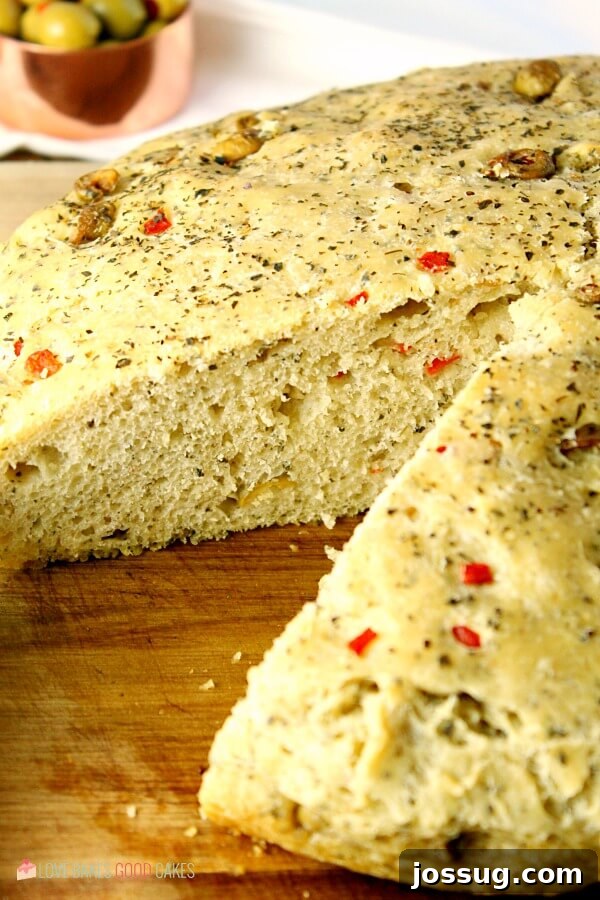
No-Knead Skillet Olive Bread
Don’t be intimidated by this No-Knead Skillet Olive Bread! It’s a super easy-to-make, crusty, homemade bread packed with olives and herbs.
Author: Jamie Sherman
Servings: 12 slices
Prep Time: 20 mins
Cook Time: 35 mins
Additional Time: 1 hr 30 mins (for rising)
Total Time: 2 hrs 25 mins
Equipment
- 8 Inch Cast Iron Skillet (or Dutch oven)
- Wire Cooling Rack
Ingredients
- 2 cups warm water (not hot)
- 1 package active dry yeast
- 4 cups all-purpose flour
- 2 teaspoons kosher salt
- 1 cup chopped green olives
- 1 tablespoon dried basil
- 1 teaspoon garlic powder
- 2 tablespoons extra virgin olive oil, divided
- Sea salt, for sprinkling
Instructions
- In a medium glass mixing bowl, add warm water and sprinkle the yeast over it. Let it sit for 5-10 minutes until foamy, indicating the yeast is active.
- Add 1 cup of all-purpose flour and kosher salt to the bowl and stir to combine thoroughly. Mix in the chopped olives, dried basil, garlic powder, and the remaining flour until a shaggy, well-combined dough forms.
- Cover the bowl with a clean kitchen towel and let the dough rise in a warm, draft-free place for 1 hour.
- While the dough is rising, preheat your oven to 400°F (200°C). Coat the inside of an 8-inch cast iron skillet with 1 tablespoon of olive oil.
- With floured hands, carefully transfer the risen dough to the prepared cast iron skillet. Cover the skillet with a kitchen towel and let the dough rise for another 30 minutes.
- Once the dough has completed its second rise, drizzle the top with the remaining 1 tablespoon of olive oil and sprinkle generously with sea salt. If desired, gently score the top of the dough with a sharp serrated knife to create a decorative pattern.
- Bake for 35 minutes, or until the crust is golden brown and the internal temperature reaches 200-210°F (93-99°C).
- Remove the skillet from the oven and place it on a wire cooling rack. Allow the bread to cool completely in the skillet before carefully removing it and slicing. This ensures a firm internal structure and prevents it from collapsing.
Notes
- Nutrition facts are based on 1 loaf cut into 12 slices and are approximate.
- No cast iron skillet? You can also bake this loaf in a Dutch oven for similar fantastic results.
Nutrition (Approximate per slice)
Serving: 1 slice, Calories: 192kcal, Carbohydrates: 33g, Protein: 5g, Fat: 5g, Saturated Fat: 1g, Polyunsaturated Fat: 1g, Monounsaturated Fat: 3g, Sodium: 565mg, Potassium: 67mg, Fiber: 2g, Sugar: 0.2g, Vitamin A: 48IU, Vitamin C: 0.01mg, Calcium: 20mg, Iron: 2mg
Nutrition information is automatically calculated, so should only be used as an approximation.
Loved this recipe? Share your thoughts below!
Your feedback helps us create more delicious content. We’d love to hear how your No-Knead Skillet Olive Bread turned out!