
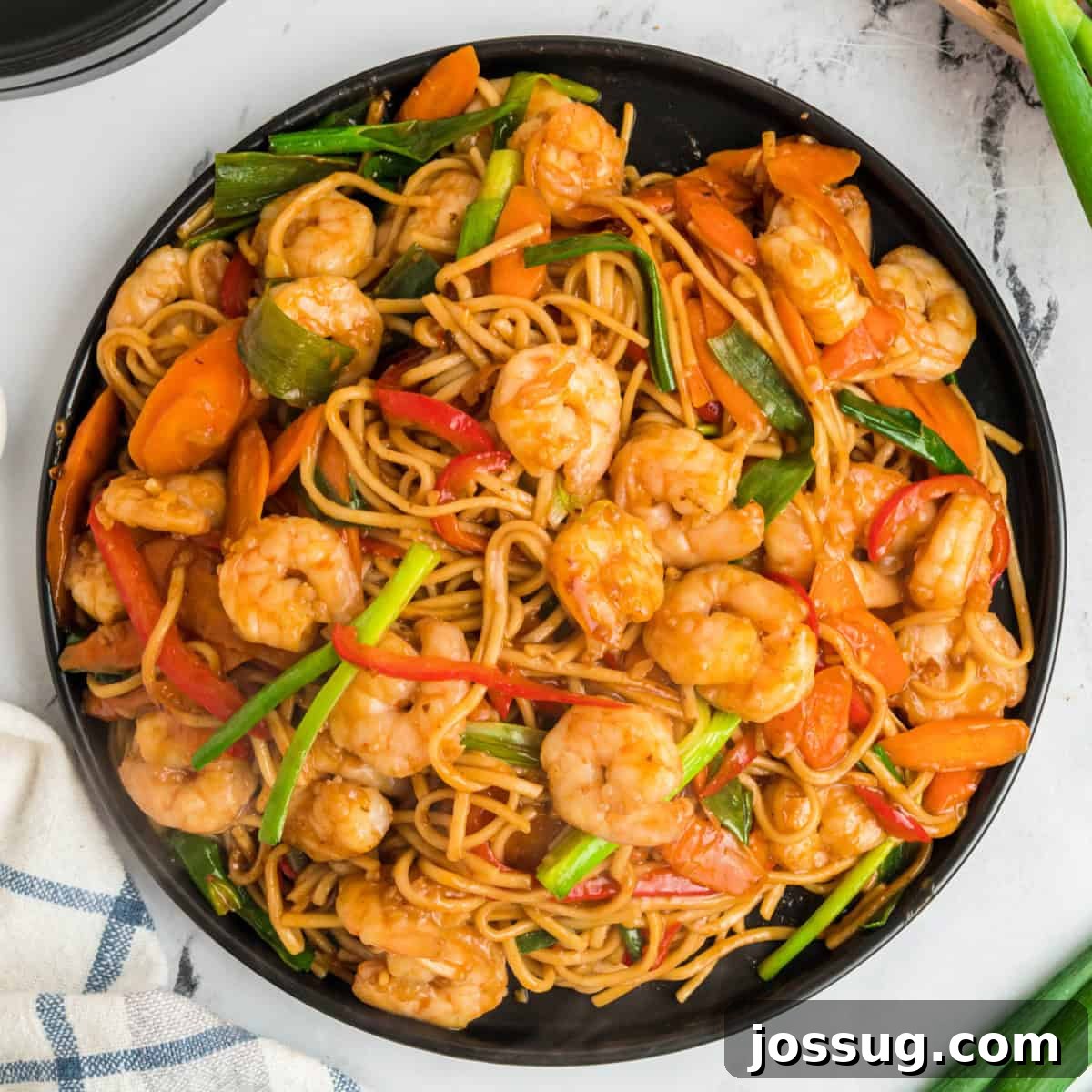
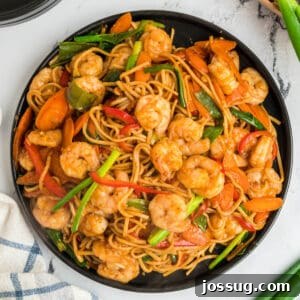
🥢 Forget about ordering takeout and bring the vibrant flavors of the Orient right into your kitchen with this incredibly quick and utterly delicious Shrimp Lo Mein! In just 20 minutes, you can create a masterpiece featuring succulent, juicy shrimp, an array of crisp-tender vegetables, and perfectly chewy noodles, all coated in a rich, savory sauce that will have your taste buds singing. It’s the ultimate weeknight meal that’s faster, fresher, and often healthier than anything you’d get delivered, making it an instant family favorite.
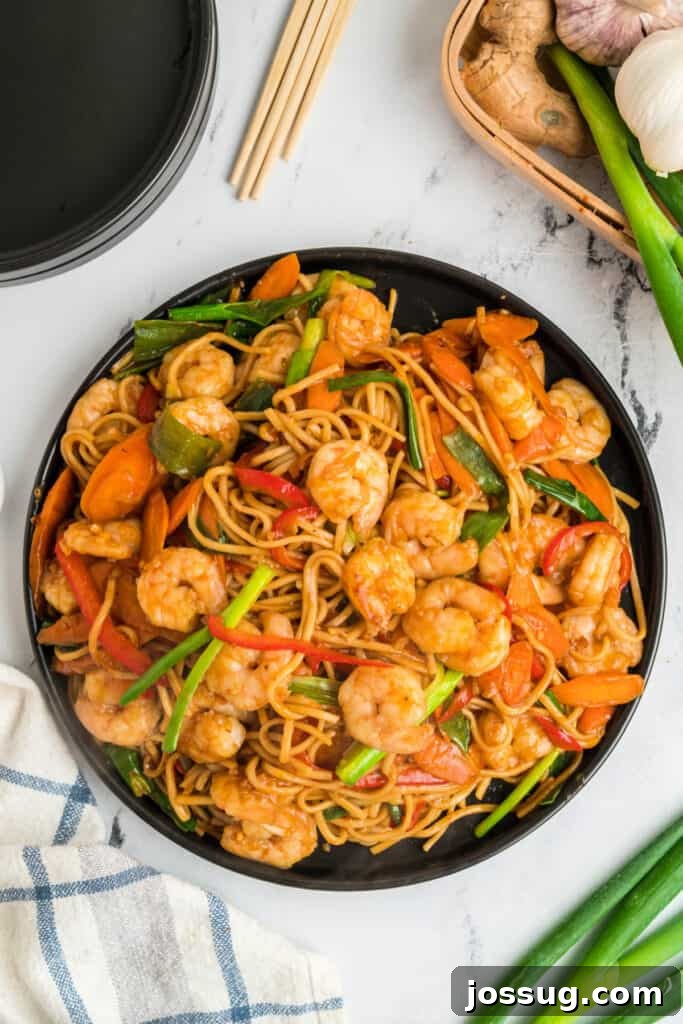
Mastering the Art of Homemade Lo Mein: Your Go-To Recipe
If the aroma of stir-fried noodles and savory sauce instantly transports you to your favorite Chinese restaurant, then this shrimp lo mein recipe is about to become your new culinary obsession. Lo mein, meaning “tossed noodles,” is a beloved staple in Chinese-American cuisine, known for its comforting texture and bold flavors. While often associated with professional woks and intricate techniques, this homemade version demystifies the process, proving that a truly authentic-tasting meal can be achieved in a flash. Forget the waiting times and extra costs of takeout; this recipe promises a fresh, flavorful, and incredibly satisfying meal that comes together in mere minutes, making it an ideal choice for busy weeknights.
Our quick lo mein recipe is not just about speed; it’s about balance. Each forkful delivers tender, perfectly cooked shrimp, a delightful crunch from vibrant, fresh vegetables, and springy noodles, all generously coated in a well-balanced savory sauce. It’s a dish that caters to everyone, from picky eaters to adventurous foodies, and its flexibility means you can easily adapt it to suit your pantry or dietary preferences. Whether you’re aiming for a healthy alternative to your usual takeout or simply seeking an easy lo mein recipe that tastes phenomenal, this dish truly delivers an unforgettable experience right at your dining table.
⭐ Why This Shrimp Lo Mein Will Become Your Favorite
This isn’t just another lo mein recipe; it’s a culinary hack that brings restaurant-quality flavors into your home with minimal effort. Here’s why this 20-minute shrimp lo mein will quickly earn a permanent spot in your recipe rotation:
- Unbeatable Speed: Ready in just 20 minutes, it’s significantly faster than ordering and waiting for takeout, making it the perfect solution for those hectic evenings when hunger strikes.
- Pantry-Friendly Ingredients: The savory sauce relies on common Asian pantry staples, meaning you likely already have most of what you need to whip this up on a whim.
- Highly Customizable: It’s a versatile canvas! Easily swap proteins or incorporate your favorite vegetables, adapting the dish to whatever you have on hand or what’s in season.
- Versatile for Any Occasion: This lo mein food classic is hearty enough for a satisfying weeknight dinner and holds up beautifully for meal prep, providing delicious lunches throughout the week.
- Healthier Home-Cooked Option: By controlling the ingredients, you can reduce sodium, unhealthy oils, and additives often found in restaurant versions, offering a fresher and more wholesome meal.
🛒 Essential Ingredients & Smart Substitutions for Your Lo Mein
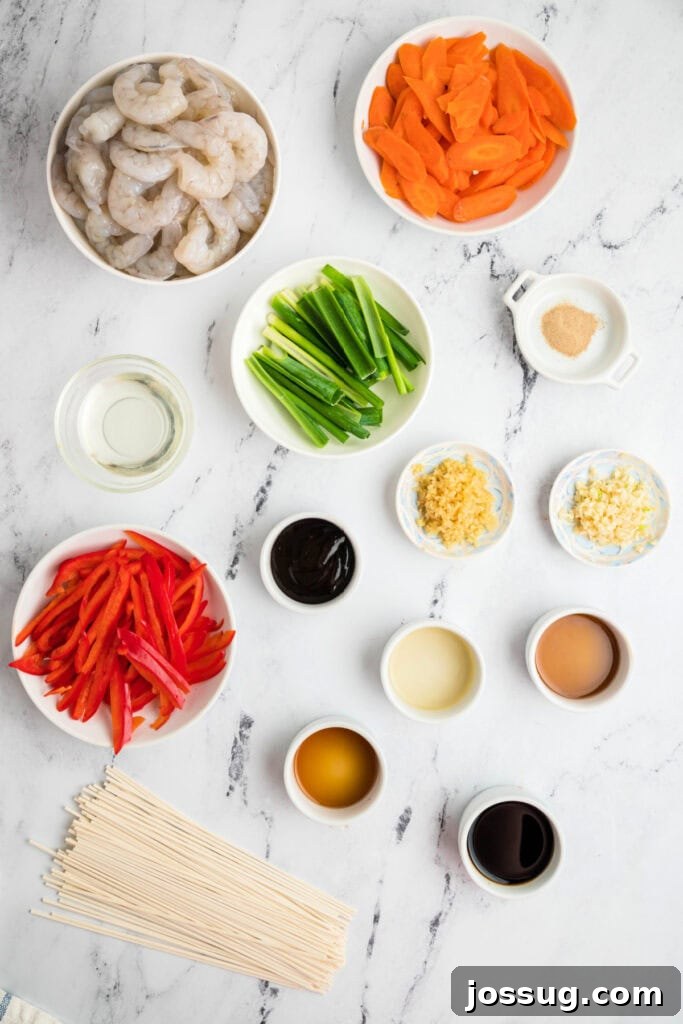
Crafting the perfect shrimp lo mein starts with selecting fresh, quality ingredients. Here’s a breakdown of what you’ll need, along with smart substitutions to make this recipe work for you, no matter what’s in your pantry.
- Lo Mein Noodles: These are the star of the dish, providing the classic chewy texture. Look for fresh or dried egg noodles specifically labeled “lo mein.”
- Substitute: If lo mein noodles aren’t available, spaghetti, linguine, or thick udon noodles can be excellent alternatives, offering a similar mouthfeel.
- Vegetable Oil: Used for stir-frying at high heat. Its neutral flavor won’t overpower the other ingredients.
- Substitute: Canola, avocado, or peanut oil are all suitable alternatives due to their high smoke points.
- Shrimp: Fresh or frozen (thawed and patted dry) medium shrimp are ideal. Ensure they are peeled, deveined, and tails removed for easy eating.
- Substitute: For a different flavor profile or dietary need, try chicken (thinly sliced), beef (flank or sirloin), pork (tenderloin), or tofu (pressed and cubed) for a vegetarian lo mein.
- Garlic: Freshly minced garlic provides an essential aromatic base for the sauce and stir-fry.
- Substitute: In a pinch, 1 teaspoon of garlic powder can be used, though fresh is always preferred for flavor.
- Fresh Ginger: Adds a pungent, zesty kick that is crucial for authentic Asian flavors. Minced ginger releases its full aroma during cooking.
- Substitute: 1 teaspoon of ground ginger can work, but again, fresh offers a superior flavor and aroma.
- Red Bell Pepper: Contributes a beautiful color and a sweet, slightly peppery crunch.
- Substitute: Yellow or green bell pepper will work equally well, or even a mix for more visual appeal.
- Carrots: Thinly sliced carrots add a touch of sweetness and vibrant color.
- Substitute: Zucchini, snap peas, or broccoli florets can be used to vary the vegetable medley.
- Green Onion: Used both in the stir-fry and as a fresh garnish, providing a mild onion flavor.
- Substitute: Chives or thinly sliced shallots can offer a similar delicate onion flavor.
- Soy Sauce: The foundation of our savory sauce. Use a good quality regular or low-sodium soy sauce.
- Substitute: Tamari is an excellent gluten-free alternative that tastes very similar.
- Hoisin Sauce: A thick, sweet, and savory sauce that adds depth and richness.
- Substitute: Oyster sauce for a brinier, umami flavor, or teriyaki sauce for a sweeter, slightly different profile.
- Mirin: Japanese sweet rice wine, essential for adding a subtle sweetness and gloss to the sauce.
- Substitute: Dry sherry or an additional ½ teaspoon of sugar mixed with a bit of extra rice vinegar can mimic its effect.
- Rice Wine Vinegar: Adds a slight tang and balances the sweetness and richness of the sauce.
- Substitute: Apple cider vinegar can be used if rice wine vinegar is unavailable, though it has a slightly stronger flavor.
- Sesame Oil: A finishing oil, added at the end for its distinctive nutty aroma. A little goes a long way.
- Note: While you can omit it if unavailable, it truly enhances the overall “takeout” flavor, so try to include it if possible.
- White Pepper: Offers a unique, subtle heat often found in Asian cuisine, distinct from black pepper.
- Substitute: Black pepper can be used, but white pepper provides a more authentic flavor.
✨ Creative Variations to Elevate Your Lo Mein
This shrimp lo mein recipe is wonderfully adaptable, allowing you to customize it to your personal preferences or whatever ingredients you have on hand. Don’t hesitate to get creative!
- Protein Power-Up: While shrimp is fantastic, feel free to swap it out. Try thin strips of chicken breast or thigh, tender beef sirloin, lean pork tenderloin, or even firm tofu for a vegetarian delight. Each protein will absorb the savory sauce beautifully, offering a distinct and equally delicious experience.
- Vegetable Medley: The beauty of lo mein is its versatility with vegetables. Beyond bell peppers and carrots, consider adding sliced mushrooms, crisp broccoli florets, tender snap peas, bok choy, water chestnuts, or even baby corn. Aim for a variety of colors and textures for a visually appealing and nutrient-rich dish.
- Turn up the Heat: For those who enjoy a fiery kick, introduce some spice! A pinch of red chili flakes in the stir-fry, a dash of sriracha in the sauce, or a drizzle of chili oil at the end will add a welcome warmth and depth.
- Garlic Ginger Infusion: Don’t underestimate the power of aromatics. For an even more intense flavor, increase the amounts of minced garlic and fresh ginger, or add thinly sliced shallots to the stir-fry.
🍽️ Perfect Pairings: What to Serve with Your Shrimp Lo Mein
To truly complete your homemade takeout experience, consider pairing your flavorful shrimp lo mein with a few complementary side dishes. These additions can elevate your meal, offering a delightful contrast in textures and flavors.
- Egg Rolls or Spring Rolls: A classic crunchy appetizer that perfectly complements the soft noodles and savory flavors of this lo mein food. Serve them hot for a satisfying crisp.
- Wonton Soup: A light, clear broth soup with delicate wontons provides a refreshing contrast and a comforting start to your meal, balancing the rich flavors of the lo mein recipe.
- Steamed Dumplings (Gyoza or Potstickers): Whether pan-fried or steamed, these savory morsels are a beloved classic side that instantly makes your homemade meal feel like an authentic restaurant feast.
- Fried Rice: For a truly abundant spread, serve fried rice alongside your lo mein, or even as a secondary main dish. Consider a simple vegetable fried rice or a flavorful chicken fried rice.
- Asian Cucumber Salad: A crisp, tangy, and refreshing salad offers a delightful palate cleanser against the savory, rich lo mein noodles recipe. Its cool, acidic notes are a perfect contrast.
- Steamed Edamame: Quick, healthy, and incredibly easy to prepare, steamed edamame sprinkled with sea salt makes a fantastic, kid-friendly snack or side dish.
- Hot Tea or Chilled Green Tea: A traditional beverage choice, hot green tea or jasmine tea complements the flavors of this easy lo mein recipe beautifully, aiding digestion and enhancing the overall experience.
🔥 Expert Tips for Restaurant-Quality Lo Mein at Home
Achieving that perfect takeout-style lo mein at home is easier than you think, especially with a few expert tips. Follow these guidelines to ensure your dish is packed with flavor and has the ideal texture every time:
- Mise en Place is Key: “Mise en place” (everything in its place) is crucial for stir-frying. Chop all your vegetables, mince your garlic and ginger, measure out your sauce ingredients, and have your noodles cooked and ready *before* you even turn on the heat. Stir-frying is a rapid cooking method, and you won’t have time to prep as you go.
- High Heat for Crisp-Tender Veggies: A blazing hot wok or skillet is essential. This allows your vegetables to cook quickly, retaining their vibrant color and desirable crisp-tender texture without becoming soggy. Don’t overcrowd the pan; cook in batches if necessary to maintain high heat.
- Prevent Sticky Noodles: After boiling your lo mein noodles according to package directions, drain them and immediately rinse them thoroughly under cold water. This stops the cooking process and removes excess starch, preventing them from clumping together. A light toss with a tiny bit of oil (like sesame or vegetable) after rinsing can further ensure they stay separate and ready for the wok.
- Don’t Overcook the Shrimp: Shrimp cooks very quickly. Overcooked shrimp becomes rubbery. Sear them just until they turn pink and opaque, then remove them from the wok. You’ll add them back in at the very end to warm through, ensuring they remain tender and succulent.
- Balance the Flavors: The sauce is key. Taste your sauce mixture before adding it to the wok and adjust as needed. If it’s too salty, add a little water or a pinch of sugar. If it needs more umami, a touch more hoisin or soy sauce can help.
❓ Frequently Asked Questions About Shrimp Lo Mein
Here are some common questions to help you confidently prepare this delicious shrimp lo mein:
Absolutely! To make this dish vegetarian, simply skip the shrimp and either use a plant-based protein like pan-fried tofu or tempeh, or double up on the vegetables. For a vegan version, ensure your lo mein noodles are egg-free and use a vegan hoisin sauce (some contain honey) or substitute with a combination of tamari, maple syrup, and sriracha.
Yes, this recipe is excellent for meal prep! It reheats beautifully and the flavors tend to meld even further after a day. Store leftovers in an airtight container in the refrigerator for up to 3 days. It’s a convenient and delicious way to enjoy healthy meals throughout your week.
You can certainly double the recipe, but it’s crucial to cook the shrimp and vegetables in batches. Overcrowding your wok or pan will lower the temperature, leading to steamed instead of stir-fried ingredients, which will result in a soggy texture. Cook ingredients in two or more batches, then combine everything at the very end with the noodles and sauce.
Frozen shrimp works perfectly! Just ensure you thaw them completely before cooking. The best way is to place them in the refrigerator overnight or run them under cold water. Once thawed, pat them thoroughly dry with paper towels to remove any excess moisture. This step is important to ensure they sear properly and don’t steam in the wok.
If you prefer your lo mein with a more generous coating of sauce, feel free to double the sauce ingredients. Just be mindful of the sodium content if you’re using regular soy sauce, and consider adding a tablespoon of cornstarch mixed with a tablespoon of water to the doubled sauce to thicken it slightly if desired.
The best way to prevent sticking is to rinse cooked noodles with cold water immediately after draining. This cools them down and washes away excess starch. Then, toss them with a tiny amount of vegetable or sesame oil before adding them to the pan. This creates a light coating that keeps them separated and ready for stir-frying.
🍽️ Explore More Delicious Asian-Inspired Recipes
If you loved this quick and flavorful Shrimp Lo Mein, you’re sure to enjoy these other fantastic recipes from our collection. Expand your culinary horizons and discover new favorites for your weekly meal rotation!
Main Dish
Chicken Lo Mein
A classic and comforting version featuring tender chicken and crisp vegetables.
Chicken and Turkey
Spicy Chicken Chow Mein
For those who love a bit of heat, this chow mein brings a delightful spice.
Chicken and Turkey
One Pan Chicken & Orange Chile Noodles
Simple, flavorful, and incredibly easy to clean up – a perfect weeknight solution.
Chicken and Turkey
Dragon Noodles
Bold and spicy, these noodles are a flavor explosion that’s ready in no time.
★
★
★
★
5
servings
Shrimp Lo Mein
Jamie Sherman
10
10
20
Equipment
Having the right tools can make all the difference in preparing a delicious stir-fry. Here’s what you’ll need:
-
Wok – Traditional Hand Hammered Carbon Steel (14 Inch, Round Bottom) or a large, heavy-bottomed skillet or Dutch oven for effective stir-frying.
-
Wok spatula or long cooking tongs for easy tossing and mixing of ingredients at high heat.
-
Mixing bowl for whisking the sauce ingredients.
-
Cutting board for safely preparing your vegetables and shrimp.
-
Chef’s knife for precise chopping and slicing.
-
Measuring cups and spoons to ensure accurate ingredient quantities for the best flavor.
-
Colander for draining cooked noodles and rinsing them thoroughly.
Ingredients
For the Lo Mein
These fresh components come together to create the hearty and flavorful core of your stir-fry:
- 12 ounces lo mein noodles
- 2 tablespoons vegetable oil, divided
- 12 ounces medium shrimp, peeled, deveined, tails removed
- 1 tablespoon garlic, minced
- 1 tablespoon fresh ginger, minced
- 1 red bell pepper, thinly sliced
- 2 carrots, peeled and thinly sliced
- 2 green onions, halved lengthwise and cut into 2-inch pieces
For the Savory Sauce
This irresistible sauce is what brings all the flavors together, coating every strand of noodle and every piece of shrimp and vegetable:
- 3 tablespoons soy sauce
- 2 tablespoons hoisin sauce
- 1 tablespoon mirin
- 1 tablespoon rice wine vinegar
- 1 teaspoon sesame oil
- ¼ teaspoon white pepper
Step-by-Step Instructions
Follow these simple steps to create your delicious Shrimp Lo Mein:
-
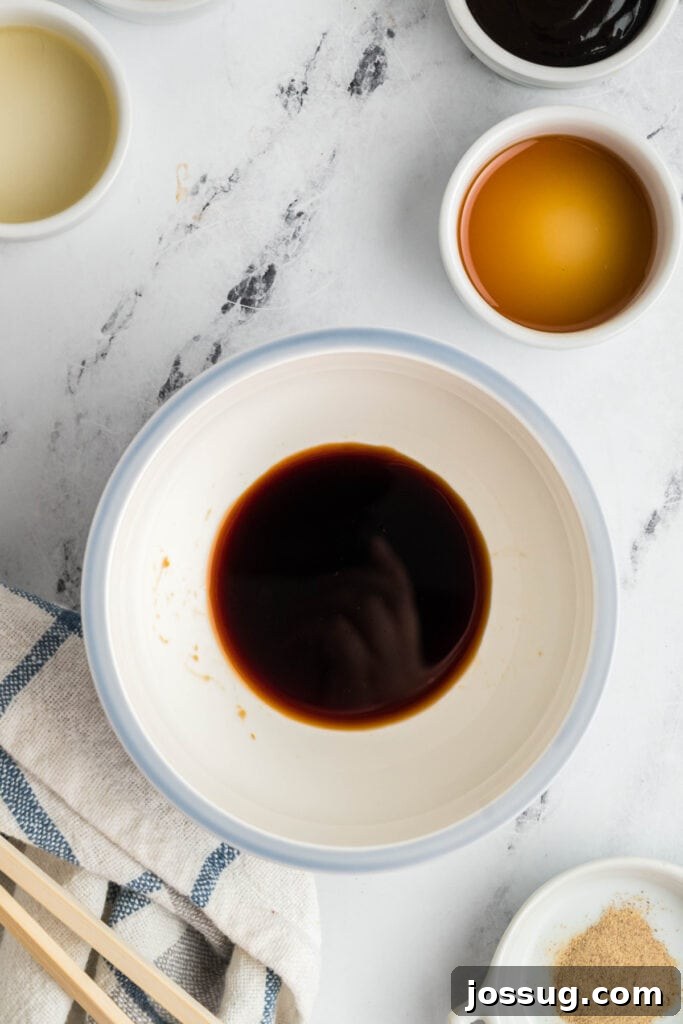
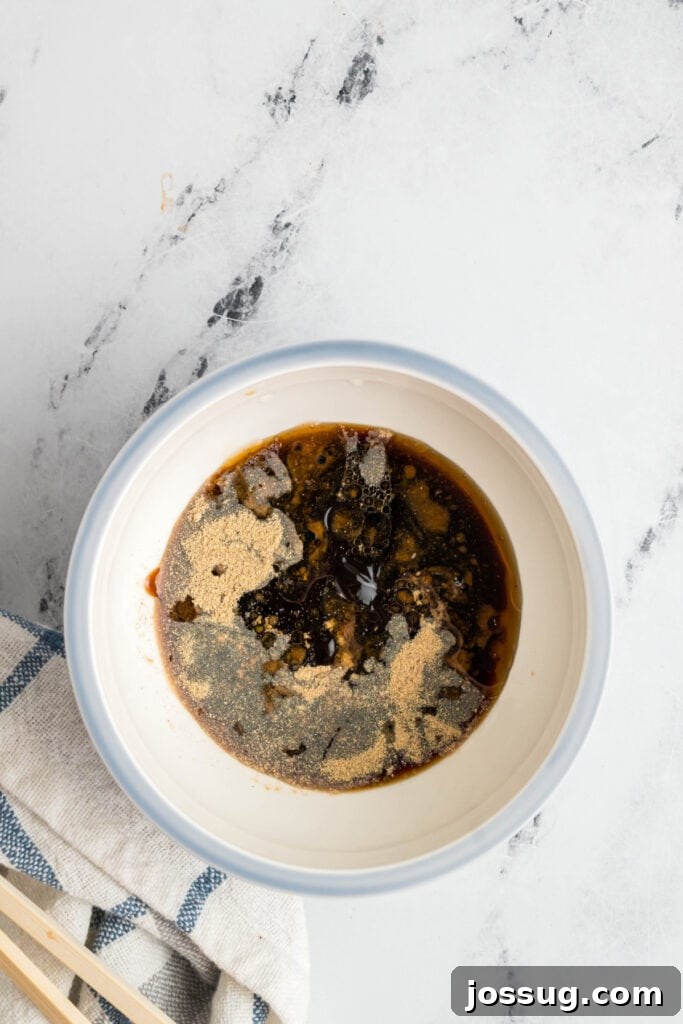
1. Prepare the Savory Sauce: In a small bowl, combine the soy sauce, hoisin sauce, mirin, rice wine vinegar, sesame oil, and white pepper. Whisk all the ingredients together until well combined and smooth. Set this flavorful sauce aside, ready for later.
-
2. Cook the Lo Mein Noodles: Bring a large pot of salted water to a rolling boil. Add the lo mein noodles and cook according to the package directions until they are al dente. Once cooked, drain the noodles thoroughly in a colander. Immediately rinse them with cold water to stop the cooking process and prevent them from sticking. Set them aside.
-
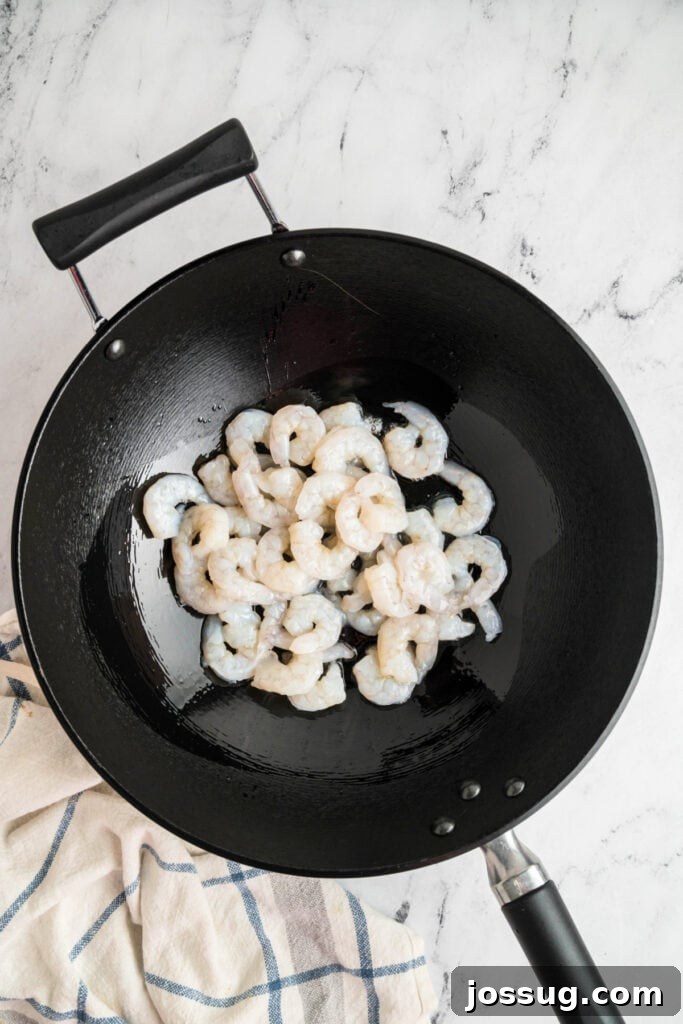
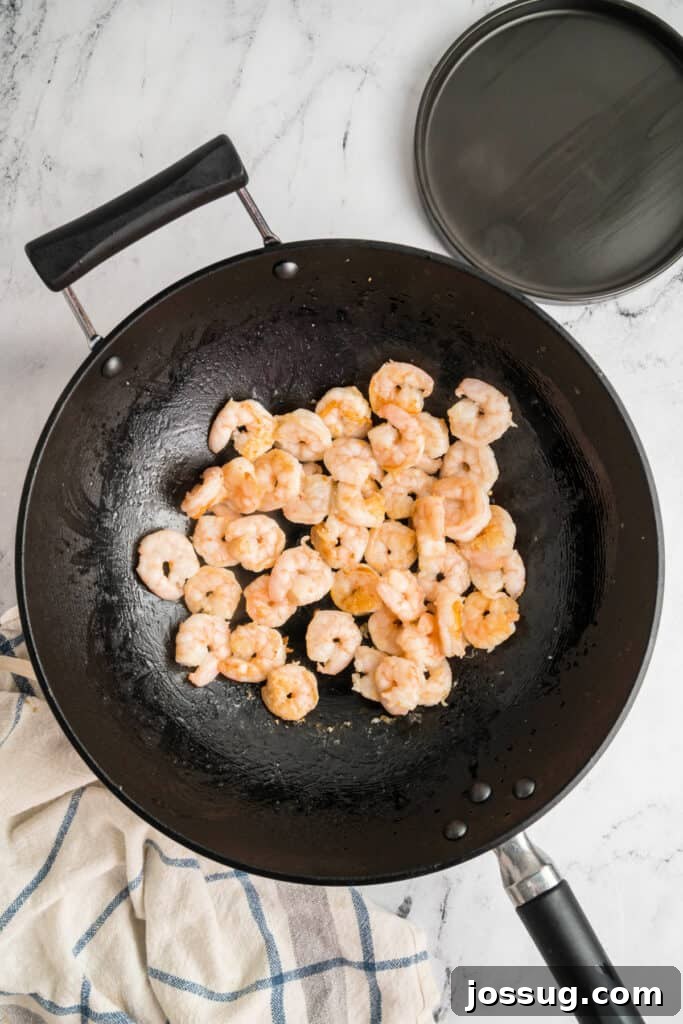
3. Sear the Shrimp: Heat 1 tablespoon of vegetable oil in a large wok or a heavy-bottomed skillet over high heat until it just begins to smoke. Add the peeled and deveined shrimp in a single layer. Sear for 2-3 minutes total, flipping once, until the shrimp turn pink and are just cooked through. Be careful not to overcook them. Remove the cooked shrimp from the wok and set aside.
-
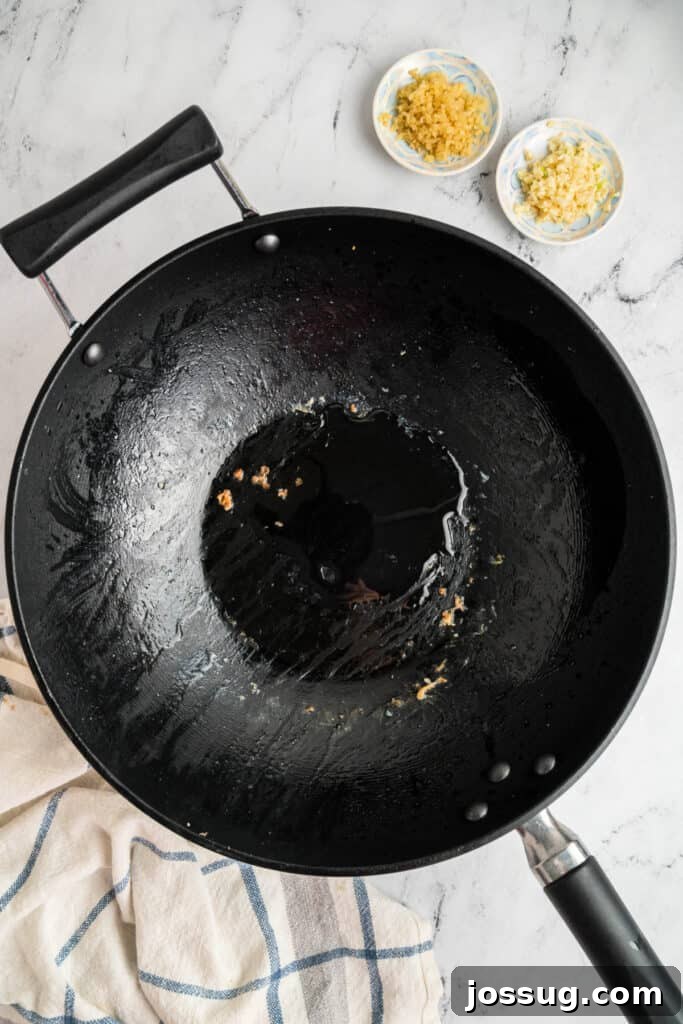
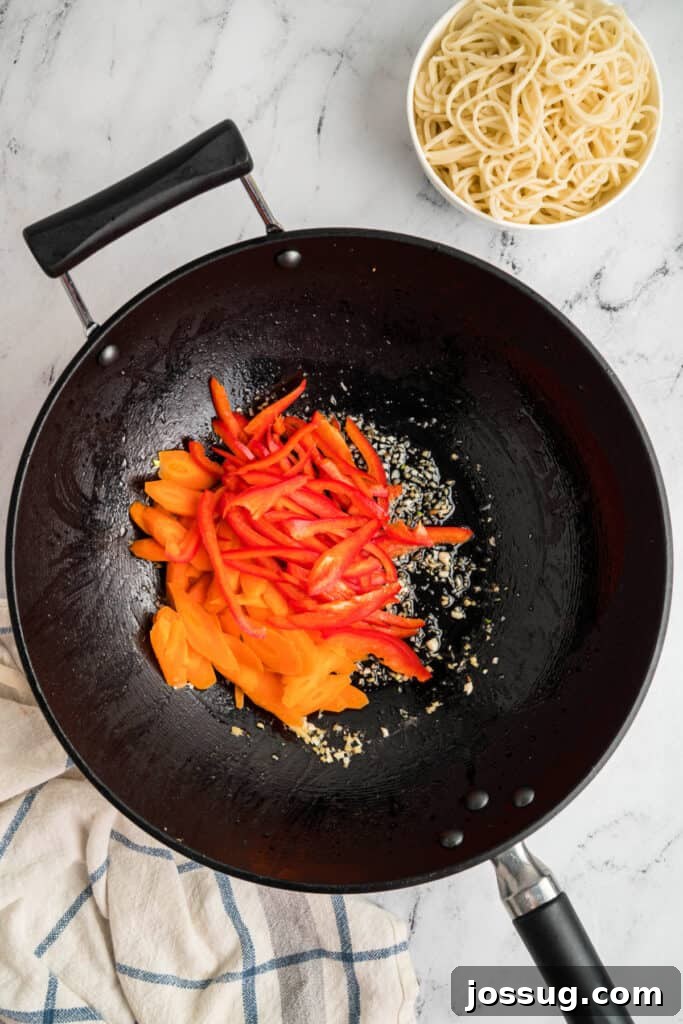
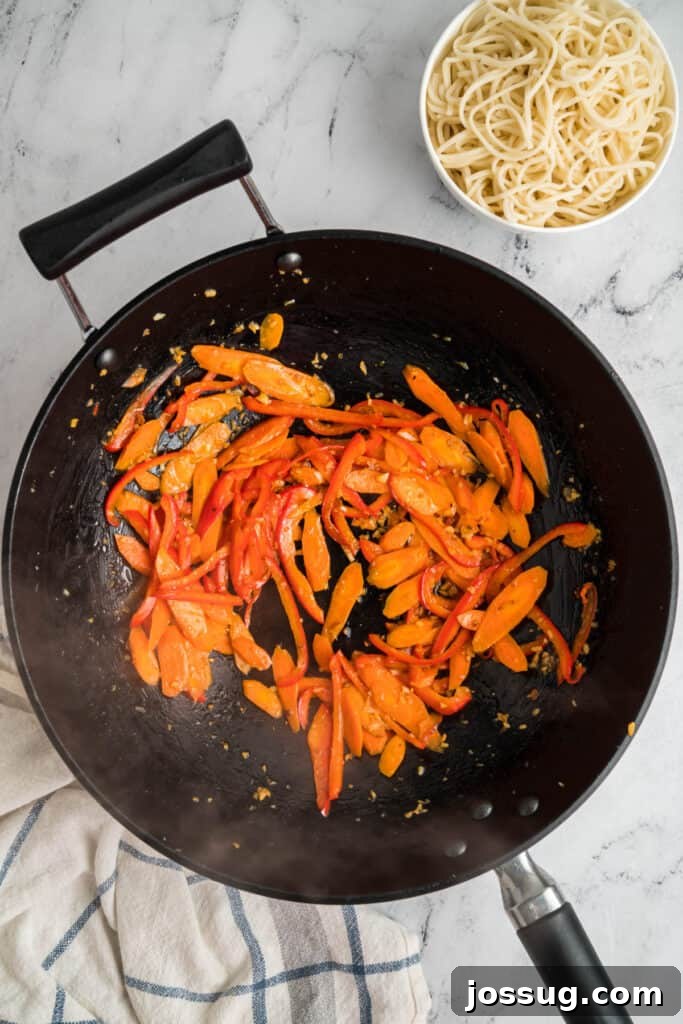
4. Stir-Fry Aromatics and Vegetables: Add the remaining 1 tablespoon of vegetable oil to the same wok. Reduce the heat slightly if necessary, then add the minced garlic and fresh ginger. Stir-fry for 1-2 minutes until fragrant, being careful not to burn the garlic. Next, add the thinly sliced red bell pepper and carrots. Continue to stir-fry for 2-3 minutes until the vegetables are crisp-tender but still have a slight bite.
-
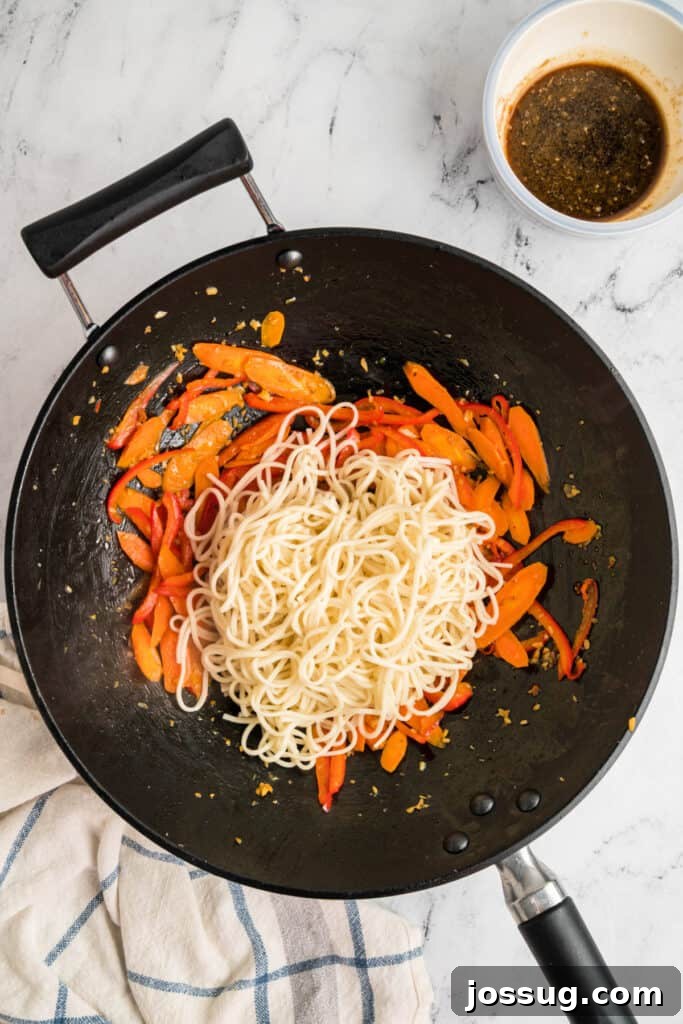
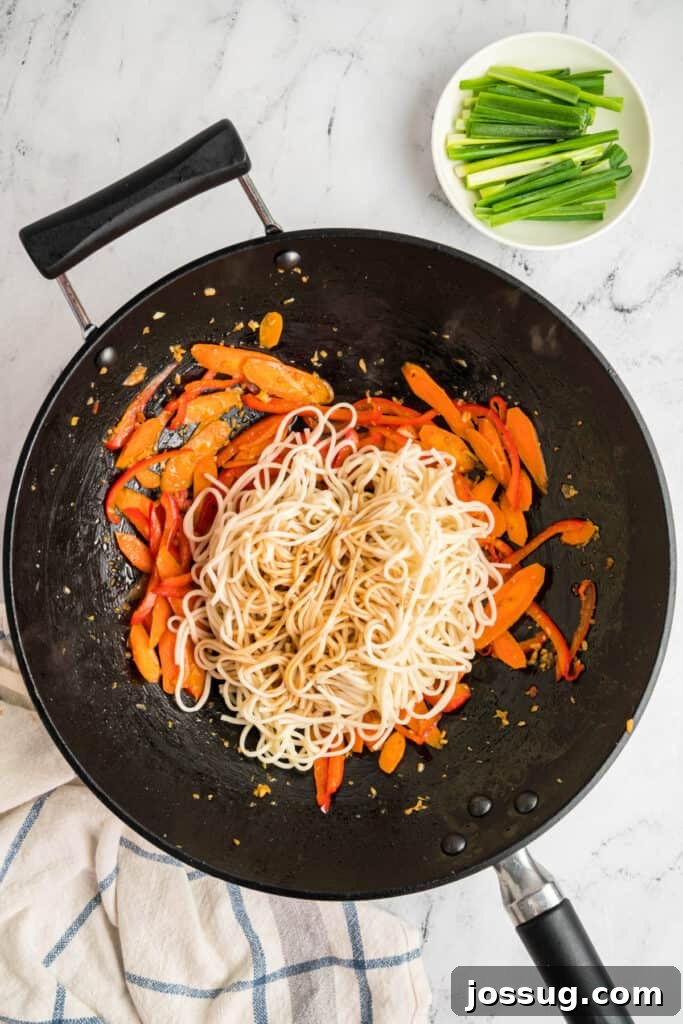
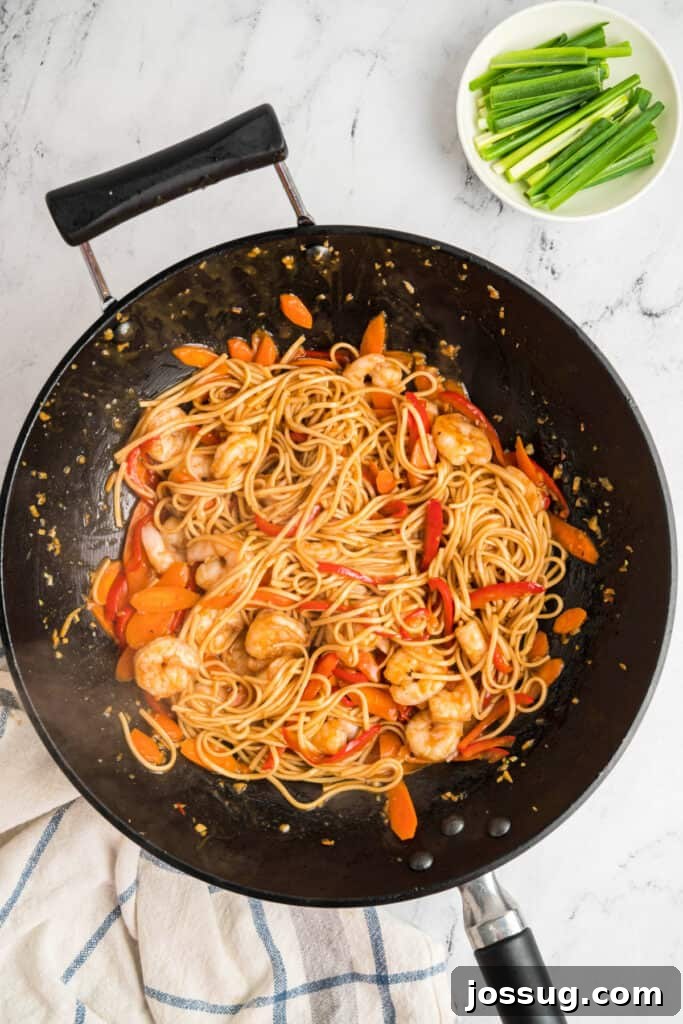
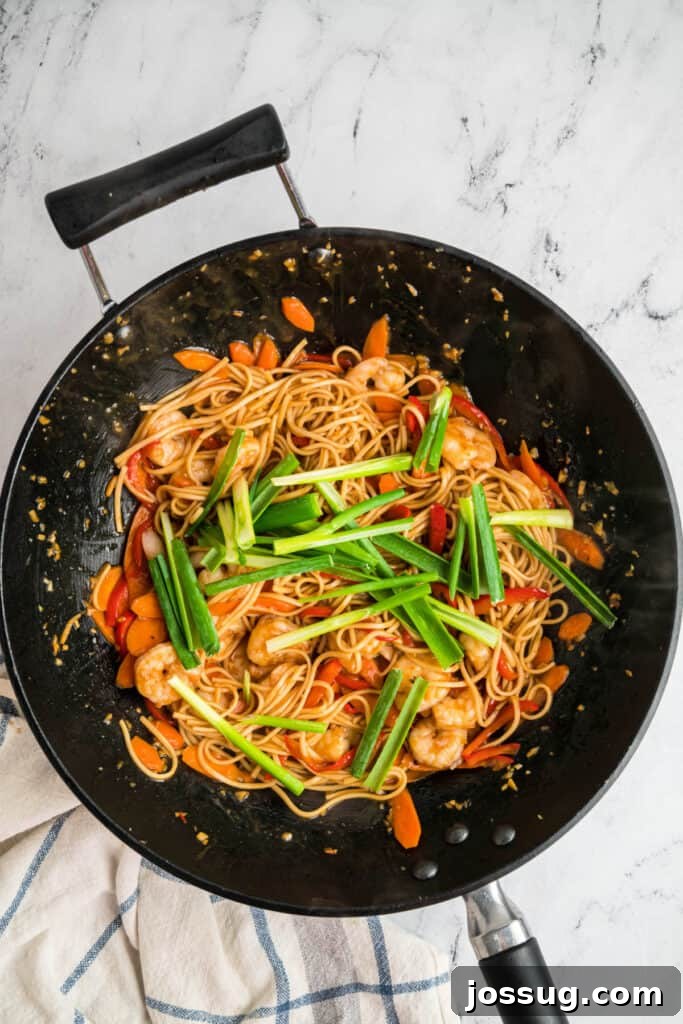
5. Combine All Ingredients: Return the cooked lo mein noodles and the seared shrimp to the wok with the vegetables. Pour the prepared savory sauce evenly over all the ingredients. Using your wok spatula or tongs, stir-fry and toss everything together vigorously for 1-2 minutes, ensuring that the noodles, shrimp, and vegetables are thoroughly coated in the sauce and heated through. Add the 2-inch pieces of green onion, give it one final toss, then immediately remove the wok from the heat.
-
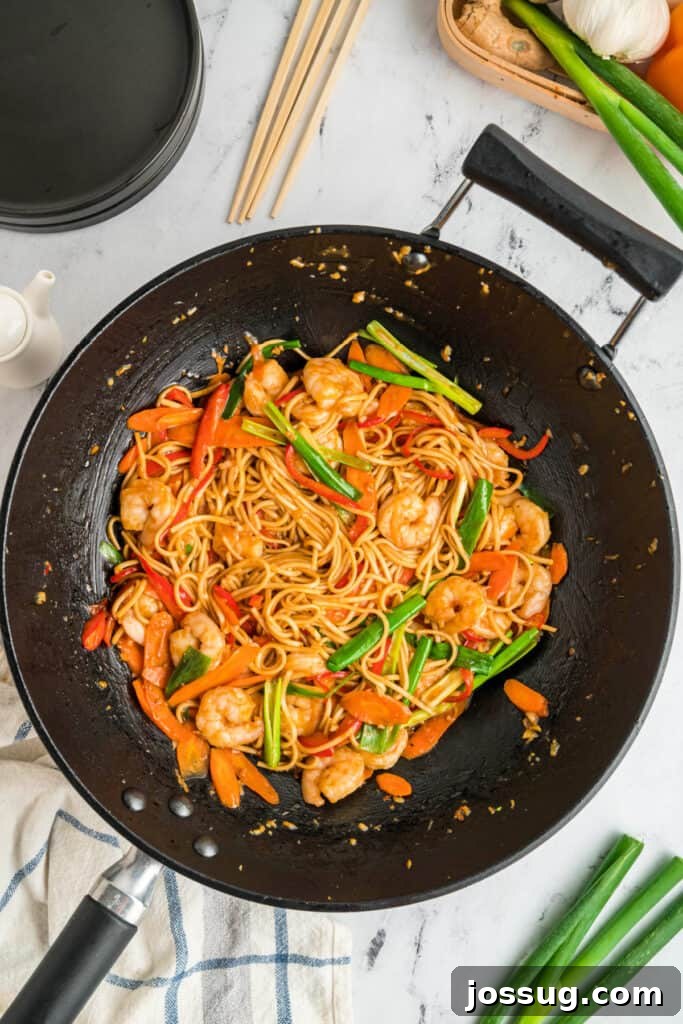
6. Serve Immediately: Transfer the piping hot Shrimp Lo Mein to serving bowls. Garnish with extra green onions or sesame seeds if desired, and enjoy your delicious homemade meal right away!
Recipe Notes for Success
🥡 STORAGE
Proper storage ensures your lo mein stays fresh and delicious for future meals.
- Store any leftover shrimp lo mein in an airtight container in the refrigerator. It will keep well for up to 3 days, making it perfect for grab-and-go lunches.
♨️ REHEATING
Enjoy your leftovers just as much as the first time with these reheating methods:
- Microwave: For a quick reheat, place your lo mein in a microwave-safe dish and heat in 30-second bursts, stirring between each interval, until warmed through. Add a splash of water if it seems dry.
- Stovetop Skillet: For best results, reheat over medium heat in a skillet with a splash of water or a teaspoon of soy sauce to rehydrate the noodles and sauce. Stir frequently until hot.
- Air Fryer: For a slightly crispy texture, place the lo mein in an aluminum foil pouch (to prevent drying) and heat at 350°F (175°C) for 4-5 minutes, or until thoroughly heated.
❄️ FREEZING
While convenient for many dishes, freezing lo mein is generally not recommended.
- Lo mein is not ideal for freezing, as the noodles and vegetables tend to lose their desirable texture and become mushy upon thawing. It’s best enjoyed fresh or from refrigeration.
💡 ADDITIONAL TIPS FOR BEST RESULTS
Enhance your cooking experience and the final dish with these extra pointers:
- Prep Everything Ahead: Stir-frying is a very fast cooking method. Have all your ingredients chopped, measured, and ready to go before you start cooking. This is known as ‘mise en place’ and prevents burning or overcooking.
- Use High Heat: Maintain high heat throughout the stir-frying process to ensure vegetables remain crisp-tender and develop that characteristic wok hei (smoky flavor) if using a wok.
- Protein Flexibility: As mentioned, feel free to swap shrimp with chicken, beef, or tofu if desired. Just ensure to slice meat thinly for quick cooking.
🍳 ALTERNATE COOKING METHODS FOR VEGGIES & PROTEIN
If you don’t have a wok or prefer different cooking methods for certain components:
- Oven: Roast shrimp and vegetables (like bell peppers and carrots) at 425°F (220°C) for 8-10 minutes until cooked and slightly caramelized. Then, toss with your cooked noodles and sauce in a large bowl.
- Stovetop Skillet: A large, heavy-bottomed skillet works similarly to a wok, but you might need to cook in smaller batches to avoid overcrowding and ensure proper browning.
♻️ LEFTOVER TRANSFORMATIONS
Get creative with any remaining lo mein and give it a new life:
- Fried Rice Base: Chop up any remaining lo mein and use it as a flavorful base for a quick fried rice. Just add an egg, a bit more soy sauce, and a few fresh veggies.
- Quick Noodle Soup: Add some chicken or vegetable broth to your leftovers and gently simmer to create a comforting and quick noodle soup.
Nutrition Facts (Per Serving)
Carbohydrates: 59g,
Protein: 17g,
Fat: 9g,
Saturated Fat: 1g,
Polyunsaturated Fat: 4g,
Monounsaturated Fat: 2g,
Trans Fat: 0.04g,
Cholesterol: 86mg,
Sodium: 1344mg,
Potassium: 261mg,
Fiber: 3g,
Sugar: 5g,
Vitamin A: 4992IU,
Vitamin C: 33mg,
Calcium: 58mg,
Iron: 1mg
Nutrition information is automatically calculated and is provided for informational purposes only. It should be used as an approximation and can vary based on specific ingredients and preparation methods.
Did you enjoy this recipe? We’d love to hear from you!
Please share your experience and leave a comment below. Your feedback helps us grow and improve!